
Parliament – Rajya Sabha witnesses heated debate over session adjournment timing
Parliament – A tense exchange unfolded in the Rajya Sabha on Thursday as members of the Congress and the ruling government clashed over the decision to adjourn the Budget Session and the proposed schedule for introducing legislation on women’s reservation.
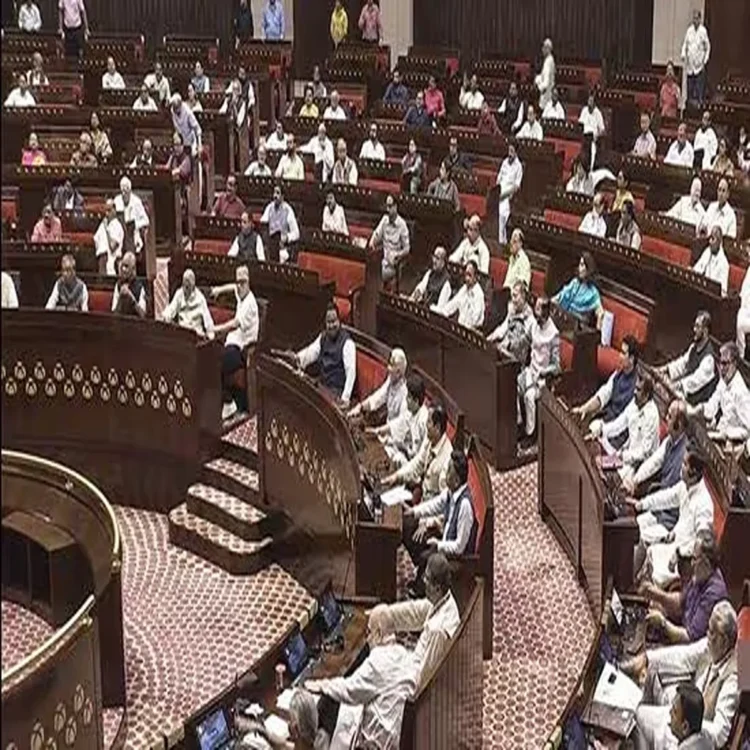
Session Adjournment Sparks Dispute
The disagreement began after Parliamentary Affairs Minister Kiren Rijiju informed the House that the ongoing session would be paused and reconvened in the coming weeks to address what he described as a significant legislative matter. According to the announcement, Parliament is expected to meet again around mid-April for a short duration of two to three days.
During that period, the government plans to introduce key bills, including proposals to increase the strength of the Lok Sabha from 543 members to 816, along with measures aimed at implementing the long-pending women’s reservation framework.
Opposition Seeks Clarity on Government Intent
The announcement prompted immediate questions from the Opposition benches. Congress Chief Whip Jairam Ramesh sought a clear explanation regarding the nature of the adjournment, asking whether the House was being suspended indefinitely or scheduled to reconvene on a fixed date.
He pressed the government to outline its intentions more transparently, emphasizing the need for clarity in parliamentary proceedings.
Government Cites Timeline Constraints
Responding to the concerns, Rijiju stated that the decision was driven by procedural timelines rather than political considerations. He explained that discussions had already taken place with Opposition representatives regarding upcoming legislative priorities.
The minister added that logistical constraints and future electoral timelines, including the general elections expected in 2029, required the government to proceed within a defined schedule. He also acknowledged that the Opposition had suggested holding discussions after April 29, but indicated that such timing may not align with the government’s legislative roadmap.
Congress Raises Concerns Over Political Timing
The Congress party, however, expressed reservations about the timing of the move. Senior leader Mallikarjun Kharge argued that the government’s approach could be influenced by upcoming state elections and warned of possible overlaps with the Model Code of Conduct.
Kharge reiterated that his party supports women’s reservation but questioned why the matter was not taken up earlier during the session. He pointed out that Parliament had already spent several days discussing other issues and suggested that the bill could have been introduced during that time.
He further urged the government to avoid taking political credit prematurely and recommended that discussions be held after the election period to ensure broader cooperation.
Government Counters Opposition Claims
Leader of the House JP Nadda responded firmly, stating that previous governments, including those led by Congress, had failed to pass women’s reservation legislation over several decades. He asserted that the current administration had taken concrete steps to move the issue forward.
Nadda also criticized the Opposition for viewing the matter through a political lens rather than recognizing its broader social significance.
Behind-the-Scenes Talks Continue
Despite the public disagreement, sources indicate that informal discussions between the government and Opposition parties are ongoing. These talks are focused on finalizing the framework for implementing the reservation policy and addressing related concerns, including the process of delimitation and its connection to census data.
The government is reportedly exploring ways to move forward with the legislation while accommodating some of the Opposition’s concerns, suggesting that further negotiations may continue ahead of the next session.
Looking Ahead to April Session
With Parliament set to reconvene later this month, attention will remain on how both sides navigate the legislative agenda. The upcoming session is expected to be crucial, not only for advancing the women’s reservation bill but also for shaping the broader political narrative in the months ahead.