
MetroRush – Crowded Platforms and Delays Mark First Day of Initiative
MetroRush – Monday morning travel turned difficult for thousands of commuters across Delhi as the launch of the “Metro Monday” campaign led to severe crowding, extended waiting times, and repeated train stoppages on several metro routes.
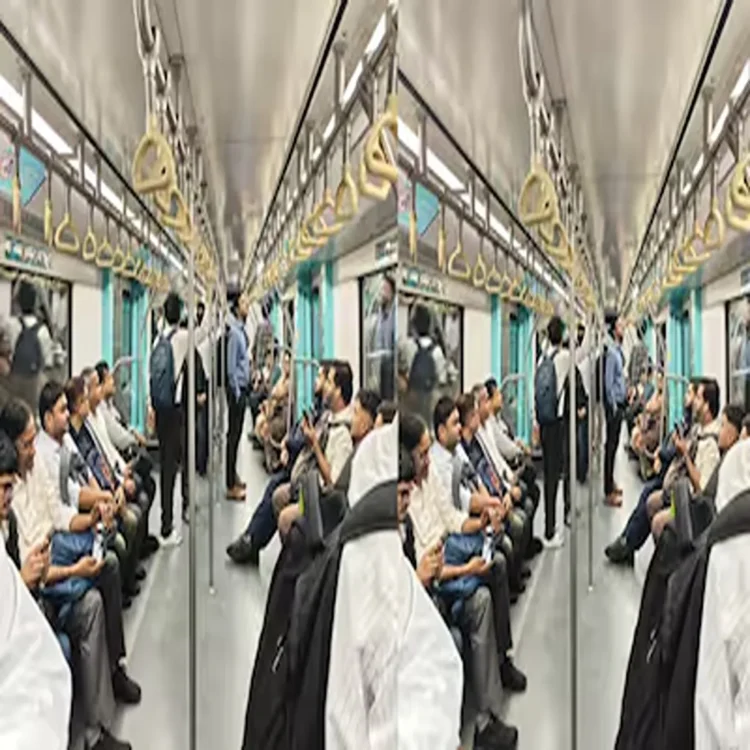
The initiative was introduced to encourage people to reduce fuel consumption and rely more on public transportation in an effort to cut air pollution levels in the capital. However, many office-goers, students, and regular passengers described the first day of the campaign as stressful rather than convenient.
Heavy Rush Across Major Metro Lines
From early morning hours, metro stations witnessed unusually large crowds as more residents chose metro travel following the government’s public appeal. Passengers reported packed platforms, long queues near security checks, and congested interchange stations during peak office timings.
Several commuters said trains were moving slower than expected, resulting in delays throughout the network. On the Magenta Line, passengers claimed metro trains remained halted at stations for extended periods, causing crowd build-up on platforms and inside coaches.
A private sector employee, Manas Marwah, said his journey on the Blue Line became frustrating due to repeated stoppages. According to him, one train remained stationary for a considerable amount of time, leading to a delay of nearly 15 minutes and making him late for work.
Security Movement Added to Congestion
Passengers also pointed out that the presence of ministers, security personnel, and official staff during the campaign contributed to the overcrowding inside metro coaches and station premises.
Many commuters felt that while the objective behind the initiative was positive, the metro system struggled to handle the sudden increase in passenger numbers. Some travelers said regular rush-hour movement in Delhi already remains difficult on most days, and the additional crowd only worsened the situation.
Several people complained about limited standing space inside coaches, slow movement at entry gates, and crowded escalators at interchange stations. Daily passengers stated that better planning and increased train frequency could have reduced the inconvenience.
Students Faced Problems Reaching Institutions
Students were among those most affected by the delays. Priyanshi Sabharwal, a student at Delhi University, said she arrived late for an examination because of the disruption in metro movement. She added that the delay affected her performance and resulted in a loss of marks.
Other students and working professionals shared similar experiences, saying they faced uncertainty while switching lines due to overcrowded platforms and delayed train arrivals. Some commuters also mentioned that announcements regarding delays were limited, leaving passengers confused about travel timings.
Public Transport Push Receives Mixed Response
The “Metro Monday” campaign was launched with the intention of encouraging environmentally friendly travel habits and reducing the number of private vehicles on roads. Officials believe such initiatives can help lower fuel usage and pollution levels in the city over time.
Despite supporting the larger environmental objective, many passengers stressed that public transport systems need stronger crowd management and smoother operations before handling a major increase in ridership.
Commuters suggested that additional trains during peak hours, better coordination at stations, and improved passenger information systems could make future campaigns more effective and less stressful for travelers.
While the initiative succeeded in drawing more people toward metro services, Monday’s experience also highlighted the growing pressure on Delhi’s urban transport infrastructure during high-demand periods.