
Justice – Panihati Election Turns Into Test of RG Kar Case Fallout
Justice – The political landscape in West Bengal has taken a sharp turn as the aftermath of a tragic crime continues to influence electoral narratives nearly two years later. The rape and murder of a young doctor at a government hospital in Kolkata has resurfaced as a central issue in the upcoming Panihati assembly contest, transforming what was once a routine electoral battle into a deeply emotional and politically charged confrontation.
A Constituency Shaped by a Tragic Memory
Panihati, a suburban constituency in North Kolkata, has historically seen power shift between the Left, Congress, and later the Trinamool Congress (TMC). However, the upcoming election scheduled for April 29 is no longer being driven by local civic concerns alone. Instead, conversations among voters are dominated by a lingering question: who is responsible for the failure to deliver justice in the RG Kar case, and which party can restore public trust?
Political Stakes Rise Across Party Lines
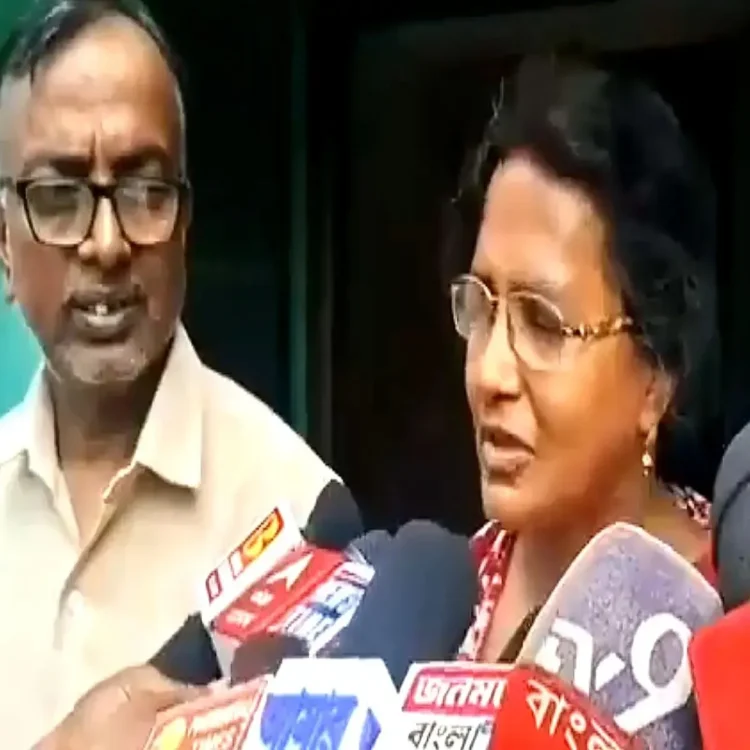
The contest has drawn significant attention due to the candidates involved. The Bharatiya Janata Party (BJP) has fielded the victim’s mother, Ratna Debnath, positioning her candidacy as a symbol of justice and accountability. The TMC, which has held the seat for over a decade, has nominated Tirthankar Ghosh, continuing the political legacy of his father, a long-time local leader. Meanwhile, the CPI(M) has entered the fray with Kalatan Dasgupta, a familiar face from protest movements linked to the case.
Each party is attempting to align itself with public sentiment surrounding the incident. For the BJP, the strategy appears to focus on channeling public anger into electoral support. The TMC, on the other hand, is working to defend its organizational strength while countering allegations tied to the case. The Left sees this as an opportunity to reclaim its role in mobilizing protests and highlighting systemic issues.
From Protest to Political Narrative
The crime, which occurred in August 2024, sparked widespread outrage across the country. Medical professionals, students, and civil society groups took to the streets, demanding accountability and justice. Hospitals witnessed strikes, and protests spread beyond Kolkata, turning the case into a national issue concerning women’s safety and institutional accountability.
Over time, the movement evolved beyond a single case. It began to reflect broader concerns about governance, law enforcement, and alleged attempts to suppress evidence. In West Bengal, these concerns gradually took on a political dimension, with opposition parties using the issue to question the state government’s handling of the situation.
Voices from the Ground
The victim’s family has now stepped directly into the political arena, arguing that systemic change is necessary to ensure justice. Statements from family members indicate a belief that electoral outcomes could influence the direction of the case and broader safety measures for women in the state.
At the same time, leaders from other parties have emphasized their continued commitment to protest and public accountability. The CPI(M), in particular, has highlighted its role in earlier demonstrations, asserting that the struggle for justice is ongoing and not limited to electoral politics.
Electoral Arithmetic and Ground Realities
Despite the emotional intensity surrounding the issue, voting patterns suggest that the ruling party retains a structural advantage. In recent elections, the TMC secured a significant share of votes in the constituency, maintaining a lead over its closest rivals. The demographic composition of Panihati, largely consisting of middle- and lower-middle-class voters, also plays a role in shaping electoral outcomes.
However, local concerns such as deteriorating infrastructure, limited employment opportunities, and allegations of corruption continue to influence voter sentiment. These issues have now merged with the larger question of justice in the RG Kar case, creating a complex electoral environment.
A Broader Question of Trust
As campaigning intensifies, the election in Panihati has come to represent more than a contest for a legislative seat. It reflects a deeper public concern about safety, governance, and accountability. For many residents, the unresolved questions surrounding the hospital incident remain central to their political choices.
The outcome of this election may not provide immediate answers, but it is likely to signal how strongly public memory and demand for justice can shape political narratives in the state.