
Judiciary – Supreme Court Chief Justice Signals Action Over Metro Station Closure
Judiciary – Supreme Court access update and Delhi Metro services during student protests – The temporary closure of the Supreme Court Metro station became a major concern on Thursday after legal professionals highlighted the disruption it caused to lawyers, court staff, and visitors. Chief Justice of India Surya Kant assured that he would personally intervene if the issue remained unresolved by the afternoon.
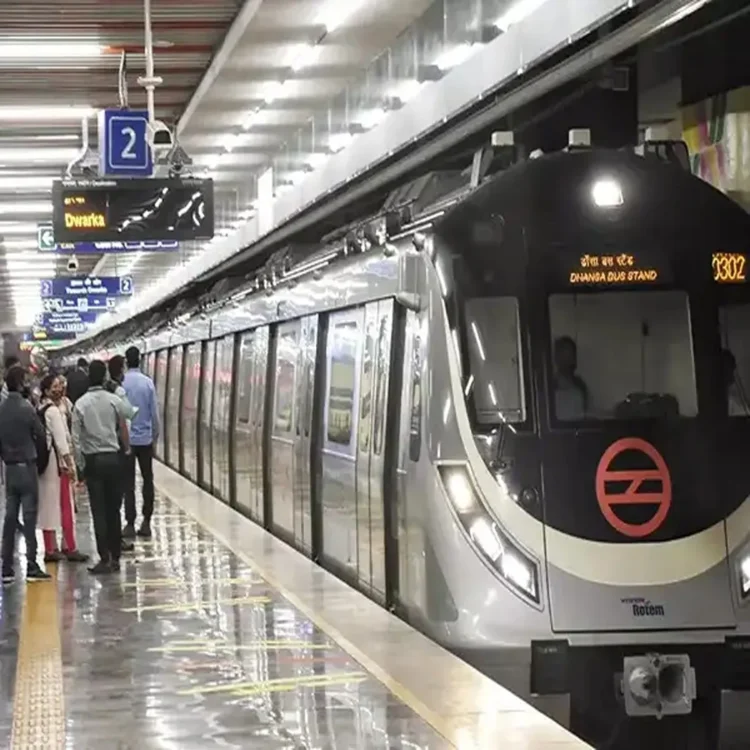
Lawyers Raise Concerns Over Restricted Metro Access
The matter came before the Supreme Court after Supreme Court Bar Association President Vikas Singh informed the bench that the shutdown of the Supreme Court Metro station had created serious difficulties for advocates, registry employees, and others who regularly travel to the court.
Singh suggested that authorities could adopt a practical approach instead of keeping the station completely inaccessible. He proposed that individuals carrying valid Supreme Court proximity cards, along with registry staff, should be permitted to leave the station after undergoing security screening. According to him, other commuters could continue their journey on the Metro network without exiting at the station, allowing both security and public convenience to be maintained.
Chief Justice Promises Intervention if Needed
Responding to the concerns, Chief Justice Surya Kant said he had already communicated the issue to the Supreme Court administration earlier in the day. He explained that the administration was expected to coordinate with the Delhi Metro authorities in an effort to resolve the situation without further intervention.
However, the Chief Justice made it clear that he would step in personally if no satisfactory solution emerged by lunchtime. He stated that if discussions between the concerned authorities failed to produce results, he would take the necessary steps to address the problem and ensure that the inconvenience faced by members of the legal community was considered.
Directions Issued to Protect Litigants and Lawyers
During the hearing, the Chief Justice also announced an important administrative measure aimed at preventing unnecessary hardship for advocates affected by the transport disruption.
He informed the court that instructions had already been issued to judges across the Supreme Court that no adverse judicial orders should be passed against lawyers who were unable to attend proceedings because of the prevailing situation. This direction was intended to ensure that parties would not suffer procedural disadvantages simply because legal representatives faced difficulties in reaching the court.
The assurance was welcomed as a temporary safeguard for ongoing cases while transportation issues remained unresolved.
Metro Closures Linked to Student Demonstrations
Earlier on Thursday, the Delhi Metro Rail Corporation announced the temporary closure of 16 Metro stations across the national capital until further notice. The measure was introduced as a precaution in view of continuing student protests taking place in different parts of Delhi.
Among the stations affected was the Supreme Court Metro station, a key transit point for advocates, litigants, court employees, and visitors attending proceedings at the country’s highest court.
The temporary restrictions were aimed at maintaining public safety and managing movement in areas impacted by demonstrations. While Metro services continued on other sections of the network, access to several stations remained suspended pending further review by the authorities.
The developments reflected the balance being sought between public safety considerations and ensuring uninterrupted access to essential institutions. As discussions continued between the Supreme Court administration and Metro officials, attention remained focused on whether the station would reopen later in the day.