
Infrastructure – KMP Expressway Corridor Set for Major Urban Expansion Across NCR
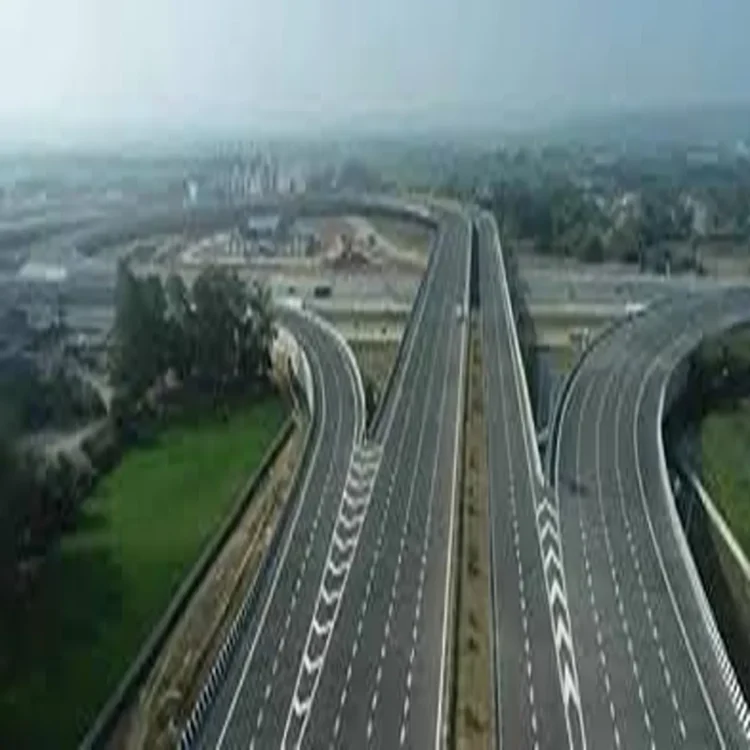
Infrastructure – The Kundli-Manesar-Palwal (KMP) Expressway is expected to play a central role in the next phase of urban and economic growth across the National Capital Region (NCR). According to planning sources, a key proposal under the Draft Regional Plan-2041 identifies the area surrounding the KMP Expressway and the Eastern Peripheral Expressway as a major development zone. The region has been given a dedicated economic identity and is being referred to as the “Golden Ring of Opportunity,” reflecting its importance in the long-term growth strategy for NCR.
New Planning Zone Receives Strategic Importance
The proposed Central NCR (CNCR) forms one of five policy-based development zones outlined in the regional framework. Other identified zones include the National Capital Territory of Delhi, transit-oriented highway corridors, natural conservation areas, and the remaining NCR region. Planning authorities have placed the CNCR at the highest level of development priority, indicating a strong focus on infrastructure creation, economic activity, and urban expansion in the years ahead.
The proposal is expected to be reviewed during the upcoming meeting of the National Capital Region Planning Board scheduled for June 16. Officials note that the broader Draft Regional Plan-2041 had already received preliminary approval during a board meeting held in October 2021.
Focus on High-Density Development
Under the proposed framework, the CNCR will support dense mixed-use urban development, larger floor area allowances, and transit-oriented projects around major transportation hubs. Significant investment in infrastructure is also planned across the zone.
The designated area stretches beyond Delhi and includes land extending up to five kilometres beyond both the Eastern and Western Peripheral Expressways. This wider coverage is intended to create a continuous growth corridor capable of accommodating future residential, commercial, and industrial demand.
Panchgram Proposal Could Shape Five New Urban Centres
A major component of the development strategy involves Haryana’s Panchgram initiative. The state government has proposed establishing a cluster of five greenfield townships along the KMP Expressway. These planned urban centres are expected to become part of the sub-regional development blueprint.
Officials indicate that development activities may cover nearly 2.5 lakh hectares of land. The proposed urban and industrial zones would be located within a belt extending roughly two to six kilometres on both sides of the expressway network. A dedicated Panchgram Development Authority is expected to oversee planning, infrastructure, and governance across these emerging townships.
Industrial Growth to Receive Additional Support
The plan also incorporates the Manesar-Bawal Investment Region, a strategically important industrial zone connected to the Delhi-Mumbai Industrial Corridor project. This region occupies a key position along the southern section of the KMP Expressway and is expected to remain a major driver of manufacturing and investment activity.
Its inclusion in future state-level sub-regional plans is intended to improve coordination between industrial development and broader urban planning objectives.
Major Transport Integration Planned
Transport connectivity remains a central feature of the proposal. Several multimodal transit hubs have been identified along the KMP corridor to improve movement across NCR.
One proposed hub at Panchgaon Chowk in Manesar would bring together the Delhi-Alwar Regional Rapid Transit System, the Gurugram-Manesar Metro network, and the Jhajjar-Palwal railway corridor. Another major interchange is planned at Kherki Daula in Gurugram, where rapid transit, metro services, and bus networks are expected to converge.
Planning experts believe these integrated transport facilities could strengthen connectivity, support future population growth, and encourage balanced development across the expanding NCR region.