
IndusTreaty – India Reaffirms Stand on Water Pact and Jammu and Kashmir at UN
IndusTreaty – India firmly rejected Pakistan’s statements at the United Nations, maintaining that meaningful cooperation under the Indus Waters Treaty cannot exist in an environment affected by cross-border terrorism. New Delhi also reiterated its long-standing position that the Union Territory of Jammu and Kashmir is an inseparable part of the country.
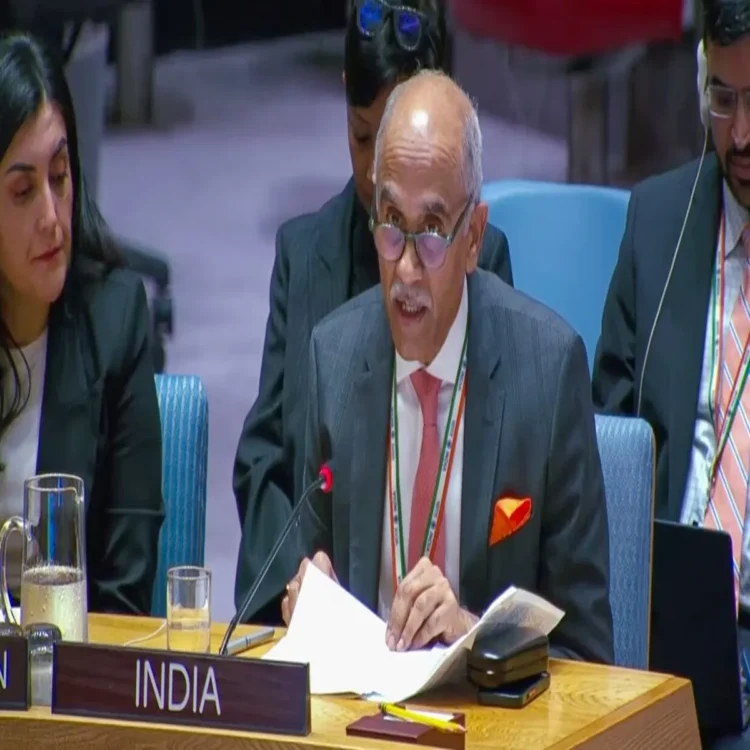
India Responds During UN Security Council Debate
India presented its response during the United Nations Security Council’s High-Level Open Debate on Natural Resources Governance: the Foundation of Peace, Security and Prosperity. Speaking on behalf of the country, India’s Permanent Representative to the UN, Ambassador Parvathaneni Harish, exercised the right of reply after accusing Pakistan of using the international forum to promote what he described as an inaccurate narrative unrelated to the main agenda of the meeting.
The Indian envoy stated that New Delhi’s position on the Indus Waters Treaty has remained consistent. According to him, cooperation between neighbouring countries depends on mutual confidence and goodwill, conditions that cannot be sustained if cross-border terrorism continues to be used as a tool of state policy.
Pakistan Raises Concerns Over Indus Waters Treaty
Earlier in the debate, Pakistan’s Permanent Representative to the United Nations, Asim Iftikhar Ahmad, criticised India’s decision to place the Indus Waters Treaty in abeyance. He described the move as unlawful and argued that it could have serious consequences for the livelihoods of more than 240 million people in Pakistan.
The Indus Waters Treaty, signed in 1960 with the support of the World Bank, regulates the distribution and management of the six rivers of the Indus basin between India and Pakistan. India decided to suspend implementation of the agreement following the April 22, 2025, terrorist attack in Pahalgam. Since then, New Delhi has maintained that the existing security situation makes continued cooperation under the treaty difficult.
India Repeats Position on Jammu and Kashmir
Responding to Pakistan’s remarks on Jammu and Kashmir, Ambassador Harish reaffirmed India’s constitutional position on the region. He stated that Jammu and Kashmir has always been, continues to be, and will remain an integral and inalienable part of India.
The envoy further said that the only unresolved matter concerning Jammu and Kashmir relates to what India considers Pakistan’s illegal occupation of parts of Indian territory. He added that Pakistan should focus on addressing its own internal issues rather than making allegations against India on international platforms.
Focus on Responsible Resource Governance
Apart from addressing bilateral issues, India also highlighted the broader theme of the Security Council debate by stressing the importance of responsible management of natural resources. Ambassador Harish warned that illegal extraction and trafficking of natural resources can become a source of funding for armed groups, thereby extending conflicts and weakening peace efforts in affected regions.
He emphasised that natural resources should contribute to economic growth, sustainable development and prosperity for sovereign nations. To achieve this, India called for transparent governance systems, accountable institutions, nationally driven policies and stronger international cooperation to prevent the illegal exploitation and trade of natural resources.
According to the Indian delegation, improving transparency across supply chains and strengthening collaboration among countries would help reduce unlawful resource activities while promoting long-term peace, security and economic stability.