
IndiaJapan – India and Japan Expand Defence and Trade Cooperation at Summit
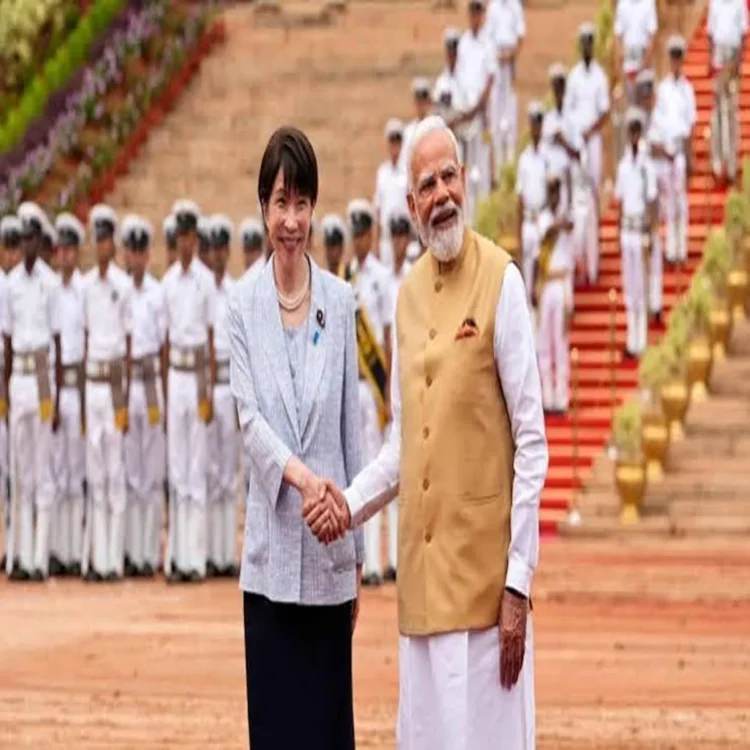
IndiaJapan – India and Japan have strengthened their strategic relationship with new agreements covering defence production, trade and economic security. During the 16th India-Japan Annual Summit on Thursday, Prime Minister Narendra Modi and Japanese Prime Minister Sanae Takaichi discussed closer industrial cooperation and ways to deepen economic ties between the two countries.
Defence Co-Development Agreement
A major outcome of the meeting was the signing of the first defence co-development agreement between India and Japan. The project concerns the Unified Complex Radio Antenna, known as UNICORN, a modern naval communications system intended to provide secure and dependable connectivity for warships.
Prime Minister Modi said the agreement marked an important development in defence technology cooperation. He noted that the naval radio antenna project would create a new framework for joint work between Indian and Japanese defence industries.
The UNICORN system is expected to support naval operations by improving protected communication capabilities at sea. Both governments have been discussing the project for several years, and the latest agreement follows the resolution of key technical matters.
Future Defence Technology Partnerships
In their joint statement, the two leaders welcomed progress on the remaining technical issues linked to the UNICORN programme. They also agreed to examine opportunities for further cooperation in defence equipment, technology and industrial manufacturing.
India has also welcomed Japan’s review of rules related to the transfer of defence equipment and technology. New Delhi believes the changes could make it easier for companies from both countries to work together on future defence projects.
The growing defence engagement reflects wider efforts by India and Japan to increase cooperation in the Indo-Pacific region. Both countries have regularly highlighted the importance of maritime security, stable sea routes and stronger regional partnerships.
CEPA Review Takes Centre Stage
Trade and economic integration were another major focus of the summit. India and Japan agreed to work towards modernising their Comprehensive Economic Partnership Agreement, or CEPA, which took effect in 2011.
The agreement was designed to improve market access, reduce tariffs and support investment between the two countries. However, Indian officials have said that several provisions now need to be reassessed because global trade conditions have changed significantly over the past decade.
Foreign Secretary Vikram Misri said the discussions included whether the CEPA agreement had become outdated when compared with newer trade arrangements signed by other countries. The review is expected to focus on practical barriers affecting businesses and exporters.
Addressing Export Challenges
Indian officials have raised concerns about non-tariff barriers that continue to affect exports to Japan. In particular, strict sanitary and phytosanitary standards have made it difficult for some Indian products to enter the Japanese market, even where tariff preferences are available.
Government sources said India has conveyed its interest in reviewing these provisions as part of the CEPA upgrade process. The aim is to ensure that Indian exporters can benefit more effectively from the agreement while also supporting stronger trade flows in both directions.
Economic Security Roadmap
The summit also resulted in a Joint Roadmap on Economic Security. Under this framework, India and Japan will work together to make supply chains more resilient in sectors considered important for future growth and national security.
The roadmap covers areas such as semiconductors, quantum technologies, advanced materials, clean energy and biotechnology. The two governments plan to encourage cooperation between businesses, research institutions and policymakers in these fields.
The agreements reached at the summit underline the expanding scope of India-Japan relations. Alongside traditional diplomatic and economic engagement, the partnership is increasingly focused on advanced technology, manufacturing capacity and long-term supply chain security.