
History – Debate Intensifies Over Claims About Maharani Tarabai’s Origins
History – The remarks made by a Jain monk regarding the origins of Maharani Tarabai have triggered a sharp public debate, drawing reactions from historians and political figures who have questioned the accuracy of the statements.
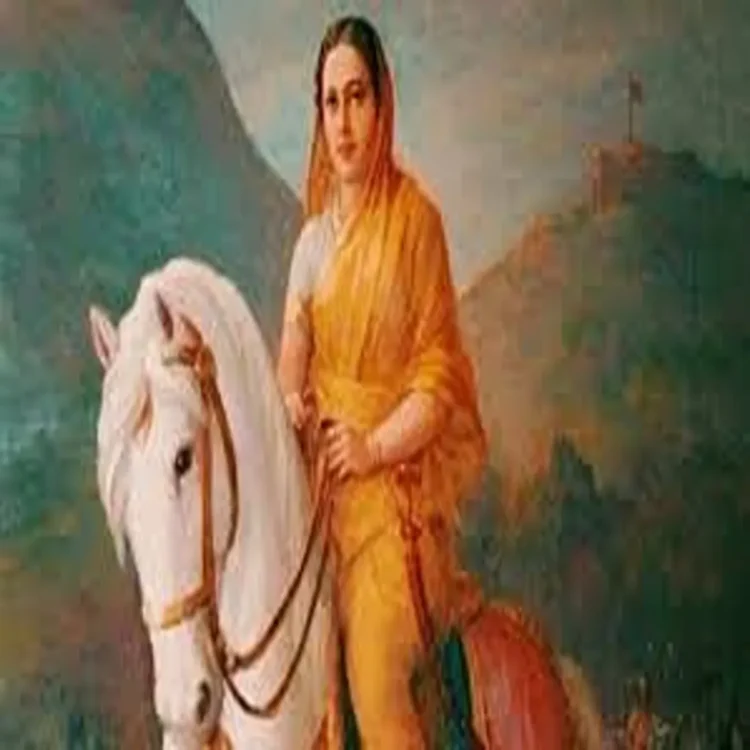
A fresh controversy has surfaced after Jain monk Acharya Nayan Padmasagar suggested that Maharani Tarabai, a prominent figure in Maratha history, was associated with the Jain community. The claim was made during a community gathering in Mumbai, where the monk spoke about historical figures and their contributions during different periods in India’s past.
Claims Made During Public Event
While addressing the gathering, Acharya Padmasagar referred to instances from medieval history, stating that a Jain queen from Mewar had taken up arms during the invasion of Muhammad Ghori. Extending his argument, he claimed that Maharani Tarabai, who led the Maratha resistance after the death of Chhatrapati Sambhaji Maharaj, was also linked to the Jain community and played a crucial role in opposing Mughal emperor Aurangzeb.
In the same speech, the monk also praised the current political leadership of India, stating that the country is experiencing true independence under the present administration.
Strong Reactions From Historians
The remarks quickly drew criticism from historians and scholars, who described them as historically inaccurate. Many argued that such claims could misrepresent well-documented aspects of Maratha history.
Historian Indrajit Sawant expressed concern over what he described as a recurring trend of altering historical narratives. He stated that attributing incorrect identities to significant figures like Maharani Tarabai undermines the legacy of those who played vital roles in shaping regional history. According to him, such statements not only distort facts but also affect the cultural identity linked to Maharashtra’s past.
Political Leaders Voice Concerns
Political leaders also reacted strongly to the controversy. Shiv Sena (UBT) leader Sanjay Raut criticized the remarks, suggesting that attempts were being made to reinterpret historical figures without factual basis. He emphasized that Maharani Tarabai was the daughter of Hambirao Mohite, a respected military leader, and that her lineage is well established in historical records.
Raut further questioned the intent behind such claims and called for responsible public discourse when discussing historical personalities.
Similarly, MNS leader Sandeep Deshpande highlighted Maharani Tarabai’s role as a warrior queen, pointing out her leadership during critical battles against the Mughal forces. He remarked that historical facts should not be altered and urged community leaders to avoid making statements that could lead to confusion or controversy.
Maharani Tarabai’s Historical Role
Maharani Tarabai remains one of the most significant figures in Maratha history. Born into the Mohite family, she was the daughter of Hambirao Mohite, who served as the commander-in-chief of the Maratha army. She married Chhatrapati Rajaram Maharaj at a young age, thereby becoming part of the royal Maratha lineage.
Following the deaths of Chhatrapati Sambhaji Maharaj and later Rajaram Maharaj, Tarabai assumed leadership during a challenging phase for the Maratha empire. She led resistance efforts against Aurangzeb for nearly 25 years, demonstrating both military skill and administrative capability.
Despite expectations from the Mughal side that the Maratha resistance would weaken after Sambhaji’s death, Tarabai’s leadership ensured continued opposition. She successfully defended several strategic forts and maintained the strength of the Maratha forces during prolonged conflict.
Leadership Beyond the Battlefield
Apart from her role in warfare, Maharani Tarabai also proved to be an effective administrator. She established the Kolhapur throne and played a guiding role in governance, particularly in mentoring her son in matters of state administration.
Her early training in combat techniques, including archery and swordsmanship, along with her understanding of diplomacy, contributed significantly to her success as a leader.
Ongoing Debate Over Historical Interpretation
The controversy highlights the sensitivity surrounding historical narratives in India, especially when it involves revered figures. Experts have stressed the importance of relying on verified historical sources while discussing the past.
As discussions continue, the episode has once again brought attention to the need for careful and accurate representation of history in public discourse.