
Education – Maharashtra Mandates Marathi as Compulsory Subject in Schools
Education – The Maharashtra government has introduced a new rule making Marathi a compulsory subject for students from Classes 1 to 10 in all schools across the state. The directive applies uniformly to government-run, aided, and private institutions, including those affiliated with various educational boards. Officials say the step is intended to ensure that every student develops a basic understanding of the state’s official language.
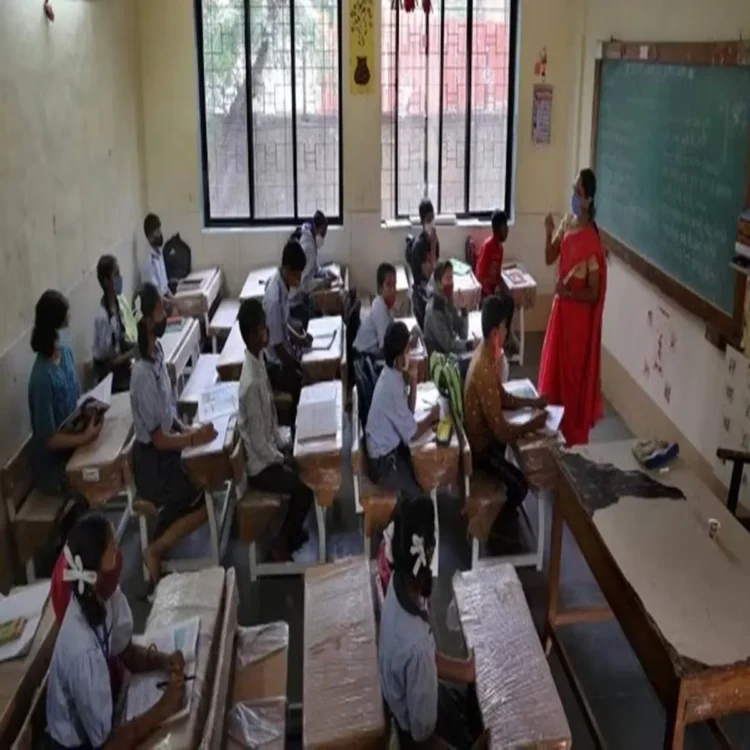
Policy Applies to All Schools Across Boards
Under the new regulation, even private and English-medium schools must include Marathi as a mandatory subject in their curriculum. Authorities have made it clear that compliance is not optional, and institutions failing to follow the rule will face consequences. These may include financial penalties of up to Rs 1 lakh and, in repeated cases, withdrawal of official recognition.
The decision reflects the government’s effort to bring consistency in language education and ensure that students studying under different systems receive equal exposure to Marathi. By standardizing this requirement, officials aim to strengthen linguistic integration across the state’s diverse education landscape.
Mandatory Appointment of Qualified Teachers
To support the implementation of this policy, schools are now required to appoint trained and qualified Marathi language teachers. The education department has emphasized that simply including the subject in the syllabus will not be sufficient; proper teaching standards must also be maintained.
Officials have announced that inspections will be conducted once schools reopen to verify compliance. These checks will involve physical visits by education department representatives, who will assess whether schools have appointed teachers and are effectively conducting Marathi classes.
Inspections to Ensure Compliance
Authorities have underlined the importance of strict monitoring to ensure the rule is followed across Maharashtra. Education Inspector Sanjay Javir stated that the initiative is crucial for preserving the state’s linguistic heritage and promoting cultural awareness among students.
He added that all schools have already been notified about the directive and are expected to adhere to it without delay. The inspection process will serve as a mechanism to identify gaps and ensure that institutions meet the required standards in both teaching and curriculum implementation.
Support from Social and Education Groups
The move has received support from several social organizations and education advocates. Ananda Hoval, president of the Indian Social Organisation, welcomed the decision, noting that some private schools have historically been inconsistent in following language-related guidelines.
He pointed out that while the policy is a positive step, its success will depend largely on effective enforcement at the local level. According to him, education officers must remain vigilant and ensure that schools do not overlook the mandate.
Impact on Private English-Medium Institutions
The new rule will significantly affect private English-medium schools, many of which have previously given limited emphasis to regional language teaching. Officials confirmed that all such institutions fall within the scope of the directive.
In one district alone, approximately 195 private English-medium schools will need to adjust their curriculum to comply with the new requirement. This highlights the scale of the policy and the level of coordination needed for its smooth execution.
Strengthening Language and Cultural Identity
The government believes that making Marathi compulsory will help students connect more closely with the state’s cultural roots. By ensuring that children from all educational backgrounds learn the language, the policy aims to create a more inclusive and culturally aware generation.
Authorities maintain that the initiative is not just about language instruction but also about fostering a sense of identity and shared heritage among students growing up in Maharashtra.