
Governance – Prime Minister Modi Becomes India’s Longest-Serving Elected Leader
Governance – Prime Minister Narendra Modi has reached a significant milestone in India’s political history by becoming the country’s longest-serving democratically elected Prime Minister in consecutive terms. The achievement was acknowledged on Wednesday by officials of the Prime Minister’s Office (PMO), who extended their congratulations and recognized his years of uninterrupted leadership.
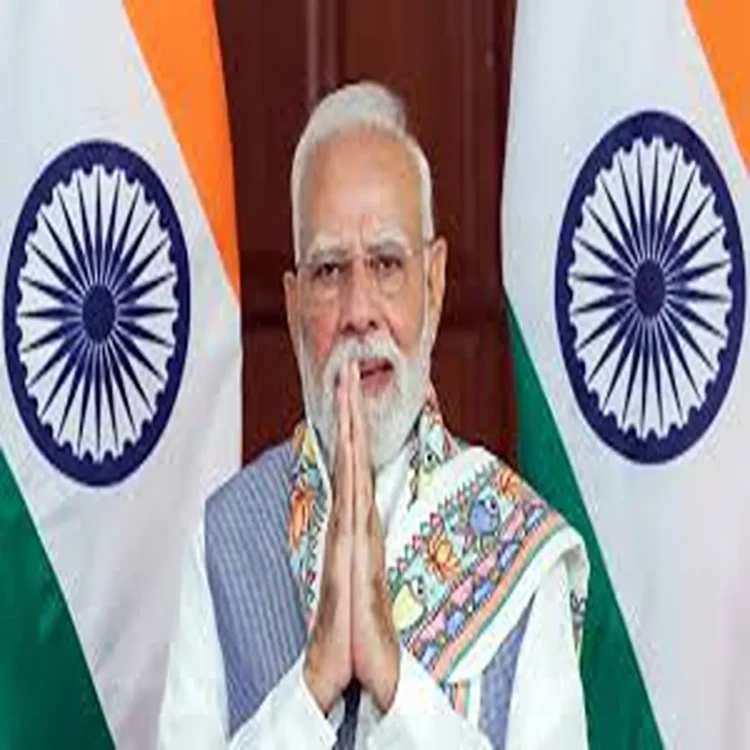
PMO Officials Extend Congratulations
In a message shared on social media platform X, the Prime Minister’s Office highlighted Modi’s continuous service and described his leadership over the past twelve years as being marked by stability, transparency, inclusive growth, and a strong focus on governance. Senior officials from the PMO welcomed the occasion and conveyed their appreciation for the Prime Minister’s contribution to the nation.
Among those who greeted him were Principal Secretary to the Prime Minister Dr. P. K. Mishra and Principal Secretary-2 Shaktikanta Das, who acknowledged the historic nature of the achievement.
Surpassing a Long-Standing Record
With this milestone, Prime Minister Modi has moved beyond the record previously held by India’s first Prime Minister, Jawaharlal Nehru. The comparison considers Nehru’s tenure after the country’s first general elections in 1952, excluding the period during which he headed the interim government following Independence.
Modi’s uninterrupted tenure began with his first oath-taking ceremony in 2014. He later secured another mandate in 2019 and returned to office for a third consecutive term in 2024, making him the longest continuously serving elected Prime Minister in India’s history.
Cabinet Passes Resolution in Recognition
Earlier in the day, the Union Cabinet adopted a formal resolution celebrating the achievement. Cabinet members reportedly greeted the Prime Minister with a standing ovation, recognizing the occasion as an important chapter in the country’s democratic journey.
According to the resolution, the milestone reflects the confidence placed in democratic institutions and the sustained support received from voters across multiple elections. The document described the achievement as an example of public trust and active participation in the democratic process.
Focus on Long-Term Public Service
The official statement accompanying the Cabinet resolution also noted that Prime Minister Modi is approaching nearly twenty-five years of continuous service as the head of a government at different levels. It emphasized qualities such as decisiveness, restraint, and responsiveness as defining characteristics of his leadership approach.
The statement further pointed out that India had not witnessed a third consecutive mandate for a ruling alliance in six decades, making the National Democratic Alliance’s return to power in 2024 a notable political development.
Major Infrastructure Projects During His Tenure
The years under the Modi-led administration have been associated with several large-scale infrastructure and development initiatives. These projects include the construction of the new Parliament building, the Central Vista redevelopment programme, and the transformation of Rajpath into Kartavya Path.
Other key initiatives launched or advanced during this period include the expansion of Vande Bharat train services, the Statue of Unity, the commissioning of INS Vikrant, progress on the Kashmir rail connectivity project, the development of Noida International Airport, the Namo Bharat Regional Rapid Transit System, and the Ganga Expressway.
Supporters of the government view these projects as symbols of modernization and nation-building, while they have also become defining features of the administration’s development agenda over the past decade.