
FATF – India Calls for Stronger Global Action Against Terror Financing Networks
FATF – India has strongly defended the role of the Financial Action Task Force (FATF), saying the international watchdog remains central to the global fight against money laundering and terror financing. Addressing a United Nations event, India’s Permanent Representative to the UN, Parvathaneni Harish, said attempts to weaken the credibility of the FATF often arise from countries unwilling to face objective international evaluation. Without naming any country, he stressed that governments must ensure their territory, financial systems and institutions are not used to support terrorist activities or destabilize other nations.
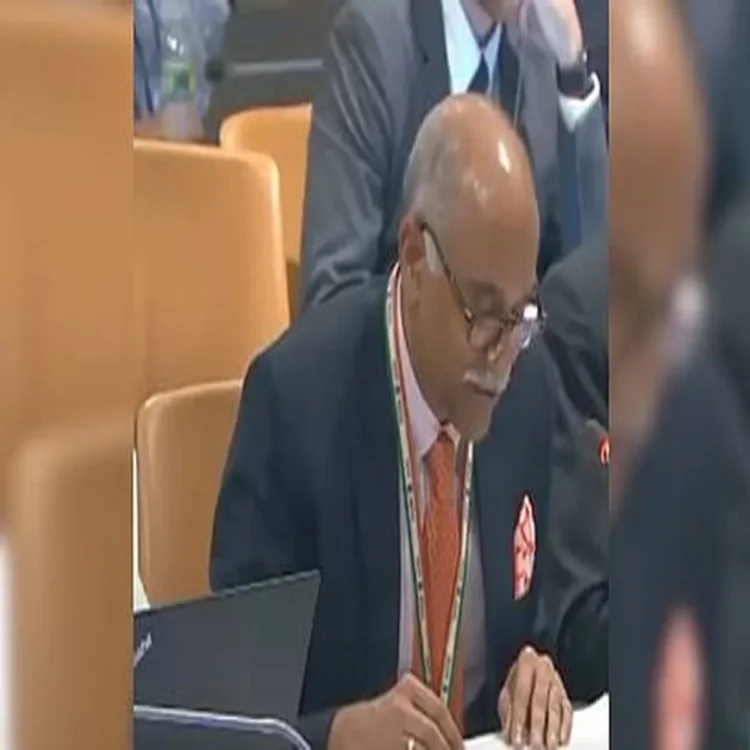
India Reaffirms Confidence in FATF Framework
Speaking during a side event of the 2026 UN Counter-Terrorism Week, Harish described the FATF as a technical and evidence-based institution built on internationally accepted standards. The session, jointly organized by India, France, the UN Counter-Terrorism Committee Executive Directorate (CTED), the United Nations Office of Counter-Terrorism (UNOCT), and the Global Internet Forum to Counter Terrorism (GIFCT), focused on tackling terror financing in an era of rapidly changing technology.
Harish said countries receiving negative FATF assessments should concentrate on fixing deficiencies, improving financial oversight and demonstrating sustained action against networks involved in financing terrorism. According to him, genuine compliance with global standards is the appropriate response rather than attempting to politicize discussions in international forums.
Cross-Border Terrorism Remains a Serious Challenge
Drawing on India’s own experience, Harish said the country has dealt with cross-border terrorism for decades and warned that technological developments have made tracking financial flows increasingly difficult. He noted that digital tools have created new channels through which terrorist organizations can raise, move and conceal funds.
India became a member of the FATF in 2010 and continues to play an active role in shaping global anti-money laundering and counter-terror financing standards. Earlier this month, Union Culture Secretary Vivek Aggarwal was appointed as the FATF Vice-President for the July 2026 to June 2027 term, further strengthening India’s presence within the organization.
Emerging Technologies Changing Terror Financing
Harish highlighted the growing use of crowdfunding platforms, prepaid financial instruments and digital reward systems by extremist groups. He said online tokens, virtual points and similar digital assets are increasingly being exploited to transfer value and support terrorist activities.
According to him, terrorist organizations quickly adapt to technologies that are inexpensive, efficient and lightly regulated. He emphasized that governments should respond through a balanced, risk-based regulatory system aligned with FATF standards while ensuring legitimate financial activity, humanitarian assistance and innovation are not unnecessarily restricted.
India’s Measures to Strengthen Financial Oversight
The Indian representative outlined several domestic initiatives aimed at reducing terror financing risks. These include bringing virtual asset service providers under anti-money laundering regulations, tightening verification requirements for centralized digital asset exchanges and contributing practical case studies to FATF guidance on emerging financial threats.
He also recalled India’s leadership of the UN Security Council Counter-Terrorism Committee in 2022. During that period, a special meeting held in New Delhi and Mumbai resulted in the adoption of the Delhi Declaration, which established guiding principles for addressing the misuse of new and emerging technologies by terrorist organizations. Harish said those principles continue to support international efforts in countering evolving security threats.
UN Chief Warns of Expanding Global Terror Threat
Addressing the Fourth High-Level Conference on Counter-Terrorism, UN Secretary-General Antonio Guterres said ongoing conflicts, economic hardship, inflation, food insecurity and mass displacement have created conditions that extremist groups continue to exploit. He noted that organizations linked to Al-Qaida, Da’esh and other terrorist networks remain active across several regions, including Africa, South Asia and the Middle East.
Guterres also warned that artificial intelligence, digital platforms, drones and other advanced technologies have significantly expanded the operational capabilities of terrorist groups. At the same time, he said these technologies can also strengthen law enforcement by improving threat detection, tracing illicit financial transactions and identifying early signs of radicalization. Stressing that terrorism transcends national borders, he called for greater international cooperation to address both security challenges and the underlying conditions that allow violent extremism to spread.