
Expressway – Delhi-Mumbai Corridor Nears Completion With Key Tunnel Set to Open
Expressway – The long-awaited Delhi-Mumbai Expressway is moving closer to full operation, with a major milestone expected later this month. Authorities are preparing to open the 4.9-kilometre tunnel near Kota in Rajasthan after June 20, marking a significant step toward completing one of India’s largest road infrastructure projects
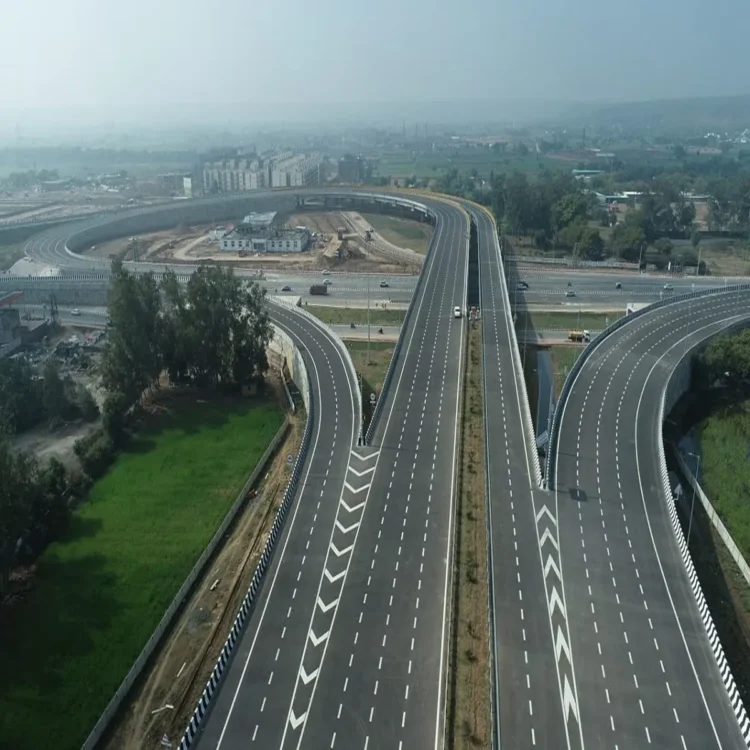
Strategic Tunnel Near Tiger Reserve
The tunnel, constructed beneath the environmentally sensitive Mukundara Hills Tiger Reserve, is considered a landmark engineering achievement. Designed as the country’s first eight-lane road tunnel passing through such a protected wildlife region, the structure allows uninterrupted highway movement while minimizing disturbances to the surrounding ecosystem.
Part of the 1,386-kilometre Delhi-Mumbai Expressway project, the tunnel plays a vital role in connecting previously incomplete stretches of the corridor. The entire expressway has been developed with an estimated investment of Rs 95,000 crore and is expected to transform long-distance road travel between northern and western India.
Faster Travel Across Major States
Once the expressway becomes fully operational, motorists are expected to complete the journey between Delhi and Mumbai in nearly 12 hours. Currently, the same trip often requires more than 24 hours by road, depending on traffic and route conditions.
The corridor passes through several important states, including Haryana, Rajasthan, Madhya Pradesh, Gujarat and Maharashtra. Improved road infrastructure is expected to provide smoother travel experiences while strengthening regional connectivity.
Advanced Safety and Monitoring Systems
Officials have incorporated several modern technologies inside the tunnel to improve safety and traffic management. According to project sources, artificial intelligence-powered cameras equipped with night-vision capabilities will continuously monitor vehicle movement.
The tunnel will also feature jet-fan-based ventilation systems to maintain air circulation. Additionally, authorities have secured an FM radio broadcasting facility that can be used to communicate important instructions directly to drivers during emergencies or unusual traffic situations.
Years of Construction in Sensitive Terrain
Construction of the tunnel required nearly four and a half years due to the ecological importance of the tiger reserve area. Special planning and execution measures were necessary to balance infrastructure development with environmental protection requirements.
The tunnel also eliminates the need for motorists to use a longer and more winding route around the reserve, making travel more efficient while preserving wildlife habitats.
Economic and Transport Benefits Expected
Industry observers believe the expressway will help reduce transportation expenses and improve logistics efficiency for businesses operating across the connected regions. Enhanced road connectivity is also expected to support economic growth in cities located along the corridor, including Kota, Ratlam and Bharuch.
For transport operators and commercial vehicles, shorter travel times could lead to better fuel efficiency and faster movement of goods between key industrial and commercial centers.
Several Sections Already Operational
A number of segments of the expressway have already been opened to traffic. The Gurugram-Dausa stretch is currently in use, while most sections between Dausa and Vadodara are either operational or approaching completion. Earlier this year, authorities also commenced trial operations on the Godhra-Vadodara segment in Gujarat.
Designed as an access-controlled highway, the expressway supports vehicle speeds of up to 120 kilometres per hour, subject to traffic regulations and official speed limits. The absence of traffic signals and grade crossings is expected to contribute to safer and more efficient travel.
Route Extends Across Six States
The expressway begins near Sohna in Gurugram, Haryana, and stretches across six states before reaching the Mumbai region near Jawaharlal Nehru Port Trust. The route includes approximately 129 kilometres in Haryana, 373 kilometres in Rajasthan, around 244 kilometres in Madhya Pradesh, and nearly 426 kilometres in Gujarat before entering Maharashtra.
Planners have also incorporated a 21-metre-wide median, allowing future expansion from eight lanes to twelve lanes if traffic demand increases in the coming years.