
EnergySecurity – Doval Highlights Hormuz Reopening at Key BRICS Security Meet
EnergySecurity – India’s National Security Advisor Ajit Doval on Tuesday welcomed the recent understanding reached between the United States and Iran, describing the reopening of the Strait of Hormuz as a positive step for international energy stability. Speaking at the BRICS National Security Advisors’ meeting in New Delhi, Doval said the development could ease pressure on global supply chains and support several critical industries dependent on uninterrupted energy and raw material flows.
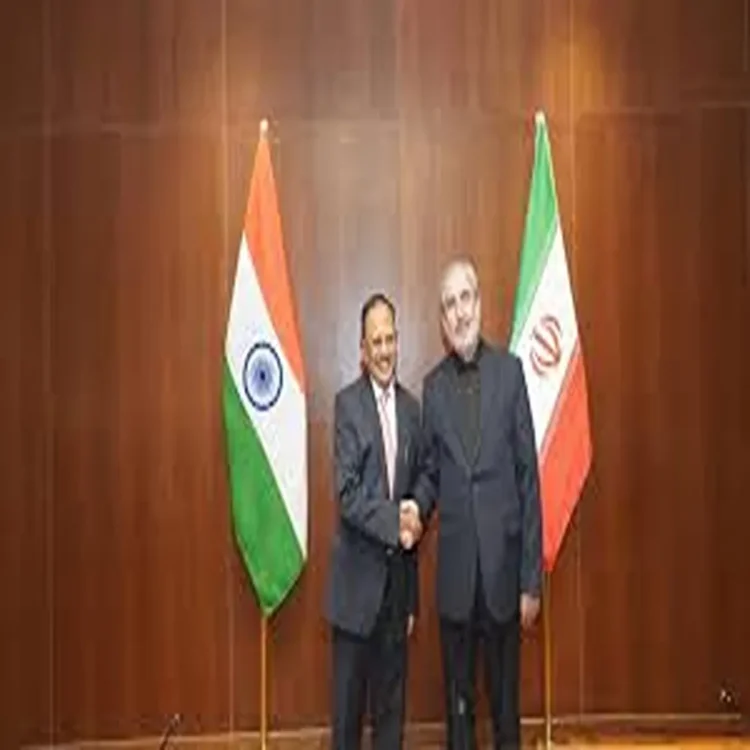
Reopening of Strait Seen as Positive Development
Addressing senior security officials from BRICS member countries, Doval said India views the agreement between Washington and Tehran with cautious optimism. According to him, the reopening of the strategically important Strait of Hormuz is expected to reduce logistical disruptions that have affected international trade and energy transportation.
He noted that smoother movement through the waterway could help address shortages impacting sectors such as fertilizers and chemicals, both of which rely heavily on stable global supply networks. The Strait of Hormuz remains one of the world’s most significant maritime routes for oil and energy shipments, making developments in the region closely watched by governments and markets alike.
BRICS Meeting Held Amid Global Uncertainty
Doval used the occasion to underline the broader international challenges confronting nations today. He said the world is currently experiencing a period marked by geopolitical tensions, economic pressures, and rapid technological disruptions that are reshaping the global security environment.
According to the National Security Advisor, traditional mechanisms designed to prevent or resolve conflicts are increasingly struggling to keep pace with evolving threats. He suggested that many existing institutions are finding it difficult to effectively respond to modern crises, creating a need for stronger international cooperation.
Call for Greater Role by BRICS Nations
Emphasizing the importance of the BRICS grouping, Doval said member nations have a responsibility to contribute meaningfully to global stability. He pointed out that the international system is undergoing significant changes, while established methods of conflict resolution are becoming less effective.
In this context, he urged member countries to reflect on the role BRICS can play in supporting peace, development, and cooperation. He stressed that the grouping has the potential to offer constructive solutions at a time when multilateral approaches are facing increasing challenges.
Growing Influence of the Expanded Bloc
New Delhi hosted the gathering as India currently holds the chairmanship of BRICS. The organization, initially formed by Brazil, Russia, India, China, and South Africa, has expanded considerably in recent years.
Egypt, Ethiopia, Iran, and the United Arab Emirates joined the bloc in 2024, while Indonesia became a member in 2025. With eleven member nations, BRICS now represents a substantial share of the world’s population, economic output, and international trade.
Doval highlighted that the grouping was originally created to encourage cooperation among emerging economies and strengthen the voice of developing nations in global affairs. Over time, he said, its objectives have also included advocating reforms in international governance structures and improving institutional effectiveness.
Focus on Emerging Security Threats
A significant portion of the discussions is expected to focus on security concerns that extend beyond conventional military challenges. Doval warned that emerging threats increasingly operate across borders and often bypass traditional response mechanisms.
He referred to risks arising from rapidly evolving technologies and other non-traditional security challenges that have become more prominent in recent years. Such threats, he said, require coordinated responses and deeper collaboration among nations.
The BRICS security conclave will also review the work carried out by two joint working groups dedicated to counter-terrorism cooperation. Officials are expected to discuss future strategies aimed at strengthening collective responses to evolving security risks.
Concluding his remarks, Doval described BRICS as a coalition committed to peace, progress, development, and cooperation, adding that the group’s collective efforts could play an important role in addressing the complex challenges facing the international community.