
Elections – Opposition Flags Concerns Over Contractual Staff in Vote Counting
Elections – Concerns over the conduct of vote counting in parts of West Bengal have intensified after the Leader of the Opposition in the state assembly, Suvendu Adhikari, questioned the use of contractual personnel in key election duties. The issue relates specifically to arrangements in the Pingla and Daspur assembly constituencies, where counting is scheduled to take place shortly.
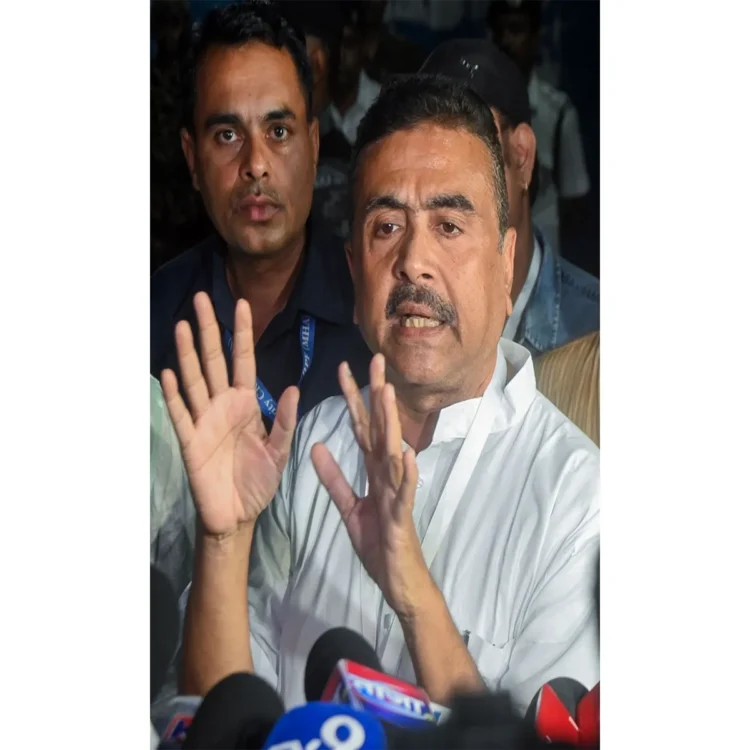
Concerns Over Staffing in Sensitive Election Duties
Adhikari has raised objections to the involvement of non-permanent staff in handling crucial aspects of the counting process. According to him, individuals such as contractual data entry operators, assistants, and local service workers have been assigned roles that involve dealing with Electronic Voting Machines (EVMs), VVPAT devices, and postal ballots.
He argued that such responsibilities require a higher level of accountability and institutional oversight, which contractual workers may not be able to provide due to the nature of their employment. The opposition leader suggested that these roles should be reserved for permanent government officials to ensure neutrality and reliability.
Allegations of Potential Political Influence
The BJP leader further claimed that contractual staff could be more susceptible to external pressure, raising questions about the fairness of the process. He described the situation as a serious challenge to democratic norms and urged immediate corrective action.
In his remarks, Adhikari pointed out that official documents indicate the inclusion of temporary staff across multiple stages of the counting procedure, including compilation teams, EVM handling, and sealing operations. He said such widespread deployment of non-regular personnel was concerning given the high stakes involved in determining electoral outcomes.
Appeal to Election Authorities
Calling for intervention, Adhikari urged the Election Commission of India to review and revise the staffing decisions. He emphasized that only full-time government employees should be entrusted with vote counting responsibilities to maintain public confidence in the system.
He also sought a broader audit of personnel नियुक्तments in Paschim Medinipur district, suggesting that all contractual or auxiliary staff be removed from counting centers. According to him, such steps are necessary to uphold the credibility of the electoral process.
Political Context and High-Stakes Contest
The issue emerges against the backdrop of a politically charged environment in West Bengal. Adhikari himself is contesting a high-profile electoral battle, while Chief Minister Mamata Banerjee remains a central figure in the state’s political landscape.
With both ruling and opposition parties closely monitoring developments, any perceived irregularities in the counting process have drawn heightened scrutiny. The debate over staffing reflects broader concerns about fairness and transparency in elections.
Legal Developments Add to Tension
The controversy has also reached the judiciary. The Supreme Court recently set up a special bench to examine a petition filed by the ruling party challenging earlier decisions related to the deployment of personnel for counting duties. The case follows a prior ruling by the Calcutta High Court, which had rejected the plea.
The Supreme Court bench is expected to hear the matter as counting day approaches, adding another layer of attention to the issue.
Earlier Objections from Ruling Party
Interestingly, the debate over staffing is not limited to one side. The ruling party had earlier expressed reservations about the deployment of central government and public sector employees for election duties. This reflects a broader disagreement between political parties over who should be entrusted with overseeing critical stages of the electoral process.
Counting Day Approaches Amid Heightened Scrutiny
With vote counting scheduled for May 4, authorities are under pressure to ensure that all procedures are conducted in a transparent and impartial manner. The Election Commission’s response to these concerns will be closely watched by both political stakeholders and the public.
As the situation unfolds, the focus remains on maintaining trust in the democratic system and ensuring that the final mandate accurately reflects the will of the voters.