
Elections – Opposition Alliance Faces Strain After Key State Setbacks
Elections – The latest Assembly election outcomes have altered the political landscape for India’s opposition alliance, raising fresh questions about its unity and future strategy. Several prominent regional parties within the bloc have faced electoral losses in their strongholds, creating uncertainty over how the alliance will move forward in the coming months.
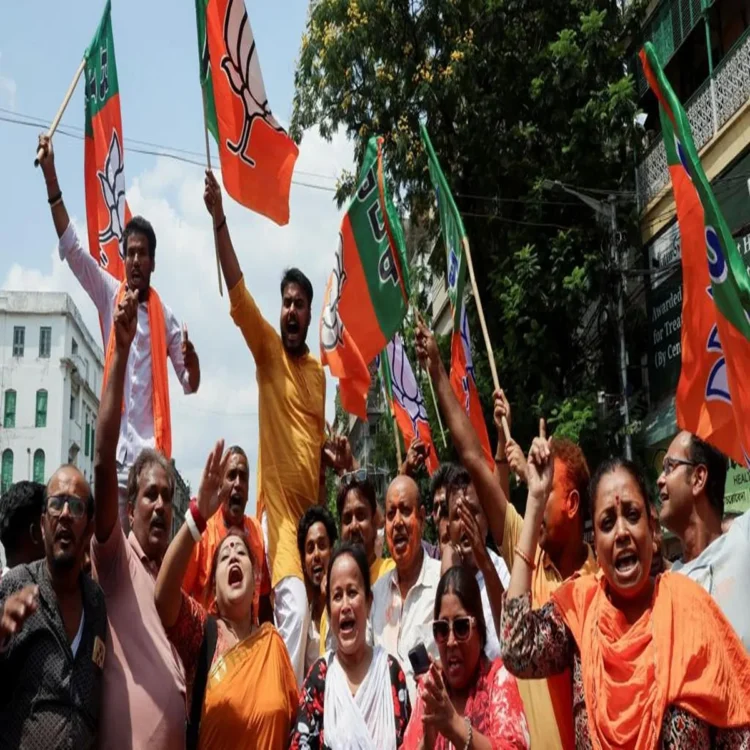
Regional losses reshape alliance strength
In three crucial states, major opposition players encountered disappointing results. The Trinamool Congress struggled in West Bengal, the Dravida Munnetra Kazhagam lost ground in Tamil Nadu, and the Left parties faced setbacks in Kerala. These developments have collectively weakened the alliance’s numerical strength and reduced its influence across key regions.
The results are particularly significant because these parties have traditionally formed the backbone of the opposition’s regional presence. Their reduced performance has shifted attention toward the Congress, which now appears relatively stronger within the grouping after a notable showing in Kerala.
Congress gains but faces new challenges
Although the Congress has benefited from improved results in certain areas, its position within the alliance has become more complicated. With regional partners weakened, expectations from the party have grown, but so have disagreements over leadership and decision-making.
Early signs of tension have begun to emerge, especially around questions of coordination and future electoral planning. Political observers note that the Congress may now need to balance its expanded role with maintaining cooperative ties with its allies.
Tamil Nadu sees shifting political equations
The outcome in Tamil Nadu has triggered fresh speculation about changing alliances. The DMK’s reduced performance has opened the door to discussions about alternative political alignments.
There are indications that the Congress could explore closer engagement with emerging political forces, including actor Vijay’s Tamilaga Vettri Kazhagam, particularly if future elections produce a fragmented mandate. Such a move, however, could further strain its longstanding partnership with the DMK.
A public message from a senior Congress leader congratulating Vijay on his party’s performance has added to these discussions, with many interpreting it as a signal of evolving political possibilities in the state.
Importance of DMK within the opposition
The DMK’s weakened position is seen as a significant setback for the broader alliance. The party has played a central role in opposing the ruling government’s policies, especially on issues concerning southern states.
With a substantial number of parliamentary representatives, the DMK has been a key contributor to the opposition’s overall strength at the national level. Any decline in its influence could affect the alliance’s ability to present a unified challenge in future contests.
Campaign tensions come into focus
Differences among alliance partners were already visible before the elections. Disagreements over seat-sharing arrangements, campaign strategies, and leadership roles had surfaced during the campaign period.
Questions were also raised about the level of coordination between top leaders, including the absence of joint appearances in certain regions. Additionally, sharp remarks exchanged during campaign rallies in states like West Bengal and Kerala drew criticism and highlighted internal friction.
Setbacks raise strategic concerns
The recent results have not only impacted the alliance’s electoral strength but also brought deeper structural issues into focus. Analysts suggest that the opposition bloc may now need to revisit its leadership model, improve coordination among partners, and develop a clearer long-term strategy.
The scale of defeat in states such as West Bengal has particularly raised concerns about the alliance’s ability to counter its main rival effectively. The idea of a united opposition front now faces renewed scrutiny, as parties reassess their positions and priorities.
Looking ahead to future contests
With several important elections on the horizon, the opposition alliance faces a critical period of introspection. Rebuilding trust among partners, addressing internal disagreements, and presenting a cohesive strategy will be essential for its survival and relevance.
While the Congress may temporarily benefit from the changing dynamics, sustaining unity within the alliance will require careful political management. The coming months are likely to determine whether the bloc can regroup and strengthen its position or continue to face fragmentation.