
Elections – Kharagpur Contest Shifts Focus From Development to Identity Debate
Elections – Kharagpur, a key railway and industrial town in West Bengal’s Paschim Medinipur district, finds itself caught between its economic significance and persistent civic challenges. Despite its prominence, many residents continue to face concerns such as inadequate infrastructure, pollution, and inconsistent access to essential services. As the Kharagpur Sadar assembly seat heads to polls, these everyday issues appear to have taken a backseat to a politically charged narrative centred on identity.
Identity Politics Dominates Campaign Narrative
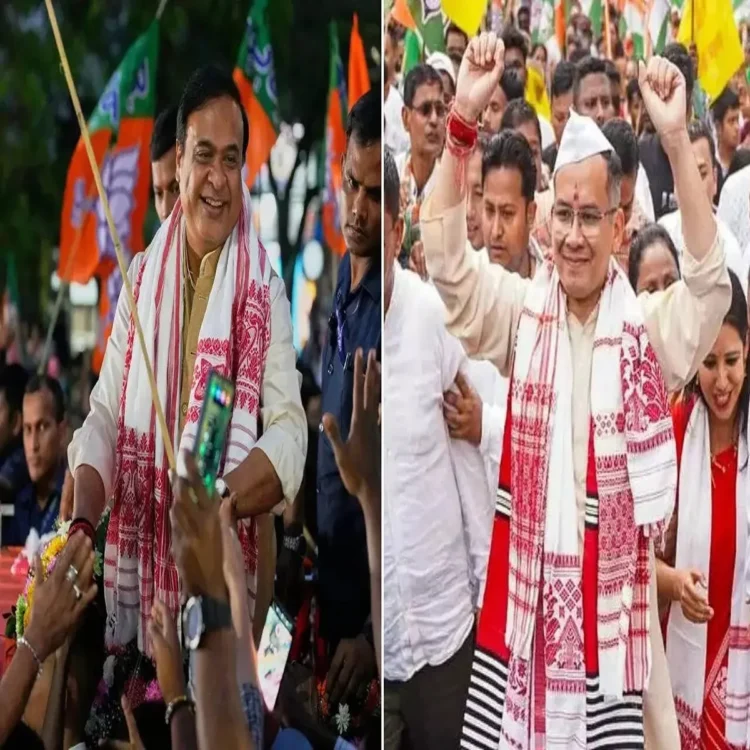
The electoral contest between the Trinamool Congress (TMC) and the Bharatiya Janata Party (BJP) has increasingly revolved around the idea of “insider versus outsider.” TMC candidate Pradip Sarkar has positioned himself as a native representative deeply connected to the region, while questioning the local credentials of BJP’s Dilip Ghosh.
Ghosh, however, has strongly rejected these claims, pointing to his earlier tenure as the constituency’s MLA and his continued engagement with local party workers. The debate has intensified campaign rhetoric, with both leaders framing their connection to Kharagpur as central to their appeal among voters.
Political Comebacks and Electoral Stakes
Both candidates enter the race with the aim of reclaiming lost ground. Sarkar, who secured a significant victory in the 2019 by-election with nearly half of the vote share, is seeking to rebuild that momentum. His earlier win marked the first time TMC captured this seat since its establishment in 1957.
Ghosh, on the other hand, is attempting a return to familiar territory after previously representing the constituency in 2016 before moving to national politics. Despite facing a defeat in the 2024 Lok Sabha elections, he has described his current candidature as a return to his political roots and an opportunity to contribute to the party’s broader ambitions in the state.
Shifting Alliances and Campaign Strategies
The BJP has sought to present a united front during the campaign, with senior leaders joining Ghosh during public events. This coordinated approach signals the party’s intent to strengthen its position in West Bengal beyond individual constituencies.
Meanwhile, Sarkar has criticised the BJP’s candidate selection strategy, alleging that the party has frequently relied on leaders without sustained local presence. Such exchanges have added further intensity to an already competitive electoral environment.
Kharagpur’s Economic Importance and Changing Demographics
Kharagpur holds a unique place in the state’s economic landscape. It is home to one of India’s largest railway workshops and the headquarters of the South Eastern Railway’s Kharagpur Division. The presence of a major Indian Institute of Technology campus further enhances its national importance.
The town’s population reflects a diverse mix of linguistic and cultural backgrounds. While Bengali speakers form a significant portion, a large number of residents communicate in Hindi, Telugu, Odia, Urdu, and other languages. Over the years, migration from different parts of the country has contributed to noticeable demographic changes, influencing both social dynamics and political calculations.
Civic Concerns Remain Unresolved
Despite its industrial profile, residents continue to express dissatisfaction with basic amenities. Issues such as unreliable train services, increasing pollution, and pressure on civic infrastructure remain prominent. Some locals have pointed out that delays in railway operations have pushed commuters to rely more on road transport.
Others have highlighted the mismatch between population growth and infrastructure development. Concerns about employment opportunities have also surfaced, with many educated youths reportedly leaving the town in search of better prospects elsewhere.
Voter Expectations Ahead of Polling Day
As campaigning intensifies, voters appear to be weighing both identity-based appeals and tangible development concerns. While political narratives have largely focused on belonging and representation, many residents argue that governance and infrastructure should take precedence.
Kharagpur Sadar will vote in the first phase of the elections on April 23, with counting scheduled for May 4. The outcome is expected to reflect not only party strength but also how effectively candidates address the gap between political messaging and everyday realities.