
EducationReforms – Parliamentary Panel Seeks Clear Timeline for Exam System Overhaul
EducationReforms – Concerns over the integrity of competitive examinations have once again come under focus, with a parliamentary committee urging the Ministry of Education to lay out a clear and time-bound strategy for implementing reforms aimed at improving the examination system. The panel noted that despite several corrective measures introduced in recent years, irregularities in major examinations continue to surface, affecting students and undermining public confidence.
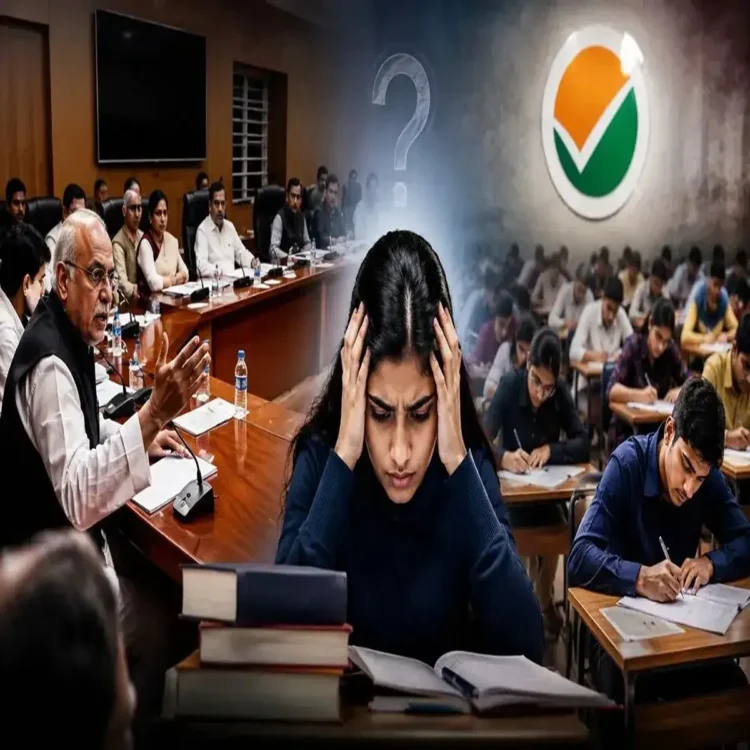
Committee Reviews Progress on Earlier Recommendations
The Parliamentary Standing Committee on Education, Women, Children, Youth and Sports recently submitted its action-taken report concerning recommendations linked to higher education funding and governance. The report was presented to the Chairman of the Rajya Sabha and reviewed the steps taken by the government and related agencies to address examination-related challenges.
The committee, led by Rajya Sabha member Digvijaya Singh, acknowledged ongoing reform efforts but stressed that more decisive action is required to prevent future disruptions in national-level entrance and recruitment examinations.
Focus on Strengthening the National Testing Agency
Members of the panel supported the earlier observation made by Union Education Minister Dharmendra Pradhan that substantial improvements are still needed within the National Testing Agency (NTA). The committee called upon the agency to accelerate the execution of recommendations made by the high-level reform panel headed by former ISRO chief K. Radhakrishnan.
According to the report, wider consultations should be conducted with students, educational institutions, experts, and other stakeholders to establish a reliable and secure examination framework. The objective, the committee noted, is to create procedures capable of ensuring smooth and transparent conduct of large-scale competitive tests across the country.
Continued Irregularities Raise Student Concerns
While recognizing that the Ministry of Education has initiated reforms, including the formation of a high-powered steering committee to monitor changes, the parliamentary panel pointed out that examination-related issues have not completely disappeared.
Instances of irregularities have continued to emerge, resulting in cancellations and uncertainty. Such developments, the committee observed, create stress among students and families who invest considerable time and resources in preparing for competitive examinations.
To address these concerns, the panel recommended that the Department of Higher Education release a detailed roadmap outlining specific timelines and milestones for implementing the reform measures suggested by the expert committee.
Proposal for a Nationwide Blacklist System
The report also drew attention to the role of external firms involved in examination-related services such as paper preparation, administrative support, and evaluation processes. Committee members expressed concern that some entities penalized or blacklisted by one institution may still be able to secure contracts elsewhere.
To improve accountability and consistency, the panel proposed the creation of a nationwide blacklist mechanism that could be adopted across institutions and examination bodies. Such a system, it suggested, would help prevent questionable vendors from participating in sensitive examination activities.
Government Clarifies NTA Operations
Responding to the observations, the Department of Higher Education stated that critical functions of the National Testing Agency, including question paper preparation and answer evaluation, are handled internally and are not outsourced.
The department further explained that the agency maintains records of vendors that have faced penalties and requires self-disclosure provisions during procurement processes. These measures, officials said, are intended to strengthen oversight and ensure compliance with established standards.
Attention on Financial Resources
The committee also reviewed the financial position of the NTA and noted that the agency had accumulated an estimated surplus of ₹448 crore over a six-year period. Members suggested that these resources should be directed toward enhancing testing infrastructure, technology systems, and regulatory capabilities.
In its response, the department said the NTA functions as a self-sustaining organization. Surplus funds are generally utilized for preparations related to upcoming examination cycles, while additional allocations are made based on operational requirements.