
Education – Stalin Raises Concerns Over CBSE Language Policy Changes
Education – Tamil Nadu Chief Minister M.K. Stalin has voiced strong opposition to the Central Board of Secondary Education’s newly proposed curriculum framework, describing it as a move that could disturb the balance of linguistic diversity across the country. Speaking on Saturday, he argued that the policy risks giving undue importance to Hindi while sidelining regional languages spoken in various states.
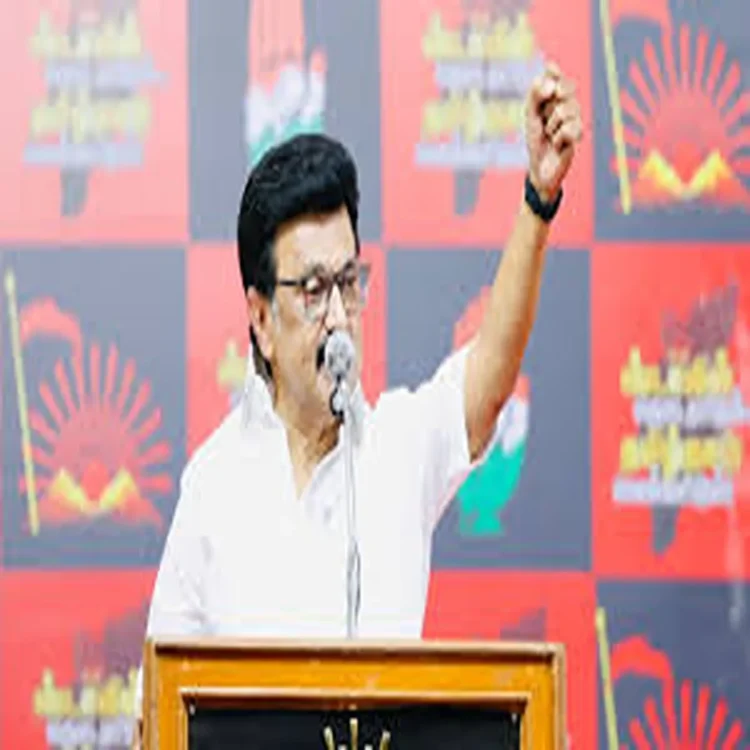
Concerns Over Language Balance
According to Stalin, the framework introduces structural changes that may disproportionately benefit Hindi-speaking regions. He suggested that such a shift could create an imbalance, placing students from non-Hindi-speaking states at a disadvantage. The Chief Minister emphasized that India’s strength lies in its linguistic diversity, and any policy must respect that foundation rather than weaken it.
He further noted that the proposal could increase academic pressure on students and teachers, particularly in states where Hindi is not commonly used. The requirement to learn an additional language, he argued, might not be equally practical for all regions.
Three-Language Policy Rollout
The CBSE plans to introduce the revised three-language formula in phases starting from the 2026–27 academic session, beginning with students in Class 6. Under this approach, learners will be expected to study three languages, with at least two being Indian languages.
While the policy aims to promote linguistic diversity, Stalin questioned its implementation, suggesting that it could effectively result in compulsory Hindi education in certain states. He pointed out that the lack of clarity regarding reciprocal requirements for Hindi-speaking states raises concerns about fairness.
Federalism and Regional Identity
The Chief Minister framed the issue as one that goes beyond academics, linking it to the broader principles of federalism. He argued that education policies should not be designed in a way that appears to centralize authority at the expense of state autonomy.
Stalin warned that imposing a uniform approach without considering regional differences could undermine trust between the Union government and individual states. He stressed that linguistic identity is closely tied to cultural heritage and must be treated with sensitivity.
Questions on Policy Reciprocity
A key point raised by Stalin was the absence of clear provisions requiring students in Hindi-speaking states to learn languages from southern or eastern regions. He questioned whether there would be equal emphasis on languages such as Tamil, Telugu, Kannada, Malayalam, Bengali, or Marathi.
He argued that without such reciprocity, the policy could be perceived as one-sided. According to him, true promotion of Indian languages should involve mutual learning and equal representation across all regions.
Criticism of Implementation Gaps
Stalin also highlighted what he described as inconsistencies in the Union government’s approach. He referred to the limited presence of Tamil language instruction in certain central schools and the shortage of qualified teachers as examples of gaps that need attention.
He suggested that before introducing broader language mandates, efforts should be made to strengthen the existing infrastructure for teaching regional languages across the country.
Call for Political Response
In his remarks, the Chief Minister called upon political parties in Tamil Nadu, including opposition groups, to take a clear stand on the issue. He urged them to consider the long-term implications for students and regional identity.
Stalin emphasized that the debate should remain focused on protecting educational fairness and ensuring that policies do not disadvantage any particular group of students.
Broader Implications for Education
The discussion around the CBSE framework highlights the ongoing challenge of balancing national integration with regional diversity. As the policy moves toward implementation, it is likely to generate further dialogue among states, educators, and policymakers.
Observers note that the success of such reforms will depend on transparent communication, equitable implementation, and sensitivity to India’s multilingual character.