
Education – Madras High Court Closes PIL After Tamil Nadu Bars Politics in Schools
Education –The Madras High Court has disposed of a Public Interest Litigation (PIL) that sought to stop the participation of school and college students in political activities after the Tamil Nadu government informed the court that it had already introduced measures to prevent such events on educational campuses. The petitioner decided to withdraw the case once the government confirmed that a circular banning political programmes in schools had been issued earlier this month.
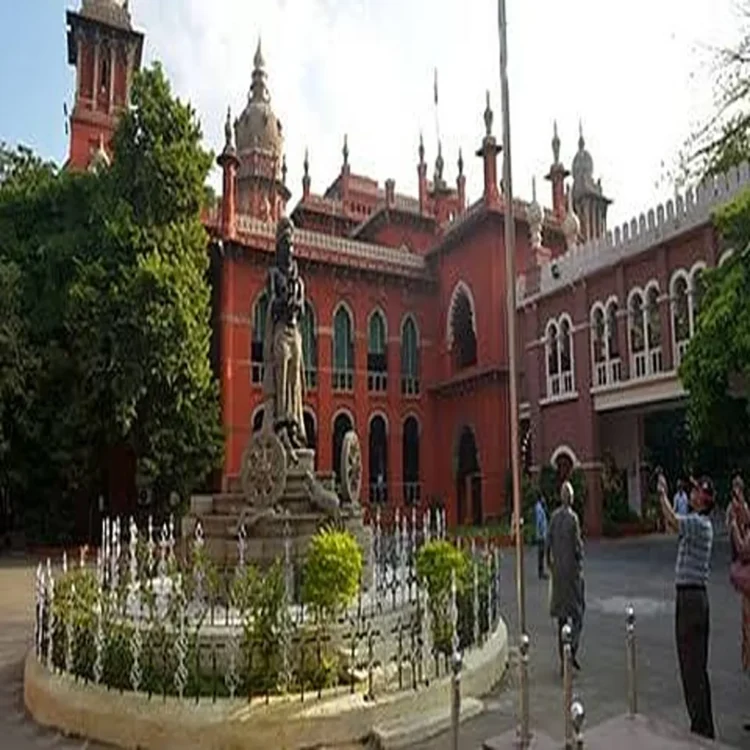
Government Informs Court of Existing Ban
A Division Bench headed by Chief Justice S.A. Dharmadhikari and Justice G. Arul Murugan took note of the state’s submission that a government circular dated July 10 directs schools to keep political programmes off their premises. Based on this clarification, the Bench accepted the petitioner’s request to withdraw the PIL and formally dismissed the matter as withdrawn.
Representing the state, Advocate General Vijay Narayan told the court that the government had already acted to ensure educational institutions remain focused solely on academic activities and are not used for political purposes. The judges also pointed out that several petitions dealing with the same issue are already pending before the High Court and questioned the necessity of filing multiple cases seeking similar relief.
Petition Raised Concerns Over Student Participation
The petition had been filed by V.P.B. Paramasivam, State Secretary of the AIADMK Ilaingar Matrum Ilampengal Pasarai from Dindigul district. In his plea, he claimed that students from schools and colleges were increasingly being involved in programmes organised by political parties and their representatives, which he argued could distract them from their education.
According to the petition, students were allegedly encouraged to take part in political campaigns, rallies, slogan chanting, flag carrying and other activities unrelated to academics. The petitioner maintained that educational institutions should remain free from political influence so that students can focus on learning without external pressure.
Constitutional Safeguards Highlighted
The PIL argued that involving students in political events could undermine the constitutional protections granted to children. It referred to Article 21A, which guarantees the right to education, and Article 39(f), which seeks to protect the welfare and healthy development of children.
The petitioner also alleged that students attending certain political events were asked or encouraged to raise slogans, including “Vijay Anna” and “Vijay Mama.” He argued that such practices were inconsistent with the principle that schools and colleges should function as politically neutral spaces dedicated to education and student welfare.
Requests Made Before Withdrawal
Before withdrawing the case, the petitioner had asked the court to direct the Tamil Nadu government to prohibit the use of students and educational institutions for political activities. The plea also sought disciplinary action against individuals found responsible for such incidents.
Additionally, the petition requested the creation of comprehensive state-wide guidelines, a monitoring system and a grievance redressal mechanism to ensure that educational institutions remain free from political influence. These measures, according to the petitioner, would strengthen the protection of students’ constitutional and legal rights.
Proceedings Conclude After State Action
During the hearing, it was also brought to the court’s attention that the petitioner had submitted a representation to the Union Ministry of Education on June 30, 2026, requesting an inquiry into the reported incidents and appropriate intervention.
However, after the Tamil Nadu government informed the High Court that preventive steps had already been implemented through the official circular, the petitioner chose not to pursue the litigation further. With the withdrawal accepted by the Bench, the proceedings came to an end, while the issue continues to be addressed through existing government measures and other related petitions pending before the court.