
DisasterManagement – Amit Shah Highlights India’s Push for Zero Heatwave Fatalities
DisasterManagement – India is strengthening its disaster response framework with a renewed focus on preventing deaths caused by extreme heat and other climate-related emergencies.
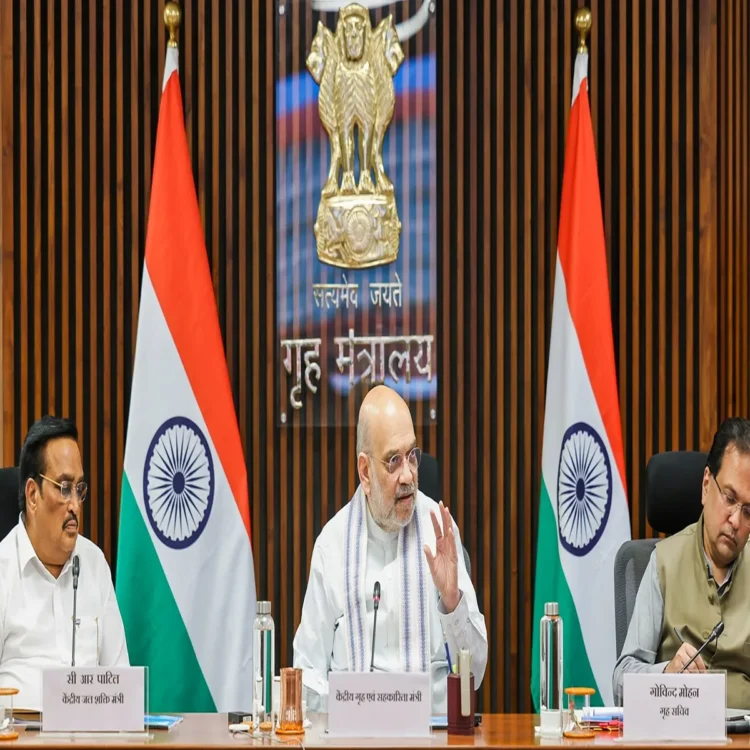
Union Home Minister Amit Shah on Thursday announced that the Centre has prepared a long-term strategy aimed at eliminating human casualties caused by heat waves in the coming years. Addressing a gathering during a ceremony held for the National Disaster Response Force, Shah underlined the importance of adopting a preventive disaster management system instead of acting only after tragedies occur.
The minister made these remarks after presenting the prestigious President’s Colour to the National Disaster Response Force at the force’s 8th battalion campus. The honour is awarded to military and police units for distinguished service to the nation and is regarded as one of the highest recognitions for uniformed organisations in India.
Recognition for Two Decades of Service
The award marks an important milestone for the NDRF, which completed 20 years since its formation. Established in 2006 as a specialised federal force, the agency has been responsible for carrying out rescue and relief operations during natural disasters and major emergencies across the country.
Speaking at the event, Shah said the President’s Colour symbolises recognition not only for the NDRF but also for the combined efforts of state disaster response teams, local administrations, volunteers, and organisations such as the National Cadet Corps and National Service Scheme. He noted that these groups have played a crucial role in strengthening India’s emergency response system over the years.
According to the Home Minister, the NDRF has earned the confidence of people both within India and internationally through its dedicated work during floods, earthquakes, cyclones, building collapses, and other emergencies.
Government Focus on Reducing Disaster Impact
Shah stated that the central government’s priority is to ensure minimum loss of life and property during disasters. He said the Ministry of Home Affairs has prepared a detailed framework to tackle the growing challenge of heat waves, which have become increasingly severe in several parts of India due to rising temperatures and changing climate patterns.
He expressed confidence that with proper planning, coordination, and awareness campaigns, the country would be able to significantly reduce deaths linked to extreme heat conditions in the coming years.
The minister also emphasised that India’s disaster management policies have shifted from a reactive system to a proactive one. Instead of responding only after damage has occurred, authorities are now focusing on advance preparation, risk assessment, early warning systems, and public safety measures.
India’s Expanding Role in Global Disaster Response
During his address, Shah said India has established itself as an important global force in disaster management and humanitarian assistance. He highlighted the country’s role as a “first responder” in regional emergencies and asked disaster response agencies to prepare for future challenges arising from climate change and global warming.
The NDRF currently operates 16 battalions deployed in different regions of the country and has an overall strength of nearly 18,000 personnel. These teams are trained to handle a wide range of emergencies, including floods, earthquakes, industrial accidents, landslides, and chemical disasters.
NDRF Director General Piyush Anand also addressed the gathering and said the force has carried out more than 12,000 rescue and relief operations since its establishment. He added that the organisation continues to upgrade its training methods and disaster response capabilities to meet evolving challenges.
The ceremony reflected the growing importance of disaster preparedness in India at a time when extreme weather events are becoming more frequent across the region.