
DelhiAssembly – New House Committees Set to Strengthen Legislative Oversight
DelhiAssembly – The Delhi Assembly has taken a major institutional step by establishing 32 House committees for the 2026–27 legislative session, aiming to improve scrutiny of government functioning and enhance discussions on issues affecting residents of the national capital.
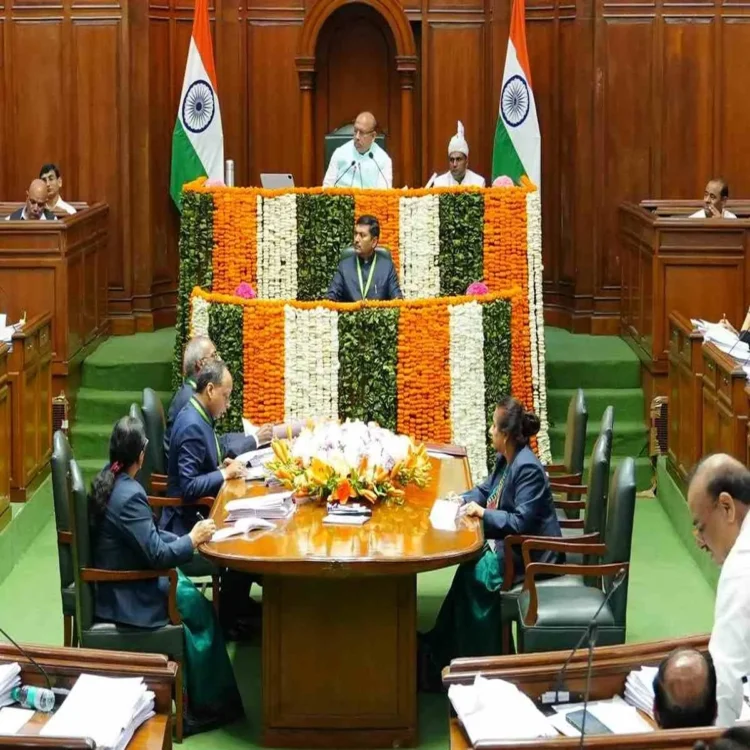
The newly constituted committees are expected to play an important role in supporting the Assembly’s legislative responsibilities. According to the Assembly Secretariat, these bodies will help ensure detailed examination of policy matters, government commitments, and public welfare concerns. Officials believe the diverse experience of committee members will contribute to stronger accountability and more effective governance.
Key Leadership Roles Assigned
Several of the newly formed committees will be led by senior members of the Assembly. Speaker Vijender Gupta has been entrusted with chairing five major panels, including the Business Advisory Committee, the Committee on Private Members’ Bills and Resolutions, the Rules Committee, the General Purposes Committee, and the Library Committee.
Deputy Speaker Mohan Singh Bisht will oversee three committees responsible for reviewing government assurances, Assembly questions and references, and matters related to peace and harmony.
These assignments place both the Speaker and Deputy Speaker at the center of the Assembly’s committee-driven legislative process.
Youngest MLA Given Education Committee Responsibility
Among the notable appointments, Rajinder Nagar MLA Umang Bajaj, the youngest member of the House at 32 years of age, has been selected to head the Department-Related Standing Committee on Education.
The committee is responsible for examining issues connected with education, training programs, arts, culture, and sports. The appointment reflects the Assembly’s effort to involve younger legislators in key policy areas that directly impact future generations.
Representation for Both BJP and AAP
The committee structure reflects the composition of the Delhi Assembly, where the Bharatiya Janata Party (BJP) holds 48 seats and the Aam Aadmi Party (AAP) has 22 legislators.
AAP members have also been assigned leadership responsibilities in select committees. Gopal Rai will chair the Committee on Papers Laid on the Table, while Pravesh Ratn has been appointed head of the Committee on Delegated Legislation.
Assembly officials stated that representation across committees has been allocated proportionally, ensuring participation from both ruling and opposition members in the legislative review process.
Privileges Committee and Other Special Panels
The Committee of Privileges will be headed by BJP legislator Parduymn Singh Rajput. Other members include BJP MLAs Abhay Kumar Verma, Ajay Kumar Mahawar, Neeraj Basoya, Ravi Kant, Satish Upadhyay, and Surya Prakash Khatri, along with AAP legislators Ram Singh Netaji and Surendra Kumar.
Another specialized committee dealing with alleged violations of protocol and inappropriate conduct by government officials toward elected representatives will function under former minister and BJP MLA Kailash Gahlot.
The committee dedicated to matters concerning the Municipal Corporation of Delhi (MCD) will be chaired by BJP MLA Om Prakash Sharma.
Focus on Welfare and Civic Issues
Several committees have been formed to address specific social and civic concerns. MLA Karnail Singh will lead the committee focused on the welfare of transgender persons and people with disabilities.
Kuldeep Solanki has been assigned responsibility for the committee examining issues related to unauthorized colonies, while Deepak Chaudhary will head the panel dealing with student and youth welfare matters.
These committees are expected to review challenges in their respective sectors and recommend measures aimed at improving policy implementation and service delivery.
Speaker Highlights Importance of Committees
Speaker Vijender Gupta emphasized that the committees would serve as an essential pillar of the legislative system by enabling detailed review of government actions and facilitating informed discussions on public issues.
He expressed confidence that the panels would produce constructive recommendations and help address the expectations and concerns of Delhi residents through a more structured and accountable legislative process.