
Delhi Waste Workers – Invisible Workforce Behind the Capital’s Daily Cleanliness
Delhi Waste Workers – Delhi produces more than 12,000 tonnes of waste every day, but the people who handle this enormous volume of garbage often remain unseen in the city’s daily life. Before commuters begin filling roads and markets open for business, thousands of waste pickers, sanitation staff and recyclers are already at work. Carrying sacks, hooks, brooms and carts, they move through lanes, collection points, markets and landfill areas to keep the capital functioning.
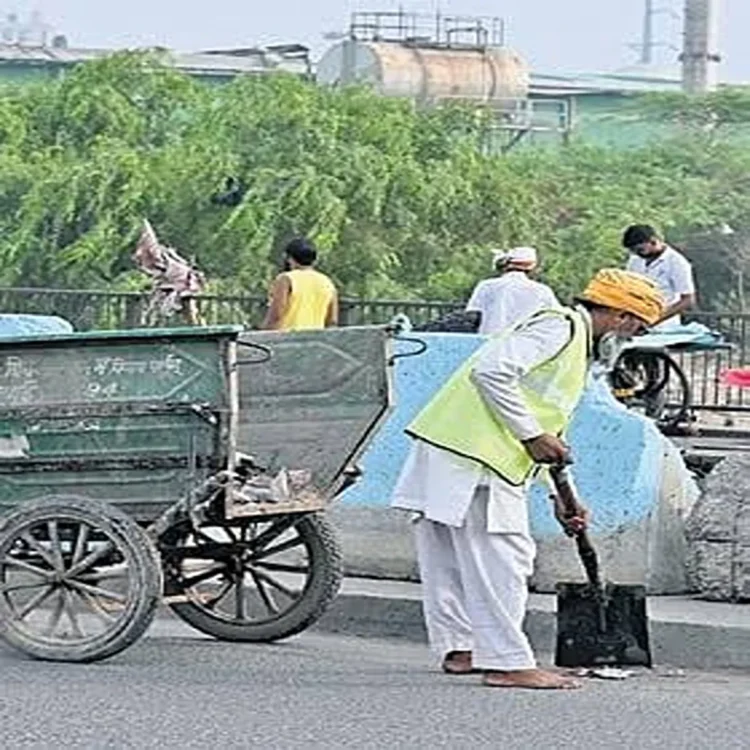
Two groups sustain Delhi’s waste management network
Delhi’s waste system depends on both informal and formal workers. Informal waste pickers, sorters and recyclers collect materials such as plastic, paper, glass and metal from bins, streets, markets and dumping grounds. They earn by selling recovered material to scrap dealers, but most do not have employment contracts, fixed wages or legal recognition.
The other group includes sanitation workers engaged by the Municipal Corporation of Delhi and other civic agencies. They are responsible for sweeping roads, collecting waste and maintaining public spaces. A substantial number of these workers have been employed on contract for years, even though many have spent a large part of their working lives in sanitation services.
Contract workers seek regular jobs and benefits
There are estimated to be around 75,000 to 80,000 sanitation workers in the MCD. Of these, nearly 30,000 to 35,000 are permanent employees, while the remaining workers are on contractual arrangements. Their main demand is regularisation of services, along with access to health benefits, insurance, safety equipment and workplace facilities.
Worker unions say several sanitation employees were hired in the late 1990s or early 2000s and are now approaching retirement without receiving the benefits available to permanent staff. Rajender Mewati, a leader associated with a sanitation workers’ union, said some employees have received permanent appointment letters in recent months, but the number remains limited compared with the total workforce.
Workers have also raised demands for pending arrears for those regularised after 2006, insurance cover, cashless medical treatment and improved welfare support. They argue that long-serving employees should not remain dependent on short-term contracts after decades of public service.
Low incomes and delayed wages add to hardship
Informal waste workers face highly uncertain earnings because their income depends on the quantity and market value of recyclable materials they collect. A fall in scrap prices can sharply reduce their daily income, making it difficult for families to manage rent, food, education and healthcare costs.
Contractual sanitation workers face a different set of concerns. Many report lower pay than permanent employees, delayed salaries and uncertainty over contract renewals. Although their work is connected to public sanitation services, their employment conditions often remain unstable.
Unsafe work exposes workers to serious health risks
Safety is a major concern for workers across Delhi’s waste sector. Many handle mixed garbage without proper gloves, masks, boots or protective uniforms. They are regularly exposed to broken glass, sharp metal, biomedical waste, chemicals and rotting material.
Landfill sites present even greater risks. Waste pickers often climb unstable piles of garbage to recover recyclable items, while facing the danger of fires, toxic fumes and waste slides. Long exposure to dust and smoke can lead to respiratory problems, skin infections and other long-term health conditions.
Caste and gender barriers continue to affect workers
Sanjay Gahlot, president of the Delhi Safai Karamchari Aayog, said sanitation work continues to be shaped by caste-based discrimination and social stigma. Many workers come from historically marginalised communities and continue to face exclusion despite providing an essential public service.
Women form a significant part of the informal waste workforce, especially in sorting and recycling. However, they often earn less than men and balance physically demanding work with unpaid household responsibilities. Limited access to childcare, sanitation facilities, maternity support and safe workplaces increases their vulnerability.
Recognition can strengthen the waste management system
Manoj Kumar, a waste management expert based in Ashok Nagar, said Delhi needs to treat waste workers as environmental service providers rather than temporary labour. He said formal recognition, fair wages, timely payments, protective gear, healthcare, social security and a greater role in policy decisions could improve both worker welfare and the city’s waste management system.