
CauveryRiver – Historic Drop in Cauvery Water Flow Raises Fresh Concerns Across Southern States
CauveryRiver – A sharp decline in water flow across the Cauvery basin has intensified concerns over water availability in southern India after weak monsoon rainfall significantly reduced river discharge and reservoir storage levels.
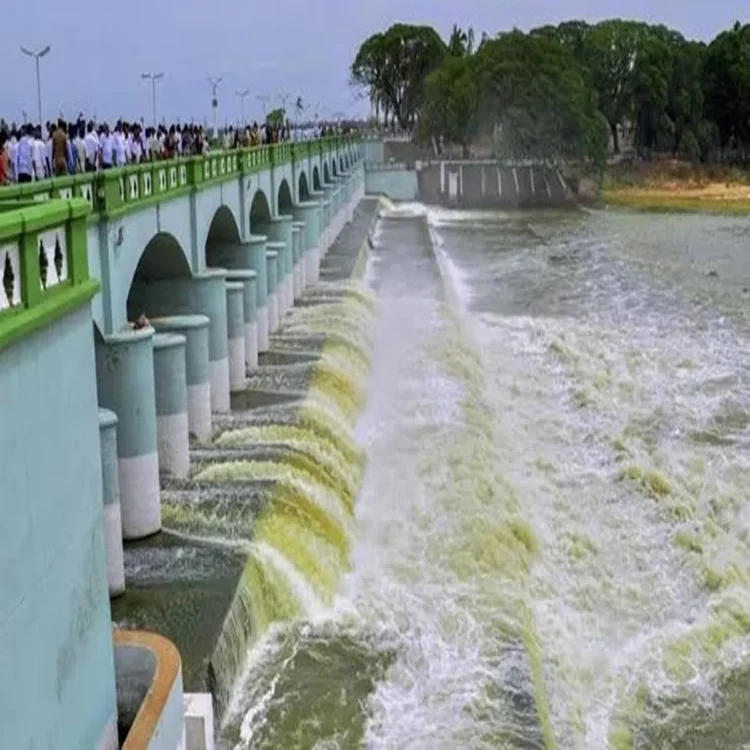
The Cauvery River is witnessing one of its weakest flow periods in recent years, creating growing pressure on water management in Tamil Nadu, Karnataka, Kerala and Puducherry. Poor rainfall during the first half of July has severely affected inflows across the basin, leaving authorities concerned about meeting essential water requirements. Officials say the reduced inflow has affected interstate water sharing while increasing the need for careful resource management.
River Flow Falls Far Below Expected Levels
The situation has become particularly serious at Biligundlu, the interstate monitoring station located on the Karnataka-Tamil Nadu border. According to official data, the expected daily river flow during July is close to 1 Thousand Million Cubic Feet (TMC). However, the actual discharge has remained between 0.025 TMC and 0.043 TMC per day, making it nearly 23 to 40 times lower than the required level.
Vineet Singh, Chairman of the Cauvery Water Regulation Committee (CWRC), said the present discharge is significantly below the required volume. He also noted that the available flow is not sufficient to maintain the minimum environmental requirements needed to sustain the river ecosystem.
Reservoir Storage Reflects Water Shortage
The impact of below-normal rainfall is also evident in reservoir storage across the Cauvery basin. Tamil Nadu’s Mettur reservoir currently stores about 37.689 TMC of water, which is close to its long-term average of nearly 36 TMC. However, the comparison with last year highlights the severity of the decline, as the reservoir had more than 93 TMC during the same period in 2025.
Karnataka’s Krishnaraja Sagar (KRS) reservoir is also below its historical average. Present storage stands at 12.8 TMC, while the 30-year average for this time of year is approximately 19.8 TMC, indicating continued pressure on available water resources.
June and July Show Persistent Deficit
The shortage has continued since June, when the total water flow recorded at the interstate point reached only 2.9 TMC against the required 9.19 TMC. During the first 14 days of July, Karnataka released only 0.377 TMC of water, compared with the expected requirement of more than 14 TMC for the period.
Officials have stated that maintaining environmental flow during the peak summer season requires at least 0.083 TMC of water every day. Current releases remain well below that benchmark, increasing concerns over river health alongside human water needs.
Water Conservation Becomes Immediate Priority
The Cauvery Water Regulation Committee has advised all basin states to adopt strict water conservation measures until rainfall conditions improve. The committee has recommended giving top priority to drinking water supply, industrial requirements and maintaining the minimum environmental flow necessary for the river. It has also suggested that agricultural planning and cropping decisions should be aligned with the actual availability of water.
Tamil Nadu has requested Karnataka to release its allocated share of Cauvery water. Karnataka, however, has informed authorities that limited water availability due to weak monsoon conditions has made it difficult to meet the demand.
Speaking on the current situation, CWRC Chairman Vineet Singh said the committee is unable to direct Karnataka to release additional water because of the inadequate monsoon and the absence of any significant weather systems expected over the coming days. He added that although rainfall briefly improved during the first week of July, overall precipitation across the Cauvery basin has remained insufficient. The committee has once again urged all concerned states to use available water carefully while ensuring that essential needs receive priority.