
Aviation – Delhi Airport Incident Raises Questions Over Weather Alerts and Ground Equipment Safety
Aviation – A rare ground incident at Delhi Airport has prompted a detailed investigation after three parked Air India aircraft sustained damage during a sudden spell of severe weather near Terminal 2 on Sunday evening. Aviation authorities are examining whether delayed communication about rapidly changing weather conditions and the movement of unsecured ground equipment contributed to the event.
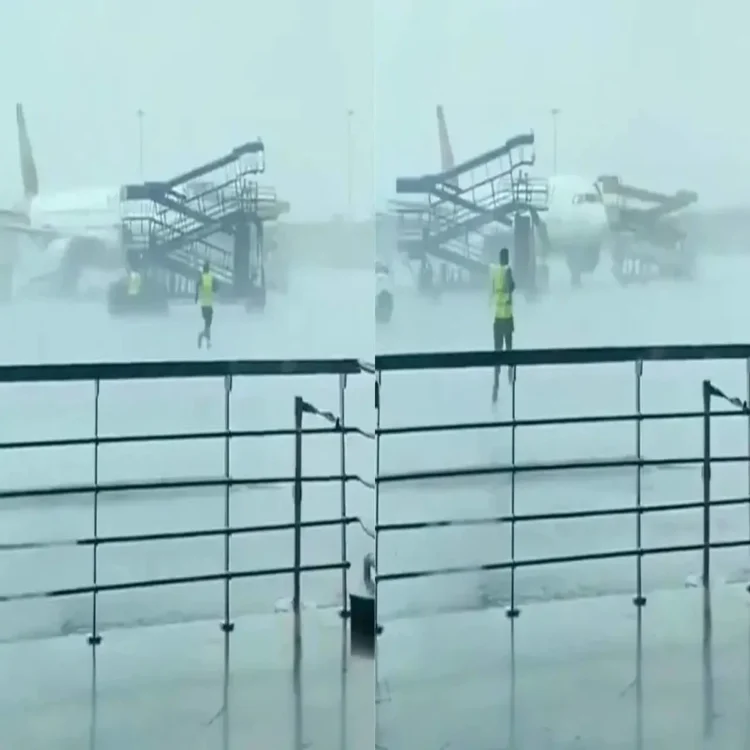
According to sources familiar with the matter, officials are reviewing the sequence of events that unfolded when strong winds swept across the airport apron. Preliminary findings suggest that the Aerodrome Meteorological Office may not have relayed information about the sudden weather shift to Air Traffic Control quickly enough. Investigators are also assessing the role of a trolley step ladder operated by IndiGo that reportedly moved across the parking area during the storm.
DGCA Begins Formal Investigation
The Directorate General of Civil Aviation (DGCA) has launched an inquiry into the occurrence, which resulted in damage to three stationary narrow-body aircraft belonging to Air India. All three aircraft have been temporarily withdrawn from service to undergo technical inspections and repairs.
One Airbus A320 suffered significant structural damage after a moving trolley struck the aircraft with considerable force. The impact affected sections of the fuselage and the area beneath one wing. Two additional aircraft experienced comparatively minor damage when other pieces of ground support equipment came into contact with them.
Multiple Equipment Units Involved
Besides the trolley step ladder associated with IndiGo, two maintenance trestles were also involved in the incident. One of the trestles belonged to IndiGo, while the other was owned by AI Engineering Services Limited (AIESL), the government-owned aircraft maintenance company.
These platforms are commonly used by maintenance personnel to access elevated sections of aircraft during servicing and inspection activities. Investigators are now examining whether all equipment had been properly secured before the weather conditions deteriorated.
Viral Video Captures Moments Before Impact
A video recorded during the incident circulated widely on social media on Monday. The footage shows airport ground staff seeking shelter as heavy rain and strong winds suddenly intensified.
Shortly afterward, a large trolley can be seen moving rapidly across the apron without any visible operator. The equipment passed a parked aircraft and a service vehicle before continuing forward. Several ground personnel attempted to chase and stop it, but were unable to prevent the collision with an Air India aircraft.
DGCA Details Extent of Damage
In an official statement, the DGCA said strong winds caused ground equipment positioned near aircraft parking stands to shift from their original locations. As a result, multiple aircraft were struck and sustained varying degrees of damage.
The regulator also reported that another aircraft suffered damage to a sliding window after being hit by foreign object debris carried by the high winds. Authorities confirmed that all affected aircraft would remain grounded until inspections and maintenance work are completed.
Airlines Offer Different Accounts
Air India did not disclose detailed information regarding the damage but indicated that the affected aircraft are expected to return to service after repairs are completed. The airline stated that the disruption is likely to be temporary.
IndiGo sources maintained that the trolley had been secured before the weather event occurred. According to the airline’s account, unusually strong winds may have caused the equipment to become dislodged and move across the apron. This explanation differed from an earlier statement issued shortly after the incident, which suggested that airline personnel had successfully stopped the equipment before it reached any aircraft.
Focus Turns to Weather Warning Procedures
Attention has also shifted to the airport’s weather monitoring and alert systems. A senior official said the airport experienced a microburst, producing wind speeds close to 100 kmph and creating a brief but intense squall that lasted approximately three minutes.
Officials acknowledged that weather updates were being communicated and entered into operational systems, but the severe weather struck before the warning process could be fully completed. Sources noted that earlier notification to Air Traffic Control might have allowed airlines and airport operators to reposition aircraft and secure vulnerable equipment before the squall arrived.