
Amarnath Yatra – SABLO Seeks Scientific Study After Early Ice Lingam Melt
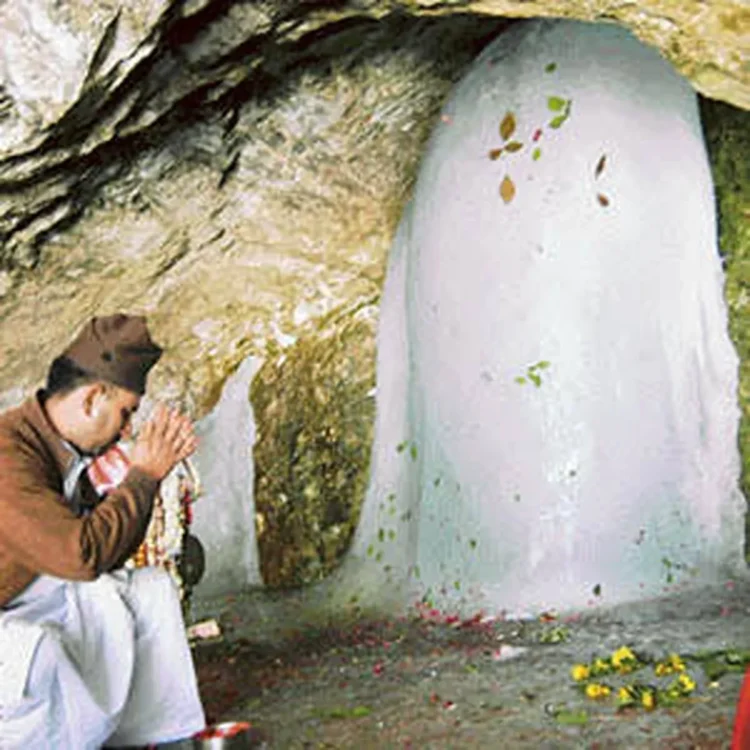
Amarnath Yatra –The Shri Amarnath Barfani Langars Organisation (SABLO) has sought a detailed scientific inquiry after the naturally formed ice lingam at the Amarnath cave shrine reportedly melted during the opening week of this year’s pilgrimage. The group said the development has raised concerns among devotees and requires an evidence-based assessment of environmental conditions around the shrine.
Concern Over Pilgrim Access
SABLO president Rajan Gupta said the organisation has submitted a representation to the Shri Amarnath Shrine Board, asking it to examine why the ice formation did not remain intact for longer. The shrine board oversees the annual Amarnath Yatra in south Kashmir.
According to the organisation, the early melting could affect the experience of a large number of pilgrims who are expected to visit the cave over the coming weeks. SABLO said many devotees may be unable to have darshan of the sacred ice lingam if the formation does not reappear or remain visible during the pilgrimage.
The 57-day yatra began on July 3 and is scheduled to end on August 28, coinciding with Raksha Bandhan. More than 1.5 lakh pilgrims have already reached the cave shrine through the Pahalgam and Baltal routes, according to the information cited by the organisation.
Demand for Independent Expert Panel
SABLO said changing weather patterns could be one possible reason behind the early melting, but it urged authorities not to reach conclusions without a wider scientific review. It has proposed an independent committee involving specialists in glaciology, geology, climate science, environmental studies, cave climatology and structural engineering.
The proposed panel, the organisation said, should study the conditions needed for the ice lingam to form and survive inside the cave. It should also examine whether recent human activity, infrastructure work or changes in visitor movement have altered the cave’s natural environment.
Gupta said the investigation should consider temperature, humidity, airflow, carbon dioxide levels and other factors that may influence the cave’s microclimate.
Review of Pre-Yatra Visits Requested
The organisation has also asked for a review of access granted to VIPs and authorised visitors before the formal start of the pilgrimage. SABLO said the Pratham Pooja was held on June 29, while the public yatra began on July 3.
It claimed that a gap of several days allowed a large number of people to visit the cave under special permissions, with some reportedly travelling in vehicles. Gupta said this movement should be reviewed, particularly if the delayed opening of the pilgrimage was intended to protect the ice formation and improve crowd management.
SABLO maintained that pre-yatra access should be assessed on scientific grounds to determine whether it has any impact on the conditions inside and around the cave.
Infrastructure Work Under Scrutiny
The group has requested an independent environmental assessment of construction and development activity near the shrine. It said excavation, drilling, concreting, rock cutting and the use of heavy machinery may affect the fragile Himalayan ecosystem if not carefully monitored.
SABLO also called for an audit of steel grills, barricades, platforms, flooring, railings and other permanent or temporary installations around the cave. While accepting that such structures are important for security and crowd control, the organisation said they should be regularly evaluated for their possible effect on airflow and temperature within the shrine.
Vehicular movement close to the cave has also been flagged by the association. It said vehicles can produce heat, emissions and vibrations that may influence the delicate environmental conditions required for the ice formation.
Call for Continuous Monitoring
SABLO has urged the shrine board to pause non-essential construction until an environmental review is completed. It has also sought a permanent monitoring system covering temperature, humidity, airflow, carbon dioxide levels, thermal imaging, weather patterns and ice thickness.
The organisation said environmental safeguards should be made public and implemented in line with Supreme Court directions and recommendations of relevant authorities. It added that preserving the cave’s natural setting is essential for maintaining both the religious significance of the shrine and the ecological balance of the region.