
Ethanol – Supreme Court Stays Karnataka High Court Order on Supply Allocation Dispute
Ethanol – The Supreme Court has put on hold a Karnataka High Court order that directed oil marketing companies to examine a request for increasing ethanol allocation for the Ethanol Supply Year (ESY) 2025-26. The interim decision came on Tuesday while the apex court considered a petition filed by Bharat Petroleum Corporation Limited, which argued that any change to the existing allocation process could affect the country’s ongoing ethanol blending programme and disrupt a policy implemented on a national scale.
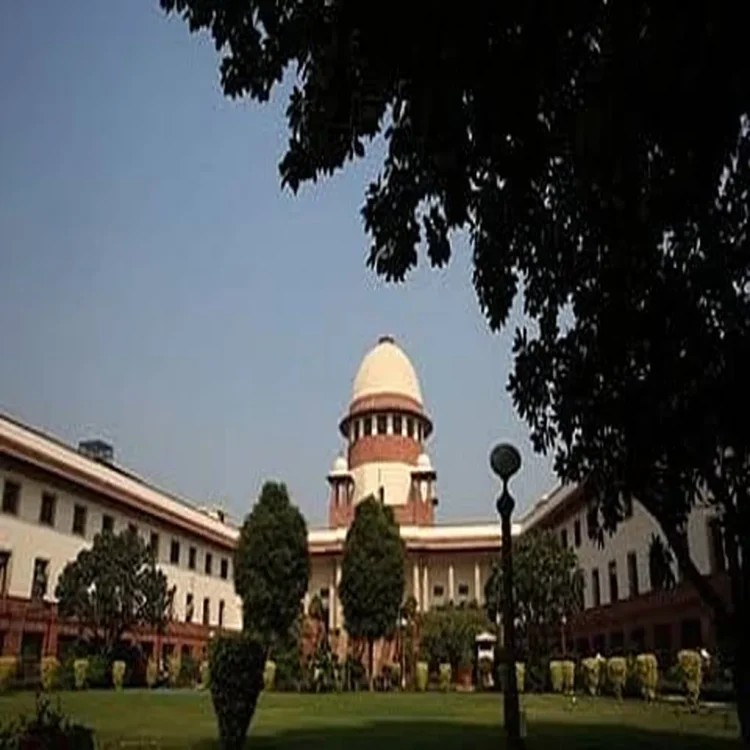
Supreme Court Issues Notice on Appeal
A Bench comprising Justices M.M. Sundresh and Sheel Nagu issued a notice on the appeal filed by Bharat Petroleum Corporation Limited against the Karnataka High Court ruling. The company maintained that revisiting finalized ethanol allocations in favour of an individual supplier could unsettle the carefully structured distribution mechanism adopted for the current supply year.
The High Court had earlier instructed Bharat Petroleum Corporation Limited, Hindustan Petroleum Corporation Limited and Indian Oil Corporation Limited to consider a representation submitted by VINP Distilleries and Sugars, a manufacturer dedicated to ethanol production, seeking a higher allocation for ESY 2025-26.
High Court Had Favoured Dedicated Ethanol Producers
In its earlier judgment, the Karnataka High Court observed that ethanol plants established under the government’s policy framework and operating under Long-Term Offtake Agreements (LTOAs) with oil marketing companies should receive the benefit of preferential allocation. The court noted that such facilities are contractually committed to supplying ethanol exclusively to public sector oil companies and therefore should not be denied the advantages envisioned under the agreements.
The order effectively required the three oil marketing companies to reconsider the company’s request for enhanced supply allocation.
Centre Raises Concerns Over National Policy
Appearing before the Supreme Court, Attorney General R. Venkataramani argued that implementing the High Court’s directions could interfere with the Union government’s nationwide strategy to achieve 20 percent ethanol blending in petrol. He submitted that the programme remains under implementation and that its long-term outcomes are still being assessed.
According to the Attorney General, the blending initiative is evolving, and a clearer understanding of its effectiveness is expected only after additional operational experience over the coming year. He urged the court to avoid changes that could disturb the existing allocation process while the policy is still being executed.
Allocation Process Already Completed
The Centre also informed the Supreme Court that ethanol supply contracts for ESY 2025-26 had already been finalised in October 2025. The allocation exercise was completed on October 17, after which supply quotas were communicated to 378 ethanol suppliers across the country.
During the hearing, the Attorney General stated that the combined allocation covered around 1,050 crore litres of ethanol. He further informed the court that nearly 680 crore litres had already been supplied by participating companies as of June 18, indicating that a substantial portion of the supply programme had already been implemented.
Oil Marketing Companies Cite Wider Impact
Bharat Petroleum argued before the Supreme Court that granting additional allocation to one supplier after the process had concluded could create similar claims from other producers operating under comparable conditions. According to the company, such a development could trigger multiple legal challenges and complicate the implementation of the national allocation framework.
The company also contended that VINP Distilleries and Sugars cannot claim an unrestricted entitlement to ethanol allocation solely on the basis of its production capacity, particularly when allocations have already been distributed among eligible suppliers under the approved policy.
With the Karnataka High Court’s order now stayed, the Supreme Court will continue hearing the matter after responses are filed. The outcome of the case is expected to clarify the balance between contractual rights of ethanol producers and the government’s broader policy governing fuel blending and ethanol distribution across the country.