
Trade Agreement – US and India Move Closer to Finalizing Bilateral Deal
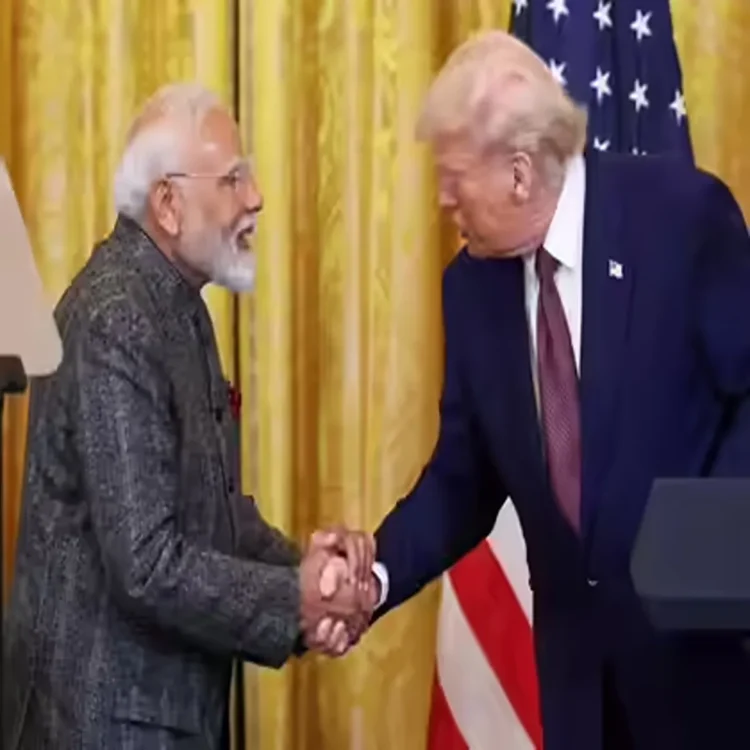
Trade Agreement – President Donald Trump has expressed optimism about the prospects of a trade agreement between the United States and India, indicating that ongoing discussions between the two countries are moving in a positive direction. Speaking at the White House on Thursday, Trump highlighted his cordial relationship with Prime Minister Narendra Modi and suggested that the strong personal connection between the two leaders could help overcome remaining challenges in trade negotiations.
Leaders’ Relationship Seen as a Positive Factor
Addressing reporters, Trump described Prime Minister Modi as a close friend and emphasized the mutual respect shared between them. According to the US President, the healthy diplomatic relationship at the leadership level has created a favorable environment for resolving outstanding trade-related concerns between Washington and New Delhi.
He noted that both nations have maintained regular engagement and expressed confidence that a mutually beneficial agreement could eventually be reached.
Concerns Over Tariff Policies Remain
While discussing trade relations, Trump revisited long-standing concerns regarding tariffs imposed on American products entering the Indian market. He argued that previous trade arrangements had not always been advantageous for the United States and claimed that India had historically maintained high duties on certain US goods.
Despite raising these issues, Trump maintained an optimistic outlook, stating that negotiators from both sides remain committed to finding common ground and completing an agreement that serves the interests of both economies.
Recent Negotiations Held in New Delhi
The President’s comments come shortly after a fresh round of trade discussions concluded in New Delhi. Officials from India and the United States held four days of meetings between June 1 and June 4 as part of efforts to strengthen economic cooperation and finalize key elements of a proposed bilateral trade framework.
The American delegation was led by chief negotiator Brendan Lynch, while India’s side was represented by Darpan Jain, Additional Secretary in the Department of Commerce.
Following progress on the initial framework of the proposed Bilateral Trade Agreement (BTA), negotiators are now focused on completing an interim arrangement while continuing work on a broader and more comprehensive trade pact.
India Says Most First-Phase Issues Resolved
Earlier this week, Commerce and Industry Minister Piyush Goyal stated that a significant portion of the first phase of the agreement had already been settled. According to the minister, discussions are now centered on a limited number of remaining points, suggesting that negotiations have entered their final stages.
His remarks signaled growing confidence within the Indian government that both countries may soon be able to announce further progress on the trade front.
New US Proposal Targets Forced Labour Imports
At the same time, trade discussions are unfolding against the backdrop of a new proposal from the Office of the United States Trade Representative (USTR). The agency has recommended additional import duties of 12.5 percent on products from 54 countries, including India, citing concerns over the handling of goods allegedly linked to forced labour.
The proposal follows investigations examining whether trading partners have established and effectively enforced restrictions on imports connected to forced labour practices.
USTR Calls for Stronger Enforcement Measures
US Trade Representative Ambassador Jamieson Greer said that inadequate action by major trading partners has created unfair conditions for American workers and businesses. He argued that the continued flow of goods associated with forced labour places US industries at a competitive disadvantage in international markets.
According to the USTR, several major economies—including India, China, Japan, Brazil, Australia, the United Kingdom and Saudi Arabia—have not implemented sufficient measures to prevent such imports from entering their markets. The proposed tariffs are part of a broader effort by the United States to address those concerns while pushing for stronger compliance among its trading partners.