
Russia – Putin Maintains War Stance as Fuel Disruptions Deepen
Russia – Russian President Vladimir Putin has played down the impact of Ukraine’s expanding campaign against oil refineries and energy sites, even as fuel shortages affect several parts of the country.
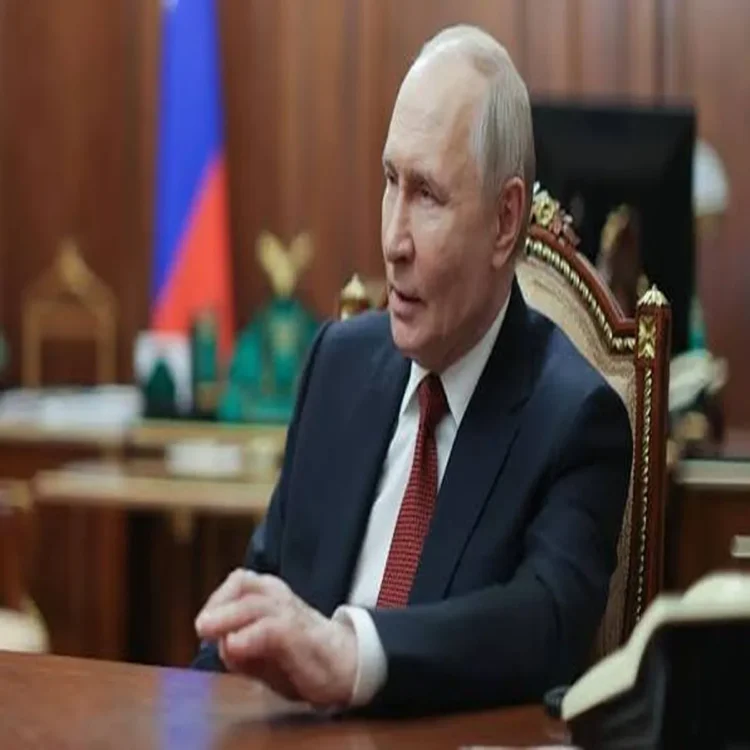
Putin has described the disruptions as manageable and said they will not alter Moscow’s military objectives in Ukraine. He has also rejected calls for a ceasefire, maintaining that Russia will continue its campaign until its stated conditions are met.
Refinery attacks add pressure to fuel supplies
Ukraine has reported carrying out a series of long-range strikes against Russian refineries, fuel depots and related energy infrastructure. More than 50 attacks on such facilities in Russia and occupied Crimea have been reported since March.
Kyiv has said the campaign is intended to weaken Russia’s ability to finance and sustain its military operations. The strikes have also brought the consequences of the conflict closer to ordinary Russian households, particularly in regions where fuel availability has become limited.
According to Chris Weafer, chief executive of the consultancy Macro-Advisory, about one-third of Russia’s refining capacity has been affected. He said some facilities may require expensive and lengthy repairs before they can return to normal operations.
A major refinery in Moscow has reportedly been hit twice despite extensive air defence measures around the capital. A June 18 strike caused a large fire and damaged equipment that may not be repaired until the end of the year.
Government figures indicate that Russian gasoline output has fallen by about 17%, to roughly 850,000 barrels a day. Fuel rationing has been introduced in some areas, while drivers in others have faced long queues at petrol stations.
Crimea faces the sharpest shortages
The most severe supply problems have been reported in Crimea, the Ukrainian peninsula annexed by Russia in 2014. Authorities there have suspended retail gasoline sales to individuals in some locations as supplies remain under pressure.
The shortages have challenged Moscow’s long-standing effort to present the war as a conflict with limited effects on daily life inside Russia. For many residents, fuel restrictions and rising uncertainty over supplies have made the consequences more visible.
Putin calls shortages temporary
Putin discussed the fuel situation during a meeting with government officials last weekend. In televised remarks, he acknowledged that Russia was facing a difficult period but said the shortages would be temporary.
He promised faster repairs at damaged energy facilities and said Russia could consider gasoline imports if necessary. Putin also said the country’s defence industry would increase production of air defence systems to counter future Ukrainian drone and missile attacks.
The Russian leader accused Ukraine of trying to create divisions within Russian society and force Moscow into negotiations on terms favourable to Kyiv. He said Russia would not allow that outcome.
Battlefield claims remain disputed
Putin has argued that Ukrainian strikes on oil facilities have had no effect on military operations at the front. However, Western military analysts say Ukrainian attacks on logistics and military infrastructure have slowed Russian momentum in recent months.
Russia continues to claim progress along the roughly 1,000-kilometre front line, while Ukraine says Moscow’s advances have been limited and costly. Independent assessments suggest that fighting in several sectors has reached a prolonged stalemate.
Putin has also rejected ceasefire proposals supported by Ukraine and its Western partners. He argues that a pause in fighting would allow Ukrainian forces to regroup.
Peace conditions remain far apart
Moscow has made a ceasefire conditional on Ukraine withdrawing from territory it still controls in the Donetsk region. Ukraine has rejected that demand, along with Russia’s broader calls for Kyiv to abandon its NATO ambitions, reduce its armed forces and accept Moscow’s conditions on Russian language and culture.
Putin has challenged Ukrainian President Volodymyr Zelenskyy to meet in Moscow, a proposal Ukraine has dismissed. The Kremlin has also said that Kyiv made a confidential proposal related to limiting fighting in four annexed regions, though Ukrainian officials have not publicly confirmed such discussions.
The latest escalation came as Russia launched an overnight barrage on Kyiv that lasted about 11 hours and killed at least 21 people. Ukrainian officials said residential areas were struck, while Russia said it had targeted military facilities.
United Nations data shows that more than 16,000 Ukrainian civilians have been killed since Russia began its full-scale invasion.