
Markets – Indian Stocks Extend Five-Day Decline Amid Global Trade and Geopolitical Concerns
Markets –Indian stock markets ended Friday’s trading session in the red, marking their fifth straight day of losses as investors remained cautious over continuing geopolitical tensions in West Asia and renewed concerns surrounding US trade tariff policies. Weakness across several Asian markets further dampened sentiment, leading to broad-based selling despite some relief in crude oil prices.
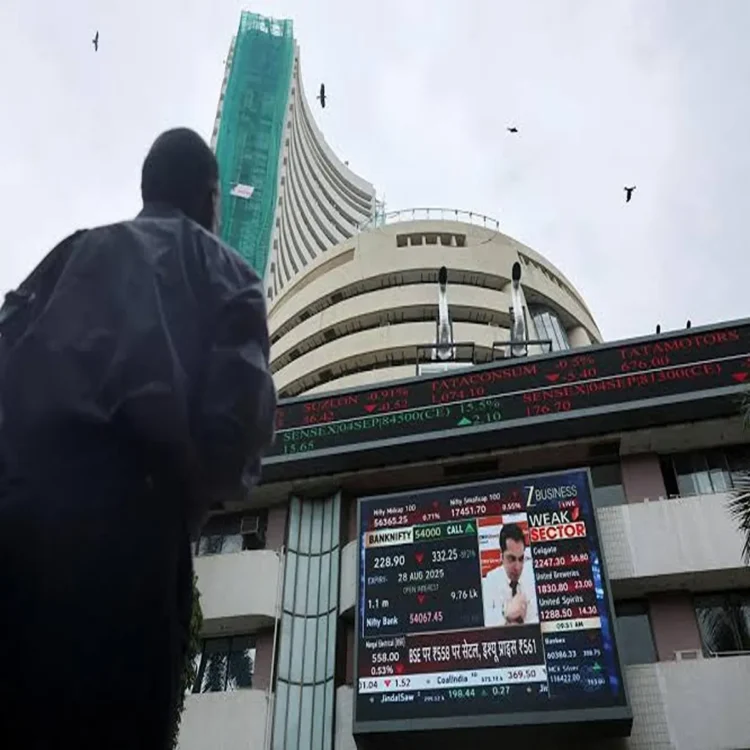
Benchmark Indices Finish Lower
The BSE Sensex settled at 76,059.17, losing 331 points or 0.43 percent, while the NSE Nifty 50 closed at 23,767.70, down 102 points or 0.43 percent. Market participants largely avoided aggressive buying as uncertainty over global developments continued to influence investment decisions.
According to market experts, geopolitical risks and trade-related concerns have kept investors on the sidelines. The cautious mood across regional equity markets also contributed to the decline in domestic benchmarks, even though energy prices showed signs of easing during the session.
Sector Performance Remains Mixed
Trading across sectoral indices presented a mixed picture. Auto stocks witnessed the sharpest decline, with the Nifty Auto index falling 1.13 percent. Other sectors that ended lower included Metal, Realty, Oil & Gas, Pharma, Financial Services, and Consumer Durables.
On the positive side, the Media index outperformed the broader market with gains of more than 2 percent. Information Technology stocks also attracted buying interest, while the FMCG sector ended marginally higher, providing limited support to the broader market.
Top Gainers and Losers
Within the Nifty 50 pack, HCL Tech, Wipro, Cipla, ITC, and Jio Financial Services emerged among the leading gainers during the session.
Meanwhile, Bajaj Finance, Mahindra & Mahindra, Shriram Finance, Tata Consumer, Hindalco, and Eternal were among the major laggards, weighing on the benchmark indices.
Crude Oil and Rupee Stay in Focus
Brent crude prices moved lower during the day, declining by nearly 4 percent to around USD 96.73 per barrel. Although the fall in oil prices offered some relief, market participants continued to monitor developments in the global energy market closely.
The Indian rupee remained under pressure against the US dollar. After touching a fresh two-month low near Rs 96.67 during the trading session, the domestic currency recovered slightly to trade around Rs 96.52 per dollar. Elevated crude oil prices, sustained demand for the US currency, and global uncertainty continued to influence currency movements.
Global Developments Influence Market Mood
International investors remained focused on developments involving the United States and Iran, with geopolitical uncertainty continuing to shape market sentiment. Fresh announcements related to US tariff policies also added to investor concerns, resulting in mixed performances across major global equity markets.
Asian markets largely ended lower. Japan’s Nikkei 225 recorded a decline of more than 3 percent, while Taiwan’s Weighted Index dropped 2.74 percent. Hong Kong’s Hang Seng also finished lower, and South Korea’s KOSPI registered one of the steepest declines among regional markets. Singapore’s Straits Times Index stood out as the only major Asian benchmark to close with modest gains.
Analysts See Support at Lower Levels
Despite the recent weakness, some market analysts believe the broader market structure remains stable. They noted that buying interest has emerged near important technical support levels, suggesting that investors continue to accumulate fundamentally strong stocks during corrections.
Analysts also indicated that disciplined investors may consider a buy-on-dips strategy while maintaining appropriate risk management. They believe a sustained move above key resistance levels could improve market momentum in the coming sessions, although global developments are likely to remain the primary driver of investor sentiment.