
Protests – Nationwide Demonstrations Intensify Opposition to Trump Policies
Protests – Large-scale demonstrations are expected to sweep across the United States this Saturday, as millions prepare to voice their concerns over President Donald Trump’s leadership style and recent policy decisions. The protests are being organized under the grassroots banner “No Kings,” which has rapidly evolved into one of the most visible movements opposing the administration since Trump began his second term in January 2025.
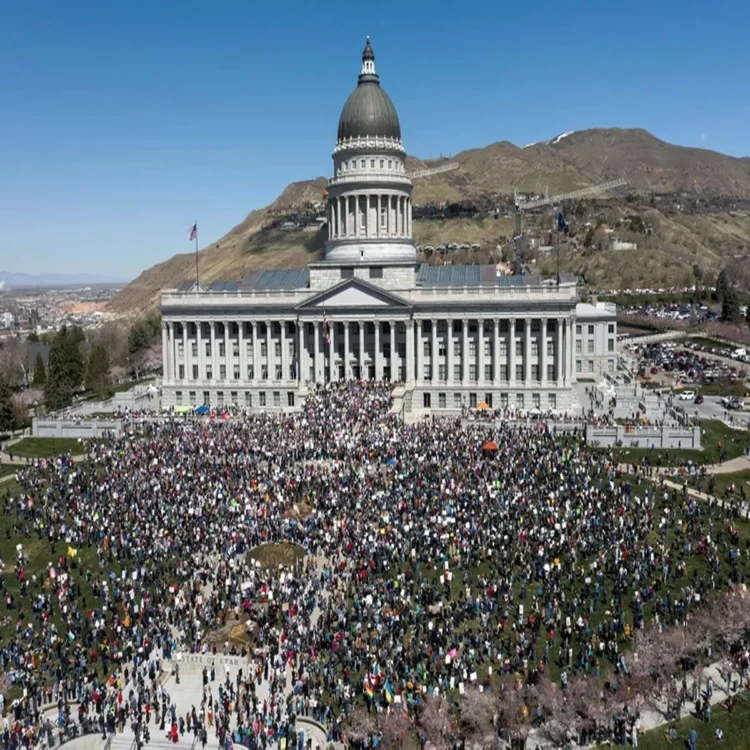
Growing Momentum of the “No Kings” Movement
This marks the third major nationwide protest organized by the movement within a year. Previous rallies have already drawn millions, signaling a widening base of dissatisfaction. The first large-scale demonstration took place in June, coinciding with Trump’s 79th birthday and a military parade held in Washington. Cities across the country, from New York to San Francisco, witnessed massive turnouts.
A second day of coordinated protests followed in October, with organizers estimating participation at around seven million people. With momentum continuing to build, organizers now aim to surpass previous turnout figures, reflecting what they describe as growing public frustration with the administration’s direction.
War in Iran Adds to Public Anger
The latest wave of protests comes amid heightened tensions following the United States’ involvement in a conflict with Iran, launched in coordination with Israel. Critics argue that the administration has not provided clear objectives or timelines for the military action, leading to widespread uncertainty and concern.
Opponents say the war contradicts earlier campaign messaging that portrayed Trump as a leader focused on peace. For many protesters, the escalation abroad has become a central issue, adding urgency to their calls for accountability and restraint.
Criticism of Domestic Policies Intensifies
Beyond foreign policy, demonstrators have raised concerns about a range of domestic issues. These include the use of executive powers, legal actions against political opponents, and policies affecting immigration and civil rights. Environmental policies and the administration’s stance on climate change have also drawn criticism.
Veterans’ groups affiliated with the movement have spoken out strongly. One representative stated that the country is being pulled deeper into conflict overseas while, at home, communities are facing increasing pressure from enforcement measures and social divisions. Such remarks reflect a broader sentiment among protesters that democratic norms are being tested.
Thousands of Rallies Planned Nationwide
Organizers have announced plans for more than 3,000 rallies across the country, spanning major metropolitan areas as well as smaller towns and rural communities. This widespread participation is notable, as it suggests the movement is expanding beyond traditional urban centers.
Minnesota is expected to be a key location during Saturday’s events, months after it became a focal point in national debates over immigration enforcement. Adding to the attention, musician Bruce Springsteen is scheduled to perform in St. Paul, where he will present a song written in memory of individuals who lost their lives during earlier protests.
Political Stakes Ahead of Midterm Elections
The demonstrations are unfolding at a politically significant time. With midterm elections approaching in November, current polling indicates that Trump’s approval rating remains relatively low, hovering around 40 percent. Analysts suggest that sustained public mobilization could influence electoral outcomes, particularly if opposition groups maintain their current level of engagement.
Labor leaders and advocacy groups have described the moment as a turning point, emphasizing economic pressures faced by many households. Rising costs and concerns about basic living standards have become central themes in public discourse, further fueling the protest movement.
A Divided Political Landscape
The scale of the demonstrations highlights the deep divisions within American society. While Trump continues to enjoy strong support among his political base, opposition to his leadership remains equally intense. This polarization is expected to shape both the immediate protests and the broader political environment in the months ahead.
Organizers maintain that what began as a single day of protest has grown into a sustained national effort aimed at influencing policy and governance. As Saturday’s events unfold, they will serve as another measure of public sentiment during a period of heightened political tension