
MissileInfrastructure – Iran Reopens Key Underground Missile Network After Extensive Repairs
MissileInfrastructure – Iran has regained access to a large section of its underground missile network after carrying out months of repair and excavation work, according to a report published by CNN. The restoration effort has drawn attention from military analysts who say the developments reveal the challenges of permanently disabling deeply buried military infrastructure through air strikes alone.
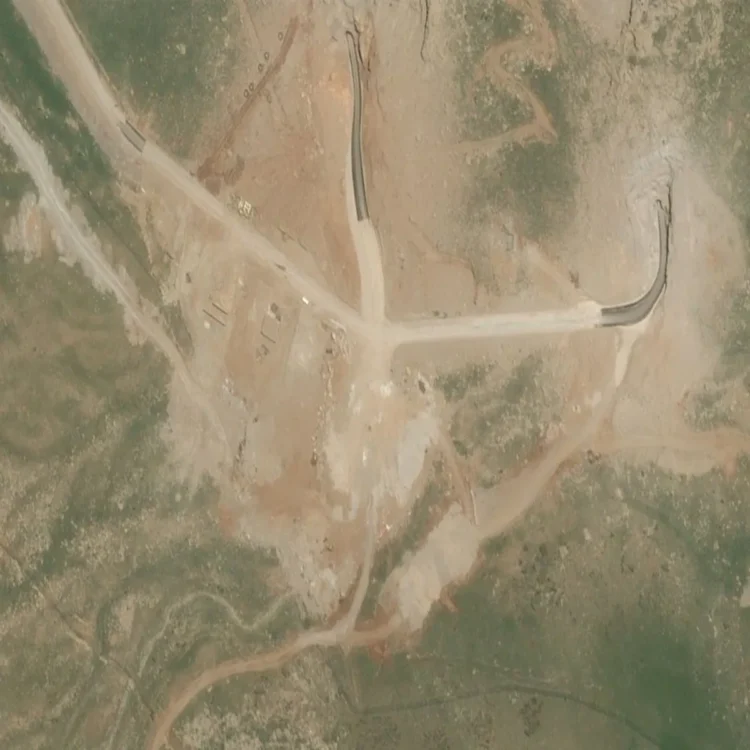
Satellite Images Show Progress at Multiple Facilities
CNN reported that satellite imagery indicates Iranian forces have reopened 50 of the 69 tunnel entrances that were previously targeted by American and Israeli attacks. The strikes focused on 18 underground missile sites and were intended to limit access to missile stockpiles by blocking entrances and damaging surrounding transportation routes.
The images suggest that many of the affected locations have gradually returned to operational status as repair crews worked to remove debris and restore access routes. The findings point to a significant recovery effort that has continued in the months following the military campaign.
Repair Operations Relied on Basic Equipment
According to the report, Iranian teams used conventional construction machinery, including bulldozers and dump trucks, to clear damaged areas and reopen tunnel access points. Despite repeated attacks aimed at disrupting these activities during the conflict, the restoration work continued.
Analysts cited in the report noted that the use of relatively simple equipment highlights the difficulty of keeping underground facilities inaccessible over an extended period. The ongoing repairs allowed Iranian personnel to steadily restore parts of the missile infrastructure that had been affected by the strikes.
Experts Highlight Durability of Missile Capabilities
Researchers monitoring Iran’s missile program told CNN that the developments demonstrate the resilience of the country’s missile force. They argue that the ability to regain access to existing stockpiles can sustain operational capabilities even if production activities face interruptions.
Sam Lair, a research associate at the James Martin Center for Nonproliferation Studies, stated that missile operations could continue as long as launch crews and equipment remain available. He noted that existing inventories may provide sufficient resources for future launches despite efforts to reduce operational capacity.
Missile Activity Continued During the Conflict
The report also stated that although the pace of missile launches declined during the fighting, Iran maintained missile operations throughout the conflict period. Analysts believe the gradual reopening of critical facilities contributed to that capability.
Since a ceasefire was reached more than seven weeks ago, restoration efforts have reportedly intensified. Satellite observations reviewed by CNN suggest that reconstruction work has expanded across several affected military sites.
Damaged Roads Restored Across Strike Zones
Beyond tunnel repairs, Iran has also focused on rebuilding transportation infrastructure damaged during the attacks. According to the report, many bomb craters visible in earlier satellite images have been filled, while some roads have undergone resurfacing and reconstruction.
The restoration of road networks is considered important for maintaining access between military facilities and supporting logistics operations connected to missile deployments.
Debate Over Strategic Outcomes
Military experts cited in the CNN report drew a distinction between short-term battlefield achievements and broader strategic objectives. While the strikes succeeded in temporarily restricting access to missile facilities, analysts questioned whether those gains translated into long-term strategic advantages.
Lair argued that tactical military success does not automatically guarantee the achievement of wider policy goals. He suggested that long-term outcomes depend on clearly defined objectives and realistic plans for achieving them.
Ongoing Regional Discussions
CNN also reported that Iran and the United States have reached a preliminary understanding regarding the reopening of the Strait of Hormuz, although discussions related to implementation remain underway.
Security analysts continue to monitor developments closely, warning that if tensions increase again in the future, Iran may still possess a considerable missile-launch capability despite previous efforts to weaken its arsenal.
When asked about the CNN assessment, Pentagon spokesperson Sean Parnell did not directly comment on the specific findings. Instead, he reiterated earlier remarks emphasizing the capabilities and readiness of the United States military.