
Earthquake – Powerful Tremor Leaves Dozens Dead and Thousands Displaced in Southern Philippines
Earthquake – Rescue teams continued extensive search operations across southern Philippines on Tuesday, a day after a devastating earthquake struck the region, leaving at least 37 people dead and forcing more than 20,000 residents from their homes. Authorities focused on inspecting damaged and collapsed structures to ensure that no survivors remained trapped beneath the rubble.
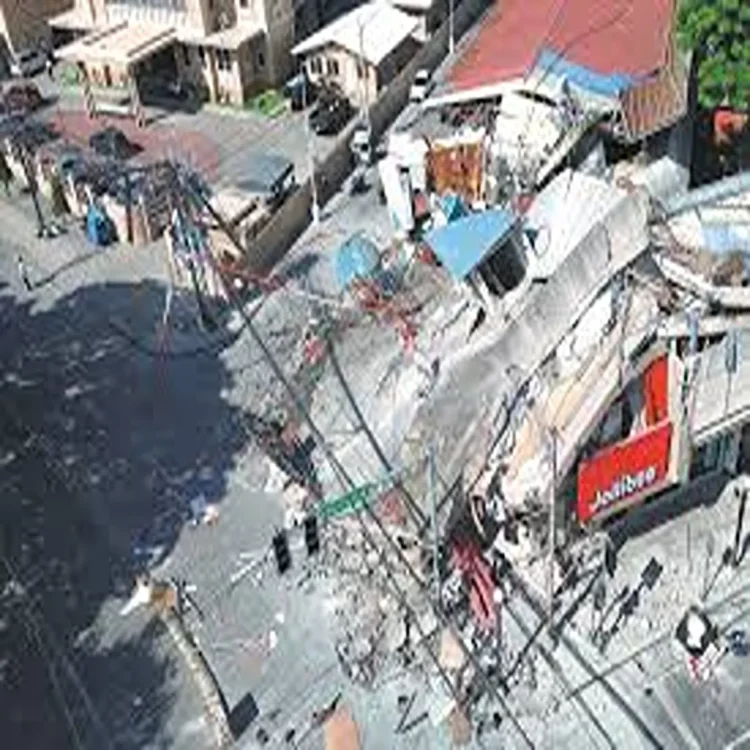
Search and Rescue Efforts Continue
Although official reports listed only four people as missing, emergency management officials said several severely damaged buildings still required careful examination. Rescue workers were deployed across affected communities to locate possible survivors and assess structural risks.
The 7.8-magnitude earthquake struck near the island of Mindanao on Monday morning, causing widespread panic and significant destruction. Nearly 500 people suffered injuries, while thousands sought refuge in temporary evacuation centers established by local authorities.
Tsunami Fears Trigger Mass Evacuations
In the hours following the earthquake, concerns over a possible tsunami prompted many residents to leave coastal areas. Monitoring agencies recorded waves reaching as high as 1.4 meters above normal tide levels in parts of the Philippines.
Despite the warnings, tsunami-related damage remained limited. Officials reported the destruction of six stilt houses in a coastal village, while smaller waves were observed in Indonesia, Palau, and parts of southern Japan.
Landslides and Building Collapses Cause Most Fatalities
Much of the loss of life resulted from landslides and collapsing structures. General Santos City, a major economic hub known for its fishing industry, was among the hardest-hit areas. Authorities confirmed at least 13 deaths there, largely caused by falling debris and damaged buildings.
Sarangani province recorded another 18 fatalities, most of them linked to a massive landslide in the mountainous town of Glan. Additional deaths were reported in South Cotabato, Davao Occidental, and Balut Island.
Preliminary government assessments indicated that approximately 2,000 homes and 117 public facilities sustained varying degrees of damage across the affected region.
Infrastructure and Schools Face Safety Checks
The earthquake also disrupted transportation and education services. Operations at General Santos International Airport remained suspended, leading to the cancellation of dozens of domestic flights, with only humanitarian and emergency missions permitted to operate.
Education officials said around 6,000 public school buildings in affected provinces would undergo safety inspections before students could return. The earthquake struck on the first day of the new academic term, shortly after a two-month break. Many of those injured were schoolchildren participating in morning assemblies when the shaking began.
Authorities warned that aftershocks could further weaken already damaged structures, increasing the risk of additional collapses.
Strongest Earthquake in Decades
According to the Philippine Institute of Volcanology and Seismology, the earthquake originated offshore at a depth of about 33 kilometers and was located southwest of Maasim town in Sarangani province.
Experts said the event was triggered by movement along the Cotabato Trench and was the most powerful earthquake to affect the country since 1976. That earlier disaster generated a destructive tsunami and claimed roughly 8,000 lives across several provinces.
Seismologists noted that a separate 7.8-magnitude earthquake in 1990 also caused significant devastation in northern Philippines, resulting in more than 1,000 deaths and widespread infrastructure damage.
Government and International Support Mobilized
President Ferdinand Marcos Jr. directed senior disaster-management and defense officials to oversee rescue operations, distribute emergency supplies, and evaluate damage to roads, bridges, and other critical infrastructure.
Several countries, including the United States, France, Japan, and New Zealand, expressed readiness to assist recovery efforts and coordinate support with Philippine authorities.
Located along the Pacific Ring of Fire, the Philippines frequently experiences earthquakes and volcanic activity. Combined with the regular arrival of tropical storms and typhoons, the country remains among the most disaster-prone nations in the world.