
BIMSTEC – Bangladesh Expected to Join Key Regional Security Meeting in New Delhi
BIMSTEC – Regional security cooperation across the Bay of Bengal continues to gain momentum – Bangladesh is expected to send Prime Minister’s Defence Adviser Brigadier General (Retd) Dr. AKM Shamsul Islam to represent the country at the upcoming BIMSTEC National Security Advisers’ meeting in New Delhi.
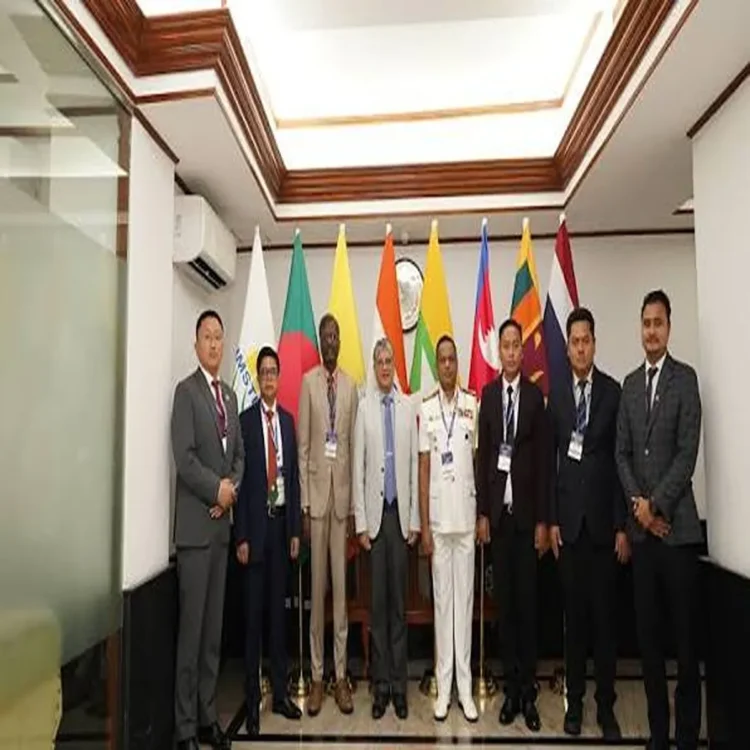
Bangladesh is likely to participate in the fifth BIMSTEC National Security Advisers’ Meeting, scheduled for July 16 in India’s capital, with Prime Minister’s Defence Adviser Brigadier General (Retd) Dr. AKM Shamsul Islam expected to lead the country’s delegation. According to reports citing diplomatic sources, Dhaka has already informed the Indian government of his participation through official diplomatic communication.
Meeting Seen as Important for Bilateral Engagement
Diplomatic observers believe the visit carries significance beyond the regional security discussions. Reports indicate that the manner in which India hosts the Bangladeshi representative could influence the pace of future high-level exchanges and official engagements between the two neighbouring countries.
The meeting comes at a time when New Delhi and Dhaka are showing signs of renewed cooperation. Relations have improved in recent months following India’s decision to resume issuing tourist visas for Bangladeshi citizens after a suspension of nearly two years. Indian authorities have also announced plans to further expand visa services, reflecting efforts to strengthen people-to-people connections.
India to Host Fifth NSA-Level BIMSTEC Meeting
India will host the fifth edition of the BIMSTEC National Security Advisers’ Meeting in New Delhi on July 16. The gathering is expected to bring together senior security officials from member countries to discuss issues related to regional stability, security cooperation, and shared strategic interests across the Bay of Bengal region.
BIMSTEC, or the Bay of Bengal Initiative for Multi-Sectoral Technical and Economic Cooperation, brings together seven countries from South Asia and Southeast Asia. The grouping represents nearly 1.73 billion people and an economy valued at approximately USD 5.2 trillion, making it one of the region’s most significant multilateral platforms.
Bangladesh Holds the Current Chairmanship
Bangladesh currently serves as the chair of BIMSTEC, while the organisation’s permanent secretariat operates from Dhaka. The platform works to promote collaboration in areas including trade, connectivity, security, technology, energy, and disaster management among its member nations.
The organisation traces its origins to June 6, 1997, when Bangladesh, India, Sri Lanka, and Thailand signed the Bangkok Declaration to establish the Bangladesh-India-Sri Lanka-Thailand Economic Cooperation, then known as BIST-EC. Myanmar joined later that year, while Bhutan and Nepal became members in 2004, leading to the formation of today’s seven-member BIMSTEC grouping.
Regional Cooperation Continues to Expand
BIMSTEC’s institutional framework has steadily evolved over the years. A major milestone came after the third BIMSTEC Summit in 2014, when member states approved the establishment of a permanent secretariat in Dhaka to support long-term regional cooperation and coordinate the organisation’s expanding agenda.
Beyond security and economic collaboration, member countries have also increased efforts to strengthen cooperation through leadership and youth engagement initiatives. Earlier this year, India organised the BIMSTEC Youth Leadership Exchange Programme from April 25 to April 30, bringing together more than 70 young leaders from across the region.
According to India’s Ministry of External Affairs, the programme focused on leadership development, collaborative problem-solving, systems thinking, community engagement, and personal well-being. Officials said the initiative reflected India’s commitment to fostering stronger regional partnerships and preparing future leaders capable of addressing common regional challenges through cooperation and dialogue.