
Delhi – Capital Strengthens Security Measures as Student Protests Escalate Over Exam Leak
Delhi –The Delhi Police have significantly intensified security arrangements across various parts of the national capital ahead of the upcoming weekend. Authorities have deployed multi-layered physical barriers and reinforced security cordons to manage large crowds gathered for ongoing political demonstrations. The heightened vigil comes as student groups and political activists continue their agitation over reported irregularities in national competitive examinations. Officials anticipate a substantial rise in protester turnout over Saturday and Sunday, prompting comprehensive preventative measures to maintain public order across high-security zones.
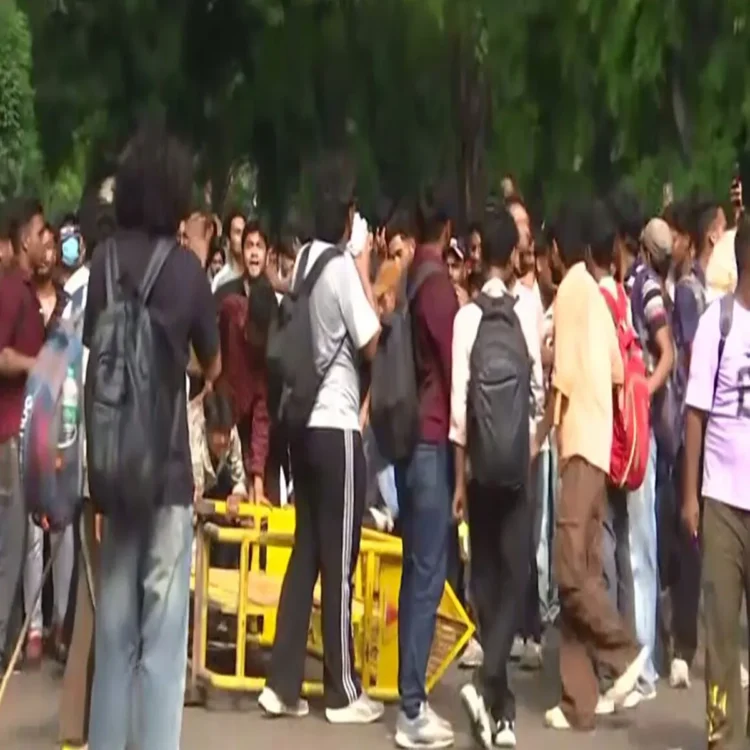
Strict Barricading and Access Control Measures
To prevent unauthorized entry into sensitive government zones, law enforcement agencies have placed heavy-duty iron barricades along primary transit routes in the New Delhi district. Key demonstration venues, including Jantar Mantar and adjacent roads, now feature reinforced barriers that have been welded together and secured with heavy iron chains. According to senior police officials, these structural reinforcements are specifically designed to restrict sudden crowd movements and prevent attempts to break through security perimeters. Additional personnel drawn from local stations and specialized police contingents have been stationed at critical intersections to manage traffic flow and keep major arterial roads clear.
Background of the Agitation and Demands
The ongoing agitation is being spearheaded by political organizations, including members of the Cockroach Janta Party, who are demanding comprehensive reforms to the national examination framework. Demonstrators are also pressing for the immediate resignation of Union Education Minister Dharmendra Pradhan following alleged paper leaks in the recent NEET competitive examinations. What began as localized sit-ins has steadily expanded, drawing participation from various student bodies and youth groups across the region. With the movement gaining momentum, authorities expect larger gatherings over the weekend, prompting administrators to enforce precautionary operational limits, including ordering local liquor outlets in sensitive areas to close early by 8 PM.
Advanced Surveillance and Facial Recognition in Use
In addition to physical blockades, police forces are relying heavily on modern surveillance technology to maintain order and monitor crowd dynamics. Advanced facial recognition systems installed around major protest sites have reportedly scanned thousands of individuals entering the demonstration grounds over the past few days. Official sources indicate that these digital monitoring tools have successfully identified over two thousand five hundred individuals with prior criminal records. Field units stationed nearby receive instant notifications whenever a flagged individual enters the zone, allowing security personnel to conduct discreet background checks without disrupting peaceful assemblies.
Citywide Monitoring and Preventive Action Plan
Police headquarters has instructed all district divisions, particularly those overseeing New Delhi, Central, and North Delhi, to maintain an elevated state of operational readiness. District commanders have been tasked with updating lists of active history-sheeters and monitoring individuals with past involvement in public order violations. Security teams are executing routine anti-sabotage checks, intensified vehicle inspections, and frequent mobile patrolling around sensitive government infrastructure. Administrative officials maintain that these widespread security protocols are strictly preventive, designed to safeguard public property and ensure peaceful expression while mitigating risks to broader public safety.