
Privacy – Delhi High Court Examines PIL Challenging Protest Surveillance at Jantar Mantar
Privacy – The Delhi High Court on Friday heard extensive arguments in a public interest litigation questioning the alleged use of surveillance measures during demonstrations at Jantar Mantar. The petition claims that continuous videography and the reported use of facial recognition technology at protest sites infringe upon the constitutional right to privacy. The Central government, however, defended the practice, stating that video recording is a standard policing measure intended to maintain law and order during public gatherings.
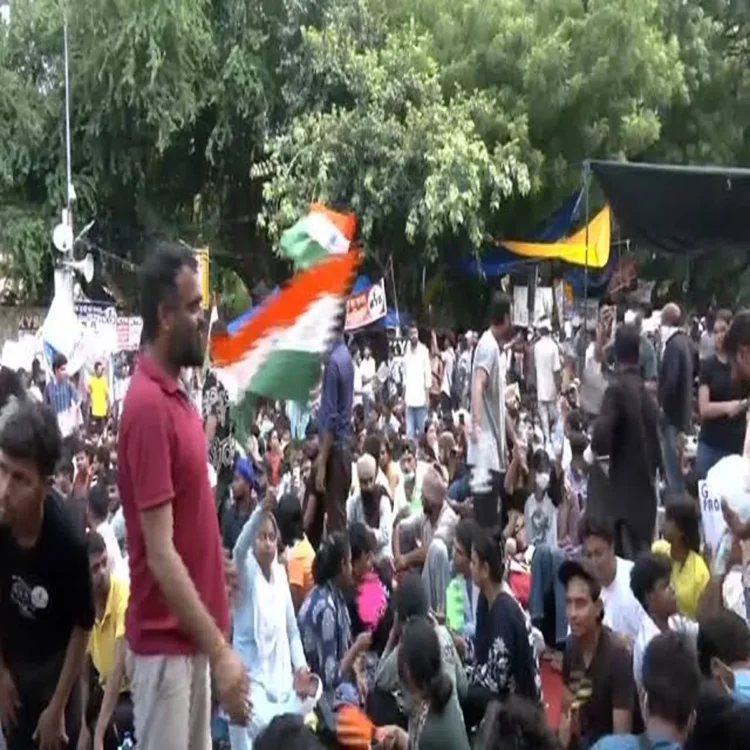
Court Hears Arguments From Both Sides
A Division Bench comprising Chief Justice Devendra Kumar Upadhyaya and Justice Tejas Karia considered submissions from the petitioner as well as the Centre before scheduling the matter for further hearing on Monday. Senior Advocate Nandita Rao, representing the petitioner, urged the Court to issue notice in the case, arguing that the present petition raises separate legal questions from other pending matters linked to the July 20 demonstrations.
Referring to the Supreme Court’s landmark ruling in the Justice KS Puttaswamy case, Rao argued that individuals do not lose their right to privacy simply because they are participating in a public protest. According to her, any State action that limits this right must satisfy the constitutional principles of legality, legitimate public purpose and proportionality.
Privacy Concerns Over Facial Recognition
The petitioner submitted that the case was filed even before the police action connected with the July 20 protests and primarily challenges alleged surveillance practices rather than crowd-control measures. Rao referred to reports claiming that police vehicles deployed near the protest venue were equipped with live facial recognition capabilities.
She argued that using such technology without a clearly defined legal framework could discourage citizens from participating in peaceful demonstrations. While acknowledging that authorities may record public events for security purposes, she contended that there are currently no transparent rules governing how such data is collected, stored, accessed or eventually deleted.
Rao also stressed that legal safeguards exist for measures such as telephone interception, but similar protections are absent for surveillance footage gathered during protests. She urged the Court to ensure that appropriate legal standards are established to prevent misuse of personal data.
Connected Petition Supports Similar Concerns
Senior Advocate Gopal Sankaranarayanan, appearing in one of the connected matters, supported the petitioner’s submissions. He argued that earlier cases before the Court did not directly address the constitutional questions surrounding surveillance technology and privacy rights during public demonstrations, making the present petition distinct.
Centre Defends Standard Videography Practice
Appearing for the Central government, Solicitor General Tushar Mehta opposed the issuance of notice and raised preliminary objections. He informed the Court that videography is routinely carried out during protests at Jantar Mantar under existing standing orders and is not specific to any particular demonstration.
According to the Centre, recording protest activities serves a legitimate public purpose by helping authorities maintain law and order and identify individuals if violence or other unlawful incidents occur. Mehta also pointed out that protest participants themselves frequently record and share videos through social media platforms, arguing that public events naturally involve reduced expectations of privacy.
The Centre maintained that although privacy is a fundamental right, it is not absolute and may be subject to reasonable restrictions where public safety and security are involved.
Petitioner Seeks Clear Legal Safeguards
Responding to the government’s arguments, Rao distinguished between recordings made by journalists or private individuals and surveillance conducted by State agencies. She submitted that while private misuse of recordings may attract legal consequences, official collection of personal data requires a transparent legal framework with adequate safeguards.
The petitioner requested that the Court direct the authorities to submit a detailed affidavit explaining the procedures followed for recording protests, retaining footage, accessing collected data and ensuring protection against misuse.
Next Hearing Scheduled
Towards the end of the proceedings, the Solicitor General requested that the matter be listed on Monday so that the issue could be addressed without unnecessary controversy. The Bench accepted the request and fixed the case for further hearing.
The PIL, filed by CPI(M) leader Aishe Ghosh, alleges unlawful surveillance of demonstrators at Jantar Mantar, including participants in protests led by climate activist Sonam Wangchuk. During an earlier hearing, the High Court had also asked Delhi Police whether it had framed a Standard Operating Procedure or standing order for managing protests in accordance with the Supreme Court’s decision in the MKSS case. The Centre has consistently maintained that videography at protest venues is undertaken solely to ensure public safety and law and order, while denying allegations of unlawful surveillance.