
NEET – Supreme Court Seeks Lasting Reforms to Strengthen National Medical Entrance Exam
NEET – The Supreme Court has made it clear that durable institutional reforms, rather than temporary arrangements, are essential to protect the credibility of India’s medical entrance examination system and safeguard students’ interests.
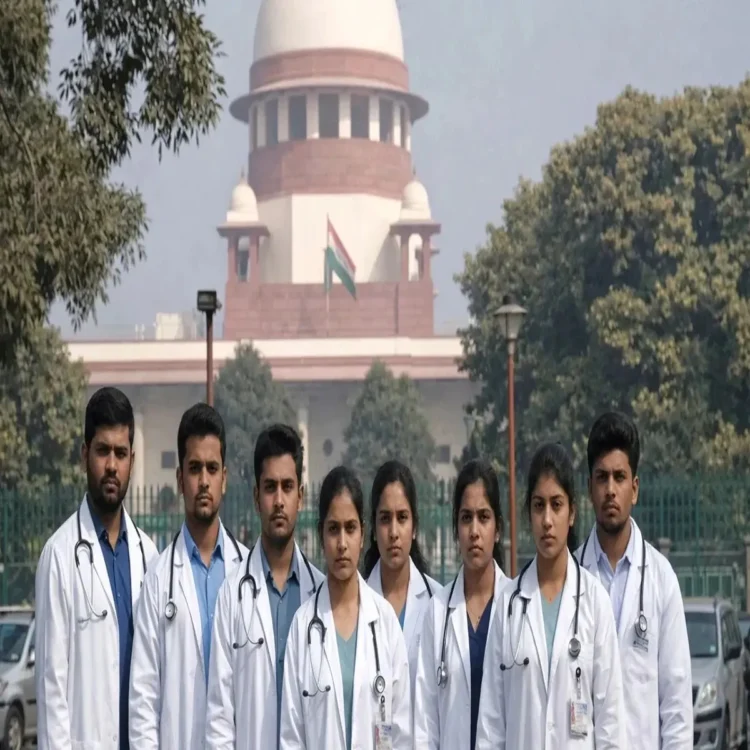
The Supreme Court on Friday underscored the need for long-term improvements in the conduct of the National Eligibility cum Entrance Test (NEET), stating that short-term responses cannot replace a well-structured and transparent examination mechanism. While hearing a group of petitions, including one filed by the Federation of All India Medical Association (FAIMA), the court said it would continue monitoring the Centre’s efforts aimed at preventing future question paper leaks and strengthening the integrity of the examination process.
Court Calls for Details on Reform Measures
A bench comprising Justices P. S. Narasimha and Alok Aradhe directed the Central government to submit a detailed record of the initiatives taken to improve transparency in the examination system. The judges also asked the government to explain the progress made in implementing the recommendations of the Radhakrishnan Committee and to provide information on plans to adopt examination practices inspired by the IIT model.
The court indicated that these measures would help assess whether the existing system is moving toward a more reliable and institution-based framework capable of reducing the risk of future irregularities.
Centre Assures Comprehensive Changes
Representing the Union government, Solicitor General Tushar Mehta informed the bench that a comprehensive report would soon be filed outlining both ongoing and proposed reforms. According to him, the government is not limiting itself to the recommendations of the Radhakrishnan Committee and is introducing additional safeguards to further improve the examination process.
He assured the court that protecting the future of students remains a top priority and stated that the reform process is receiving close supervision at the highest levels of the government. Mehta also emphasized that the authorities are committed to strengthening every stage of the examination system to restore confidence among candidates and stakeholders.
Previous Safeguards Discussed During Hearing
During the proceedings, Mehta referred to a similar matter that came before the court two years ago. He noted that the government had previously explained the various security measures adopted for NEET examinations, including procedures related to the printing, storage, and transportation of question papers.
According to the Centre, these safeguards were designed to minimize security risks and ensure the safe handling of confidential examination material throughout the process.
Judges Stress Institutional Solutions
Despite acknowledging the government’s efforts, the bench observed that certain emergency measures adopted in the past were intended only as temporary responses. The judges referred to the deployment of the Indian Air Force for transporting question papers during the NEET-UG re-examination, noting that such extraordinary arrangements cannot become a permanent solution.
Justice Narasimha remarked that dependence on ad hoc measures has remained a recurring concern over the years. He observed that the court would continue to focus on ensuring that the examination system evolves through stable institutional mechanisms rather than temporary fixes introduced only during crises.
FAIMA Seeks Clarity on Future CBT Process
The hearing also included submissions regarding the proposed transition of NEET-UG to a computer-based test (CBT) format from next year. Appearing for FAIMA, advocate Tanvi Dubey requested that the National Testing Agency prepare and publish a detailed standard operating procedure for the new examination model.
The request was made to ensure greater transparency and provide students with a clear understanding of how the CBT-based examination would be conducted. The matter remains under the Supreme Court’s consideration as it continues to examine the steps being taken to improve the credibility, security, and fairness of the country’s medical entrance examination system.