
Education – Rahul Gandhi Questions Delhi University Advisory on Jantar Mantar Protests
Education –Delhi University’s latest advisory regarding protests at Jantar Mantar has sparked a political debate over democratic participation and student safety.
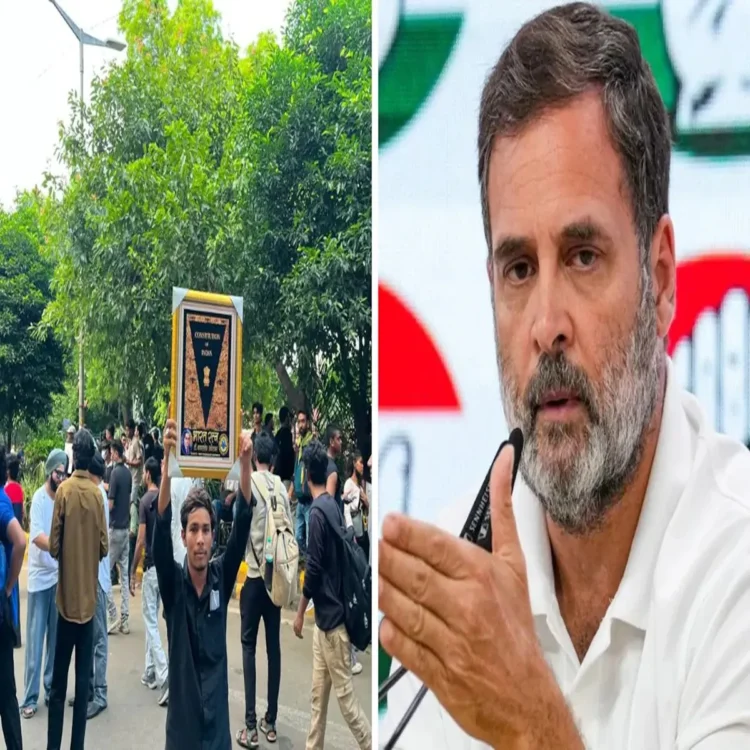
Congress leader Rahul Gandhi on Friday criticized Delhi University over its recent advisory asking students to avoid participating in protests at Jantar Mantar. Raising concerns about democratic freedoms, Gandhi questioned why the university was warning students against exercising what he described as their constitutional right to take part in peaceful public demonstrations. In a message shared on social media, he also cautioned that those responsible for restricting such rights would eventually be answerable for their actions.
Rahul Gandhi Responds to University Advisory
Gandhi’s remarks were posted while sharing the university’s advisory that urged students to stay away from protest gatherings at Jantar Mantar. He argued that educational institutions should encourage democratic values rather than create an atmosphere in which students feel discouraged from expressing their views. His response quickly drew attention as the advisory became the subject of wider political discussion.
Delhi University Explains Its Position
Delhi University issued the advisory on Thursday night, addressing both students and faculty members. The institution stated that public demonstrations at Jantar Mantar are governed by directions issued by the Supreme Court and that participation in any unlawful gathering could result in legal consequences. According to the university, the notice was intended to inform students about the legal framework surrounding such events rather than interfere with individual opinions.
The advisory also stressed that students should remain aware of applicable laws while making decisions about attending public demonstrations. University officials emphasized that compliance with legal requirements is important for maintaining personal safety as well as academic discipline.
Focus on Student Safety and Academic Interests
In its statement, the university expressed concern that involvement in unlawful protests could expose students to unnecessary risks. It noted that legal issues arising from participation in prohibited assemblies might not only affect personal safety but could also influence academic progress and future professional opportunities.
The administration encouraged students to prioritize their education and avoid situations that might lead to complications. It further advised them to remain cautious about misinformation and fabricated content circulating on various platforms, reminding students to verify information before relying on or sharing it.
Protest Linked to NEET Paper Leak Allegations
The advisory comes at a time when the Cockroach Janta Party (CJP) has been holding demonstrations in central Delhi since June 20. The group has been demanding the resignation of Union Education Minister Dharmendra Pradhan over allegations connected to the NEET paper leak issue.
The protest has continued to attract public attention as concerns surrounding the examination process remain a subject of political debate. While demonstrators have maintained their demands, the university’s advisory has introduced a separate discussion about the balance between ensuring student safety and protecting democratic participation.
Debate Over Democratic Rights Continues
The exchange between Rahul Gandhi and Delhi University has added another dimension to the ongoing conversation surrounding student involvement in public protests. Supporters of greater civic participation argue that students should be free to express their opinions peacefully within the framework of the law. At the same time, educational institutions maintain that they have a responsibility to alert students about legal requirements and possible risks associated with public demonstrations.
As discussions continue, the issue highlights the broader challenge of balancing constitutional freedoms, institutional responsibilities, and student welfare. The developments are likely to remain under close public and political scrutiny as the protests and related debates continue.