
EducationProtests – Sonia Gandhi Accuses Centre of Mishandling Student Demonstrations Over NEET Issue
EducationProtests – Growing concerns over examination transparency and education policy have intensified the political debate after senior Congress leader Sonia Gandhi criticised the Union government over its handling of protests linked to the NEET paper leak controversy.
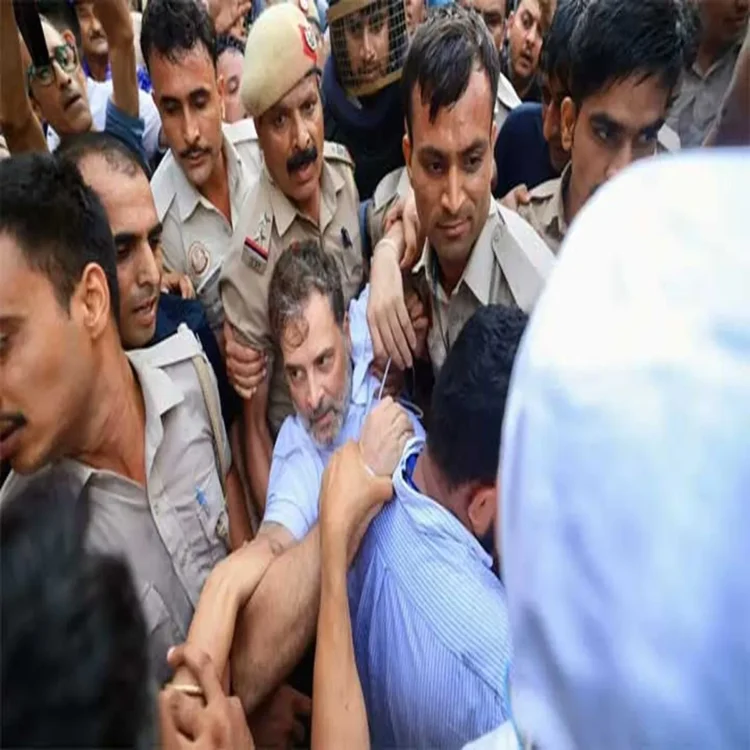
The political confrontation surrounding the NEET paper leak controversy deepened after Congress Parliamentary Party chairperson Sonia Gandhi accused the Central government of responding harshly to peaceful student demonstrations. In an opinion article published in The Hindu, she alleged that students seeking accountability over examination irregularities had been met with excessive force instead of meaningful engagement. Gandhi argued that young protesters, who represent the country’s future, deserved dialogue rather than confrontation from the authorities.
Sonia Gandhi Criticises Police Action Against Students
Referring to the student march held in Delhi on July 20, Sonia Gandhi described the day as deeply troubling, claiming that police personnel used lathi charges and tear gas to disperse demonstrators. According to her article, several protesters sustained injuries during the action, including students who were reportedly leaving the protest site. She urged the government to immediately stop the crackdown and begin discussions with student representatives to address their concerns.
Gandhi wrote that the nationwide protests reflected growing frustration among students over repeated examination paper leak allegations and broader issues affecting India’s education system. She maintained that their demands focused on transparency, accountability and meaningful reforms rather than political confrontation.
Allegations Over Government’s Education Policies
In her editorial, Gandhi expanded her criticism beyond the protests, arguing that the Centre has steadily reduced support for public education. She claimed that budget allocations for both school and higher education had declined significantly in recent years. According to her, these funding decisions have weakened public institutions while encouraging greater dependence on private education.
She also alleged that nearly one lakh government schools had been shut during the past 12 years, while thousands of private schools had opened during the same period. Gandhi further stated that reduced financial assistance from the University Grants Commission had compelled public universities to rely on loans and increase student fees, placing additional financial pressure on families.
Concerns Raised Over NTA and Examination System
A major focus of Gandhi’s article was the functioning of the National Testing Agency (NTA), which conducts examinations such as NEET and CUET. She argued that replacing state-level and university-based examinations with a centralised testing system had created fresh challenges.
According to her, the NTA continues to face staffing shortages and depends heavily on private contractors to manage examination operations. Gandhi also referred to reported examination paper leak incidents across the country over the past decade and questioned whether sufficient safeguards exist to protect the integrity of national entrance examinations.
She further criticised the government’s handling of recommendations made by the Parliamentary Standing Committee on Education, alleging that proposals aimed at strengthening the examination system were not adequately considered.
Unemployment and Student Anxiety Highlighted
Linking the protests to wider economic concerns, Gandhi said rising unemployment among graduates has increased the pressure on students competing for limited career opportunities. She argued that secure, well-paying jobs have become increasingly difficult to obtain, making fair and credible entrance examinations even more important for young people.
The Congress leader also expressed concern over what she described as politically influenced appointments within higher education institutions and questioned the implementation process of the National Education Policy 2020. She maintained that major education reforms should involve wider parliamentary consultation and stronger institutional accountability.
Protest Movement Continues
While political debate over the issue continues, protest activities have not completely subsided. The Cockroach Janta Party (CJP) announced on Friday that its demonstration at Jantar Mantar would continue until Union Education Minister Dharmendra Pradhan steps down.
Meanwhile, activist Sonam Wangchuk ended his 26-day hunger strike after receiving a written assurance from the Union government regarding discussions on the NEET examination issue and broader education reforms. The developments indicate that demands for greater transparency and systemic changes in India’s examination framework are likely to remain at the centre of public and political discourse in the coming weeks.