
ICC – US Launches Broad Diplomatic Drive to Challenge International Criminal Court
ICC – The United States has unveiled a broad government-led strategy aimed at challenging the role and influence of the International Criminal Court (ICC), arguing that the tribunal’s actions threaten American sovereignty and could expose US officials and military personnel to legal proceedings without Washington’s approval.
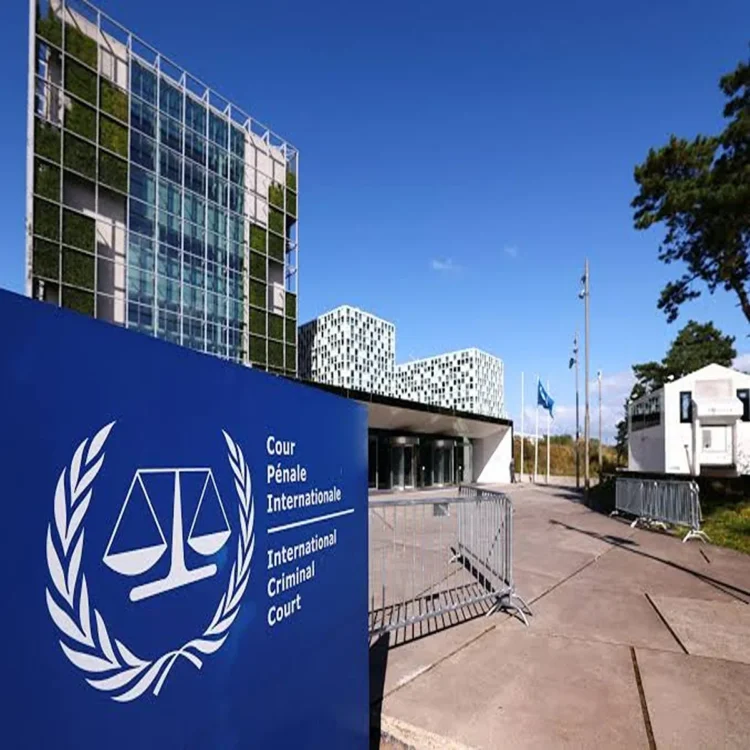
State Department Takes the Lead
The campaign is being coordinated by the US State Department and represents one of the strongest public positions taken by the Trump administration against the Hague-based court. Officials said the effort will involve multiple federal agencies and could expand beyond diplomatic engagement if necessary.
State Department spokesperson Tommy Pigott stated that the administration intends to systematically counter what it considers the ICC’s growing challenge to US sovereignty. According to senior officials, the government is reviewing a broad range of policy measures that may be implemented depending on international responses.
Possible Measures Under Consideration
Among the options being discussed are additional sanctions targeting the ICC and related organizations, visa restrictions, travel bans and other administrative actions. The administration is also considering diplomatic initiatives designed to reduce political and financial backing for the court from countries around the world.
Officials indicated that these measures are part of a coordinated strategy rather than isolated policy decisions. They said the administration believes a unified approach across government agencies will strengthen Washington’s position on the issue.
Diplomatic Outreach to Governments Worldwide
Senior US officials, including the Secretary of State, Deputy Secretary and American ambassadors, have reportedly begun contacting foreign governments as part of the diplomatic campaign.
According to the State Department, countries that have joined the Rome Statute—the treaty establishing the ICC—are being encouraged to reconsider their membership and financial contributions to the court. Nations that are not members are also being asked to use their diplomatic influence to support the US position.
American officials said particular attention is being given to countries that maintain close security cooperation with the United States, host US military personnel or work alongside American law enforcement agencies. Washington is urging these governments to reject what it describes as the ICC’s authority over US citizens.
Warning for Nations Supporting the Court
The administration also suggested that governments continuing to support the ICC while benefiting from American assistance could face greater scrutiny in future diplomatic and policy discussions.
Officials argued that the objective of the outreach is to explain what Washington views as the risks associated with the court’s expanding jurisdiction. They maintained that the United States remains opposed to any attempt by the ICC to prosecute American officials or service members without the country’s consent.
Washington Questions ICC’s Authority
Pigott accused the International Criminal Court of attempting to exercise powers that extend beyond the authority of sovereign nations. He said the administration believes international institutions should not be able to override the legal systems of independent states or impose legal decisions on countries that have not accepted their jurisdiction.
He also reaffirmed that the United States considers national sovereignty a fundamental principle that cannot be compromised. According to Pigott, the administration is prepared to use every available diplomatic tool to prevent the court from taking actions that it believes could affect American interests.
Longstanding US Position on the ICC
The United States has consistently maintained that it does not recognize the ICC’s jurisdiction over US nationals because it has never ratified the Rome Statute. Successive American administrations have argued that the country’s legal system is fully capable of addressing allegations involving its own citizens.
Established in 2002 and headquartered in The Hague, the International Criminal Court investigates and prosecutes individuals accused of genocide, crimes against humanity, war crimes and the crime of aggression when national judicial systems are unwilling or unable to take action.
More than 120 countries are parties to the Rome Statute. However, several major global powers, including the United States, China, India and Russia, remain outside the treaty and are not members of the court.