
Rural Employment – Higher Job Guarantee Raises State Funding Concerns
Rural Employment – India’s revised rural employment programme could increase household income support through more workdays and higher wages, but its broader economic effect will depend heavily on the ability of state governments to meet a much larger funding requirement, according to a Systematix Research report.
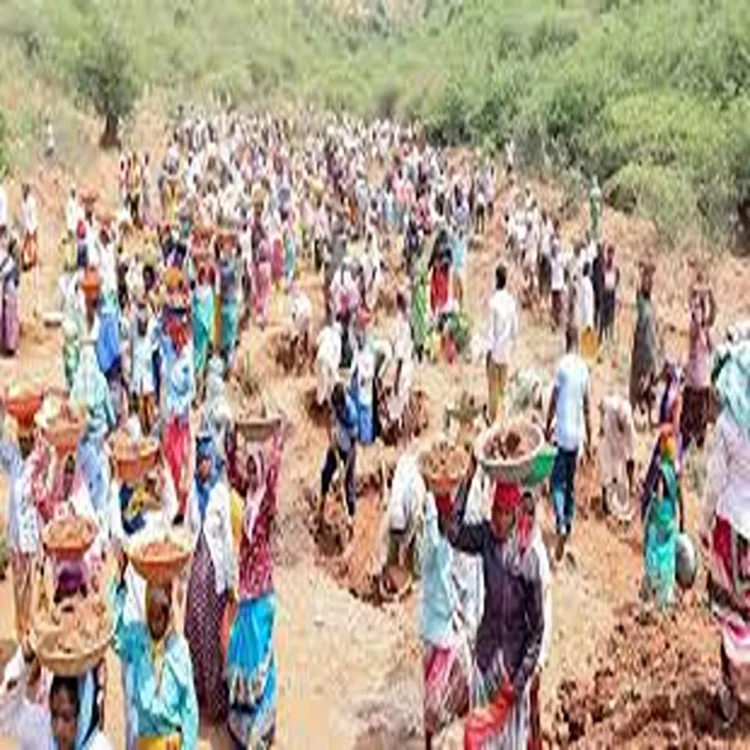
Rural jobs scheme funding outlook –
The Viksit Bharat-Guarantee for Rozgar and Ajeevika Mission (Gramin), or VB-G RAM G, has replaced the Mahatma Gandhi National Rural Employment Guarantee Act programme. The new framework increases the annual employment guarantee from 100 days to 125 days and lifts the average daily wage by nearly 10 per cent, from Rs 299 to Rs 327.
Systematix Research said the changes could improve spending capacity in villages and provide support to rural demand, particularly at a time when wage growth and household incomes in many rural areas have faced pressure.
Higher wages and longer work entitlement
The report noted that the revised programme carries a stronger employment and wage commitment on paper. More guaranteed workdays could provide an additional income buffer for families that depend on seasonal employment and agriculture-linked activities.
However, it said the programme’s structure has changed significantly from the earlier model. The report described the shift as a move from a demand-driven funding arrangement to one with centrally capped allocations, raising questions about whether employment demand can be met fully in practice.
Larger share of costs for states
One of the central concerns is the new cost-sharing formula. Under VB-G RAM G, most states are expected to bear 40 per cent of the expenditure, while the Centre will contribute 60 per cent. Previously, the Centre covered the overwhelming portion of spending under the earlier rural employment programme.
Systematix Research estimated that the collective state contribution could rise to around Rs 35,300 crore in FY27, compared with about Rs 8,690 crore in FY26. This would represent an increase of more than four times in the financial responsibility carried by state governments.
The report said both the FY27 interim allocation estimate and its comparison with past funding patterns suggest that states may face a four-to-five-fold rise in their contribution compared with the outgoing MGNREGA structure.
Budget pressures may affect implementation
States with limited fiscal space may be forced to make difficult choices to finance the programme, the report said. They could increase revenue spending, reduce capital expenditure, or reconsider allocations for other welfare initiatives.
Such trade-offs may be particularly challenging for states already managing high spending commitments on subsidies, social protection programmes and public infrastructure.
The report also warned that higher notified wages and a longer employment guarantee may not automatically lead to stronger rural demand. If states face funding constraints or if job creation continues to weaken, the scheme’s impact on household earnings could remain limited.
Infrastructure and accountability goals
VB-G RAM G is also expected to focus on the creation of durable rural assets and improved accountability in implementation. These objectives could strengthen the programme’s long-term value if projects are selected effectively and payments are made on time.
Systematix Research said the eventual outcome will depend on how the funding model operates, how states manage their budgets and whether implementation can respond to actual demand for work. The programme may offer greater income support, but its success in supporting the rural economy will be shaped by fiscal capacity and execution on the ground.