
ConstructionSafety – Supreme Court Seeks Accountability After Deadly Delhi Building Collapse
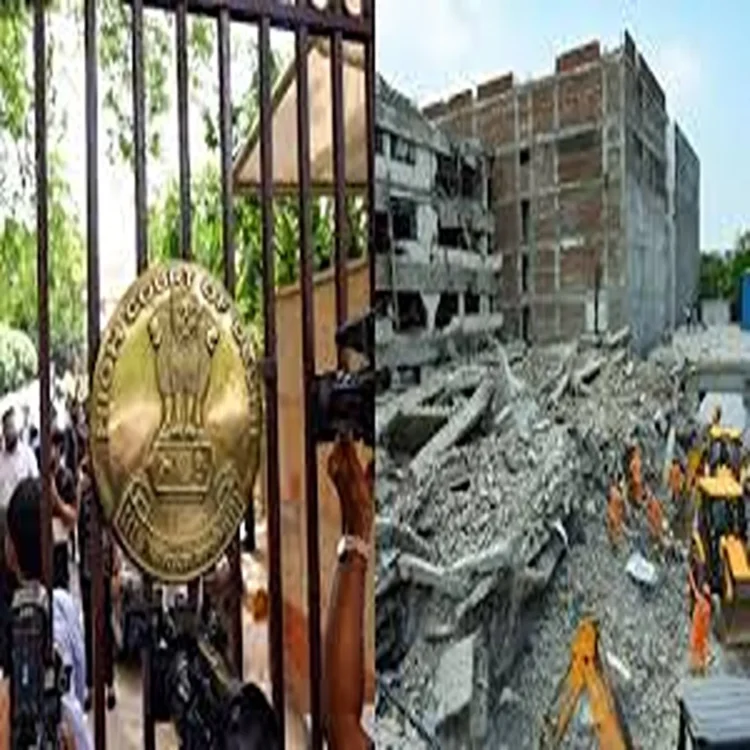
ConstructionSafety – A fresh plea has been placed before the Supreme Court seeking immediate measures to address illegal construction activities in Delhi following the collapse of a multi-storey building in the Saidulajab area. The tragic incident, which occurred on May 30, resulted in the deaths of six people and left at least 14 others injured. The matter has reignited concerns over building safety standards and enforcement failures in the national capital.
Supreme Court Already Raised Concerns Over Violations
The latest development comes against the backdrop of earlier observations made by the Supreme Court regarding unauthorized construction across the country. On March 25, a bench comprising Justices Ahsanuddin Amanullah and R. Mahadevan expressed serious concern while hearing a case linked to Tamil Nadu. The court had highlighted widespread violations of building regulations and questioned the effectiveness of municipal authorities in preventing illegal structures.
The recent collapse in Delhi has now prompted calls for urgent intervention and stricter oversight of construction practices.
Amicus Curiae Submits Status Report
Senior advocate Ajit Kumar Sinha, appointed as amicus curiae in the matter, submitted a status report before the apex court on June 4 through advocate Govind Jee. The report urges the court to take immediate steps in light of the Saidulajab building collapse and examine the role of authorities responsible for monitoring construction activities.
According to the submission, the building that collapsed had allegedly been under the notice of municipal authorities for years due to construction-related violations. Despite repeated records of unauthorized development, effective preventive measures were reportedly not implemented.
Previous Violations Recorded by Civic Authorities
The report cites municipal records indicating that violations associated with the building were first documented in 2012. Additional concerns were reportedly registered again in 2015 when further floors were added to the structure.
Despite these observations, construction activity allegedly continued. The report states that additional upper floors, including the fourth and fifth levels, were built shortly before the structure collapsed. This sequence of events has raised serious questions about enforcement mechanisms and compliance monitoring within the civic administration.
Questions Raised Over Enforcement Failures
The amicus curiae has argued that the Municipal Corporation of Delhi (MCD) did not adequately fulfill its statutory responsibilities. The submission claims that authorities failed to take timely corrective measures, such as sealing the property or preventing further construction, even after repeated indications of violations.
The report suggests that stronger enforcement could have prevented unauthorized expansion of the building and potentially reduced the risk posed to residents and occupants.
Demand for City-Wide Survey and Structural Audits
Among the key requests made before the Supreme Court is a direction requiring the MCD to submit an affidavit detailing surveys conducted across Delhi and actions taken against illegal constructions and unauthorized use of residential properties.
The plea also seeks a comprehensive structural audit of buildings falling within the jurisdiction of the civic body. In addition, it calls for time-bound action involving the sealing and demolition of illegal structures found to be in violation of applicable regulations.
Supporters of the proposal argue that such measures could help identify unsafe buildings and strengthen public safety standards across the city.
Reports Sought From Delhi Government and Police
The submission further requests that the Delhi government and the police provide a detailed action-taken report regarding the Saidulajab collapse. This report is expected to include information on the investigation conducted so far and any findings related to the alleged involvement or negligence of municipal officials.
As the Supreme Court considers the matter, the case is likely to draw attention to broader issues surrounding urban planning, regulatory compliance, and public safety in rapidly expanding urban areas.