
CensusData – Owaisi Raises Concerns Over Data Collection and Voter Roll Revision Process
CensusData – AIMIM president Asaduddin Owaisi has accused the Union government of weakening the reliability of India’s census and survey mechanisms, arguing that changes in data collection practices could reduce the effectiveness of future policymaking and welfare planning. He said dependable statistical information remains essential for governance, development strategies, and the distribution of public benefits.
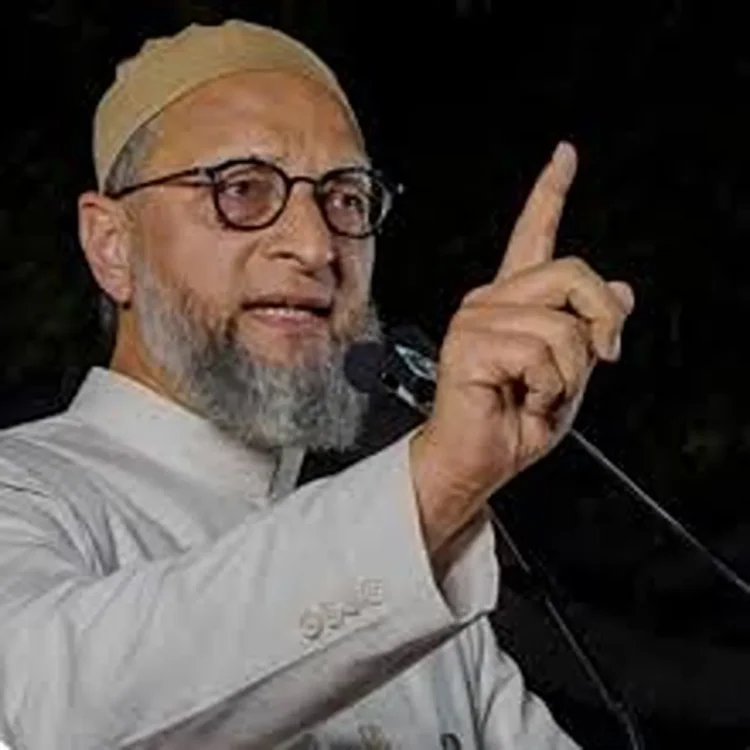
Questions Raised Over Census Data Collection
In a statement shared on social media platform X, Owaisi referred to the importance of trustworthy statistical records and expressed concern that alterations in the way information is gathered may affect the overall credibility of the census exercise. According to him, accurate population data plays a key role in constituency delimitation, development initiatives, and food security programmes.
He further alleged that the government could be compromising the quality of national data collection at a time when reliable figures are needed for long-term planning. Owaisi suggested that any gaps in official datasets may create challenges for policymakers who depend on such information to assess social and economic conditions across the country.
Concerns Over Missing Indicators in Surveys
The Hyderabad MP also pointed to the latest National Family Health Survey, claiming that certain indicators previously tracked in earlier rounds are no longer being collected. Among the issues he highlighted were data related to sanitation practices and household cooking fuel usage.
According to Owaisi, the absence of such information may make it harder to evaluate living standards and monitor progress in areas linked to public health and household welfare. He argued that comprehensive datasets are necessary for understanding conditions on the ground and designing targeted government interventions.
Report Highlights Field-Level Discrepancies
His comments come after reports of inconsistencies between survey findings gathered by field officials and existing government records. The report suggested that census workers had encountered cases where conditions observed during verification did not fully match official claims.
Among the concerns mentioned were villages reported as open defecation-free where verification reportedly indicated otherwise. Similar discrepancies were said to have emerged in relation to household fuel use, with some families continuing to rely on traditional energy sources such as kerosene, crop residue, and cow dung cakes despite records showing access to cleaner alternatives including LPG connections.
Officials are believed to have instructed field staff to conduct additional checks in such cases to ensure the accuracy of information being recorded.
Electoral Roll Revision Also Under Scrutiny
Separately, Owaisi criticised the ongoing Special Intensive Revision (SIR) of electoral rolls. He alleged that approximately 6.5 crore voter names had been removed across 13 states and Union Territories, raising concerns about the possible impact on disadvantaged sections of society.
He warned that communities such as Muslims, women, migrant workers, and economically weaker groups could face long-term challenges if they are excluded from voter lists. While acknowledging that removal from electoral rolls does not determine a person’s citizenship status, he noted that millions of cases remain under review and affected individuals can seek re-enrolment through the prescribed application process.
Debate Over Verification and Accountability
Owaisi also questioned the rationale behind proposals for additional committees to study exclusions, arguing that existing demographic indicators already provide substantial information about population trends. He cited factors such as a stable population pattern and fertility rates as examples.
Additionally, he criticised what he described as increasing documentation and verification requirements imposed on citizens through electoral and administrative processes. He argued that such measures often place greater scrutiny on the public while raising broader questions about institutional accountability.
The Election Commission is currently carrying out the third phase of the Special Intensive Revision across 16 states and three Union Territories. The exercise covers more than 36 crore voters and is being coordinated alongside household listing activities connected to the upcoming national Census, with the aim of improving efficiency in field operations.