
FloodManagement – Centre Restructures Flood Control System Ahead of 2026 Monsoon
FloodManagement – The Union government has begun a major restructuring of India’s flood management framework ahead of the 2026 monsoon season, with the Ministry of Jal Shakti introducing administrative and institutional changes aimed at reducing loss of life and limiting damage caused by floods across the country.
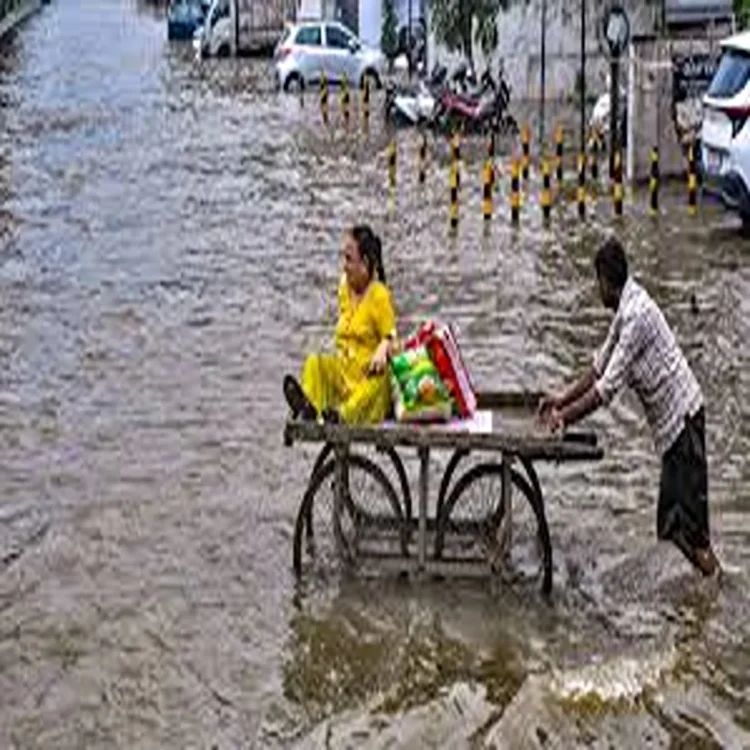
The changes are part of a broader strategy focused on improving coordination, strengthening forecasting systems, and shifting disaster management efforts from post-flood relief to preventive planning. Officials involved in the process said the government’s objective is to work toward “zero casualties and minimal property damage” during future flood seasons.
Senior Flood Control Officials Shifted to Delhi
Under the new arrangement, the Chairman of the Ganga Flood Control Commission will move from the organisation’s headquarters in Patna to New Delhi. The official will now serve as Member (Floods) within the Central Water Commission, functioning under the supervision of the CWC Chairman, who also serves as the ex-officio Secretary to the Government of India.
In another related change, the Member (Planning) of the Ganga Flood Control Commission will take over the role of Chief Engineer (Flood Appraisal) at the Central Water Commission in Delhi.
Government officials said the relocation is intended to improve coordination between departments before and during the monsoon season. According to one senior officer, the move reflects a transition toward a prevention-oriented disaster management system rather than relying mainly on emergency relief measures after floods occur.
Focus on Prevention and Faster Coordination
Officials familiar with the restructuring said the central government believes that bringing key flood management authorities under a more integrated administrative structure in Delhi could help speed up decision-making and planning activities.
One officer also pointed to the current political environment, noting that states across the Gangetic plains are presently governed by the Bharatiya Janata Party or its allies, which may have contributed to smoother acceptance of the administrative shift from Patna to Delhi. Earlier, states such as Bihar and West Bengal had reportedly shown resistance to similar proposals.
Floods continue to remain among India’s most damaging natural disasters. Every year, heavy rainfall and overflowing rivers affect millions of people, damaging homes, roads, crops, and public infrastructure across several states.
Economic Losses Remain a Major Concern
Government data shows that floods impact nearly 7.3 million hectares of land annually in India. The estimated economic losses caused by flooding are close to Rs 18,000 crore every year.
Although flood control and water management are primarily handled by state governments, the Centre provides technical guidance, financial assistance, and institutional support for large-scale flood management projects and river basin planning.
The restructured system is expected to improve cooperation between central agencies and state administrations in handling flood-related challenges more efficiently.
New Flood Monitoring System Planned
As part of the reforms, the newly organised body will prepare master plans for different river basins across the country, excluding the Northeastern region, which will continue to remain under the Brahmaputra Board’s jurisdiction.
The organisation will also conduct studies related to river behaviour, sediment accumulation, and erosion patterns to support long-term flood prevention planning.
In addition, authorities are planning to launch a digital platform called the Flood Management Information System. The dashboard will monitor anti-erosion projects, track ongoing and completed flood control works, and identify flood-prone areas and affected populations across states.
Officials believe the system will help improve real-time monitoring and provide more accurate information for planning and emergency response.
Northeast Flood Planning Also Expanded
The Centre had earlier expanded the structure of the Brahmaputra Board by including Sikkim and West Bengal as members for the first time. The move was intended to support basin-level planning and coordinated flood management across the Brahmaputra region.
However, some environmental activists in Sikkim have raised concerns that the inclusion could encourage renewed hydropower and dam construction projects in ecologically sensitive hill regions.
At present, flood management at the national level is handled mainly through the Central Water Commission, the Ganga Flood Control Commission, and the Brahmaputra Board. The Central Water Commission continues to serve as the country’s top technical body for flood forecasting, inundation modelling, floodplain zoning, and appraisal of flood control projects outside the Ganga basin.