
Politics – BJP Intensifies Criticism After Rahul Gandhi’s Government Collapse Remark
Politics – The Bharatiya Janata Party on Sunday sharply criticised Congress leader Rahul Gandhi following his recent remarks suggesting that the Narendra Modi-led government could face collapse in 2027. The comments triggered a strong political reaction, with senior BJP leaders accusing the Congress MP of attempting to create instability in the country’s political environment.
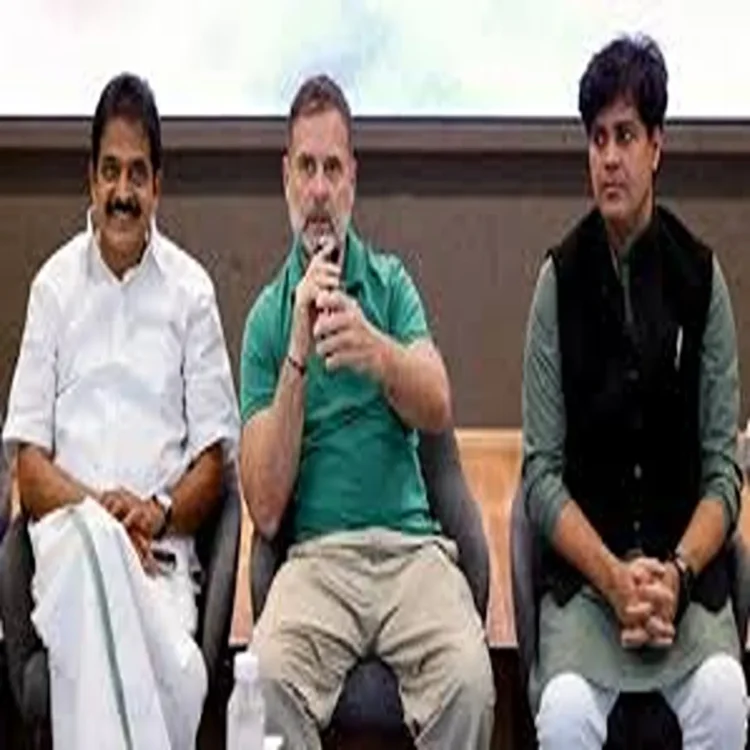
Rahul Gandhi’s Remarks Trigger Political Confrontation
The controversy began after Rahul Gandhi addressed an event organised by the Congress party’s minority advisory platform earlier this week. During his speech, Gandhi expressed confidence that the current central government would not remain stable in the coming years and predicted major political changes by 2027.
His statement quickly became the centre of political debate, with BJP leaders accusing him of making irresponsible remarks aimed at undermining democratic institutions. Party representatives argued that such comments could encourage political uncertainty at a sensitive time.
BJP Accuses Congress of Destabilisation Efforts
Several BJP leaders responded strongly to Gandhi’s statement, alleging that the Congress leadership was attempting to create confusion and unrest for political gain. Union Minister Piyush Goyal claimed that the remarks reflected what he described as a broader strategy involving opposition groups working together to weaken public confidence in the government.
In a social media post written in Hindi, Goyal alleged that Gandhi’s comments were not casual political observations but part of a coordinated effort intended to spread instability. According to the BJP leader, certain opposition parties and groups were trying to create a negative narrative around the country’s political and economic direction.
The minister further claimed that Congress leaders were frustrated by repeated electoral setbacks and were therefore attempting to build public pressure through aggressive political messaging rather than democratic victories at the ballot box.
Allegations of Political Provocation
The BJP also accused the Congress leader of encouraging divisive politics. Party representatives argued that repeated predictions about the fall of the government could fuel unnecessary political tension across the country.
Senior BJP MP Sudhanshu Trivedi stated that Gandhi’s remarks reflected what he called a dangerous political mindset. According to him, such statements could weaken public trust in democratic stability and governance.
Trivedi further alleged that opposition parties were increasingly relying on confrontational rhetoric instead of constructive political debate. He maintained that the Narendra Modi government continued to enjoy strong public support and remained focused on development and economic growth.
Congress Yet to Issue Detailed Clarification
While BJP leaders intensified their criticism, the Congress party had not issued a detailed response to the allegations at the time of reporting. However, party leaders in recent months have repeatedly questioned the central government over issues such as unemployment, inflation, social harmony, and economic inequality.
Rahul Gandhi has frequently targeted the BJP government during public rallies and parliamentary speeches, accusing it of centralising power and failing to address concerns affecting ordinary citizens. The BJP, on the other hand, has consistently dismissed these allegations and defended its governance record.
Political observers believe the latest exchange signals that the rivalry between the BJP and Congress is likely to become even more aggressive as the country gradually moves closer to future electoral contests. Public statements from senior leaders on both sides are expected to shape the political narrative in the coming years.
The dispute has once again highlighted the deepening divide between the ruling party and the opposition, with both camps continuing to trade accusations over governance, political conduct, and the direction of national politics.