
CourtRuling – Supreme Court Reviews Bail Standards in Delhi Riots Case
CourtRuling – The Supreme Court on Friday signaled that interim bail may be granted to two men arrested in connection with the alleged conspiracy behind the 2020 Delhi riots, while also agreeing to examine a larger legal question concerning bail provisions under the Unlawful Activities (Prevention) Act.
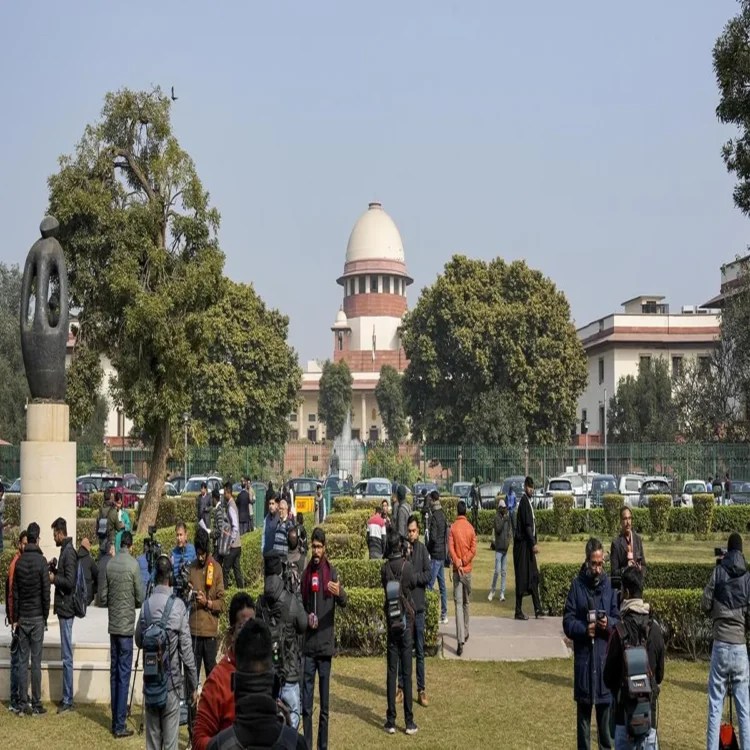
The matter was heard by a bench comprising Justices Aravind Kumar and PB Varale. During proceedings, the court reserved its order on the bail petitions filed by Abdul Khalid Saifi and Tasleem Ahmad. Senior advocate Rebecca John represented Saifi, while advocate Mehmood Pracha appeared for Ahmad.
The bench informed both sides that relief was likely to be considered, although the court would also evaluate the request made by Delhi Police to refer the legal issue to a larger bench of the Supreme Court.
Debate Over Delayed Trials and Bail Provisions
The hearing focused heavily on whether prolonged detention and delays in criminal trials can become valid grounds for granting bail in cases registered under the UAPA, India’s anti-terror law.
Additional Solicitor General SV Raju, representing Delhi Police, argued that delay alone should not automatically entitle an accused person to bail in serious terror-related cases. According to him, courts must assess the role played by each accused individually instead of applying a uniform principle.
Raju referred to cases involving terror offences to support the police position. He stated that trials involving numerous witnesses often take years to complete and warned against creating a broad rule that could weaken strict bail restrictions under anti-terror legislation.
He further argued that there are varying levels of involvement among accused persons in UAPA matters, ranging from key conspirators to associates. Therefore, he said, judicial scrutiny must remain case-specific.
Supreme Court Examines Conflicting Judgments
The proceedings also highlighted differing interpretations delivered by separate benches of the apex court in recent months.
Delhi Police defended the Supreme Court’s January 5 ruling that denied bail to activists Umar Khalid and Sharjeel Imam in the Delhi riots conspiracy case. The prosecution argued that the judgment correctly applied legal standards after considering the seriousness of allegations and the specific roles assigned to the accused.
However, the court also discussed another recent judgment delivered in the case involving Syed Iftikhar Andrabi, linked to a narco-terror investigation by the National Investigation Agency. In that verdict, the Supreme Court strongly reiterated that personal liberty remains important even in UAPA prosecutions and observed that “bail is the rule and jail is the exception.”
The Andrabi ruling reportedly raised concerns over the reasoning adopted in the January 5 decision and stressed that extended incarceration without trial cannot be ignored indefinitely.
Focus on Najeeb Judgment
A major part of the legal discussion revolved around the landmark 2021 judgment in the K A Najeeb case. In that ruling, the Supreme Court held that excessive delay in trial proceedings could justify bail even under the stringent provisions of the UAPA.
Justice Kumar noted during Friday’s hearing that courts have granted bail in other serious criminal cases involving life imprisonment or death penalty when delays were not caused by the accused themselves.
The prosecution, however, maintained that the Najeeb principle should not become a blanket formula for all UAPA cases. According to Delhi Police, the facts and gravity of each case must continue to guide bail decisions.
Interim Relief Likely for Two Accused
Despite the larger constitutional debate, the hearing indicated possible relief for Saifi and Ahmad. The prosecution itself acknowledged before the court that the two accused may not fall within the category of principal conspirators in the case.
The bench stated that orders on their interim bail pleas may be delivered later in the day or on May 25.
The Delhi riots conspiracy case has remained one of the most closely watched legal matters linked to the violence that erupted in northeast Delhi in February 2020. Several activists and accused individuals have challenged their continued detention under the UAPA, leading to repeated legal debates over personal liberty, national security and the pace of criminal trials in India.