
Politics – Udhayanidhi Stalin Repeats Sanatana Dharma Criticism in Assembly
Politics – DMK leader Udhayanidhi Stalin renewed his criticism of Sanatana Dharma during his first speech as Leader of the Opposition in the Tamil Nadu Assembly on Tuesday, stating that the concept should be removed because it creates divisions among people.
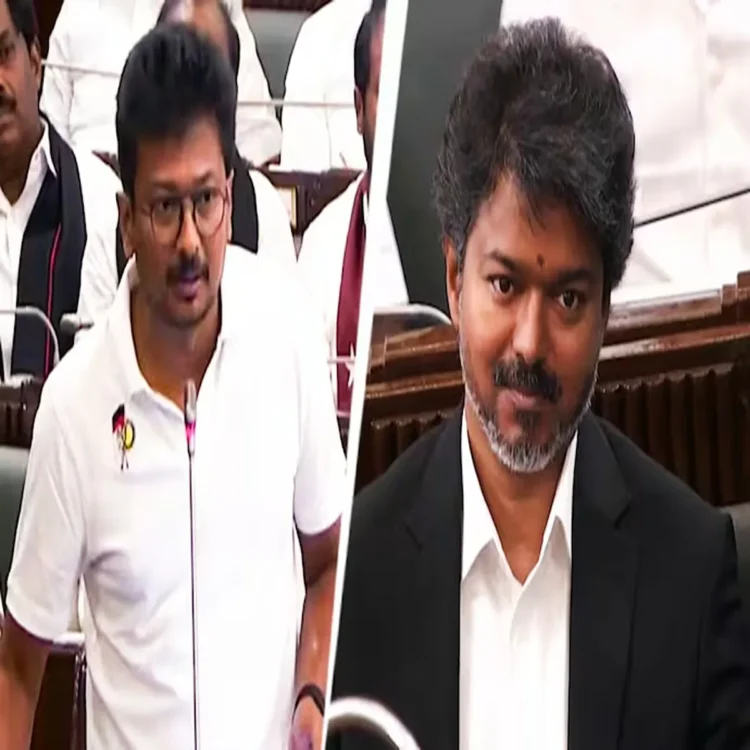
The remarks drew attention because they echoed comments he made in 2023 that had triggered strong political reactions across the country and led to legal complaints from several Hindu organisations. Speaking in the Assembly, Udhayanidhi said social harmony should remain the priority and argued that any ideology encouraging discrimination had no place in society.
Concerns Raised Over Tamil Invocation Song
During his address, the DMK leader also questioned the handling of “Tamil Thai Vazhthu” at the recent swearing-in ceremony of the newly formed government. He alleged that the traditional order followed during official events had been altered, reducing the importance usually given to the Tamil invocation song.
According to Udhayanidhi, the anthem was shifted from its customary position in the programme sequence, which he described as inappropriate for a state function. He urged the government to ensure that established cultural practices are respected at all official ceremonies in Tamil Nadu.
He further stated that such protocol-related issues should not be repeated inside the Assembly or at future government events. Stressing the emotional connection many people in the state have with the Tamil anthem, he said the matter had caused disappointment among sections of the public.
Reference to Earlier Disputes
Udhayanidhi also recalled earlier disagreements involving the previous DMK administration and Governor R N Ravi regarding official traditions and ceremonial procedures. He said the former government had firmly opposed attempts to modify long-standing conventions linked to Tamil identity and culture.
The DMK leader maintained that safeguarding regional customs and linguistic traditions remained an important responsibility for political parties in the state. He appealed for continued vigilance to protect what he described as Tamil Nadu’s cultural rights and heritage.
Opposition’s Role in the Assembly
In his maiden speech as Leader of the Opposition, Udhayanidhi outlined how the DMK intended to function inside the Assembly. Referring to the views of former Chief Minister and DMK founder C N Annadurai, he compared the opposition’s responsibility to a braking system in a vehicle, meant to guide governance in the public interest.
He said the opposition would not focus only on confrontation but would instead work constructively while closely examining government decisions. According to him, democratic functioning becomes stronger when the opposition actively participates in debates and raises public concerns.
The DMK leader also highlighted the present strength of the opposition benches, noting that the numbers were now close to those of the ruling side. He welcomed the presence of many first-time legislators and women members in the Assembly, saying it reflected broader political participation.
Light Moment During Proceedings
Amid the serious political discussion, Udhayanidhi introduced a lighter moment by mentioning that he, Chief Minister C Joseph Vijay, and Speaker JCD Prabhakar had all studied at Loyola College. He jokingly remarked that the DMK represented the “senior batch” in politics, drawing smiles inside the House.
Despite political rivalry, he said democratic institutions function better when debates are carried out respectfully and with accountability. He added that the opposition would continue monitoring the government’s actions to ensure that welfare policies remain inclusive and beneficial for all sections of society.
Appeal for Neutral Conduct
Towards the end of his speech, Udhayanidhi appealed to the Speaker to maintain neutrality during Assembly proceedings. He said opposition members should receive adequate opportunities to voice issues affecting the public.
Reaffirming the DMK’s commitment to the Dravidian model of governance, he stated that the party would continue advocating policies centred on equality, welfare, and social justice while ensuring that the concerns of ordinary citizens are represented effectively in the Assembly.