
MaritimeSecurity – US Escorts Begin Limited Commercial Ship Passage Through Hormuz
MaritimeSecurity – Global energy trade stability and Strait of Hormuz shipping operations remain under close international observation – The United States has continued its naval operation aimed at helping commercial vessels move safely through the Strait of Hormuz, one of the world’s most important oil and gas shipping routes. According to American officials, only two merchant ships, both sailing under the US flag, had successfully crossed the strategic waterway by Tuesday as military protection efforts expanded in the region.
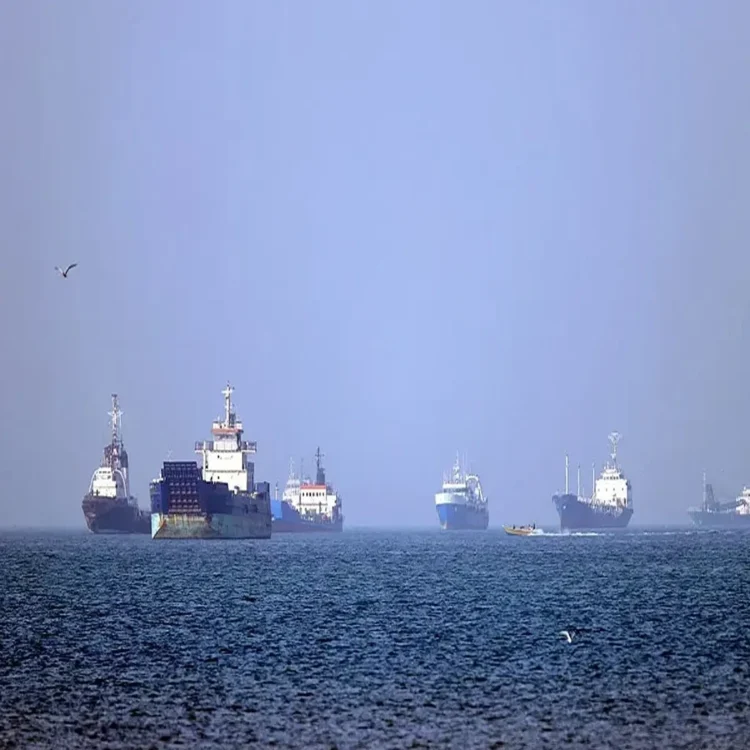
US Military Expands Protective Presence in Gulf Waters
Chairman of the Joint Chiefs of Staff Dan Caine stated that the temporary maritime corridor is being supported by guided-missile destroyers, more than 100 military aircraft, and nearly 15,000 US personnel. The mission is focused on assisting thousands of mariners and hundreds of commercial vessels currently waiting inside the Persian Gulf due to security concerns.
US Defense Secretary Pete Hegseth said Washington’s immediate objective is to ensure safe navigation without escalating tensions further. He noted that over 22,500 sailors aboard more than 1,550 ships remain affected by the ongoing uncertainty surrounding the route.
Speaking about the military deployment, Hegseth emphasized that the United States would prefer a peaceful operation centered on guidance and protection rather than confrontation. He also described the mission as temporary and suggested that broader international participation may eventually be required to maintain maritime security in the region.
Reports of Confrontation Near Protected Shipping Routes
The situation in the Gulf remains tense despite ongoing diplomatic discussions. US Central Command reported that Iranian forces launched cruise missiles, drones, and small boats toward civilian vessels operating under American military protection.
According to the statement, US helicopters responded by targeting six small boats allegedly involved in the attacks. American officials also rejected Iranian claims that US naval assets had been damaged during the confrontation.
Iran has criticized the American naval activity and described the military presence as a violation of the existing ceasefire framework. However, General Caine maintained that the ceasefire agreement itself had not collapsed and that efforts to prevent wider conflict were continuing.
Diplomatic Efforts Intensify Across Europe
Alongside the military developments, diplomatic activity has accelerated in Europe and the Middle East. US Secretary of State Marco Rubio is expected to travel to Rome and Vatican City later this week as part of efforts to ease growing tensions involving President Donald Trump and Pope Leo XIV.
Recent remarks from Trump directed at the pope have attracted international attention after the president accused the pontiff of comments that could increase divisions among Catholics. The dispute reportedly followed the pope’s concerns regarding the conflict linked to Iran.
European leaders are also becoming more directly involved in attempts to lower tensions. French President Emmanuel Macron confirmed on Tuesday that he planned to hold discussions with the Iranian president following a request from Tehran.
France Calls for Diplomacy and Open Shipping Lanes
Macron reiterated France’s position that military escalation must be avoided and that diplomatic negotiations remain the best path forward. He stressed the importance of keeping the Strait of Hormuz open to international shipping without restrictions, tolls, or coercive measures.
The French president warned that any unilateral action targeting oil tankers, cargo ships, or foreign states could worsen instability in the region. He said additional pressure on commercial shipping would only increase the risk of a broader conflict and deepen economic uncertainty linked to global energy supply routes.
The Strait of Hormuz continues to serve as a critical maritime passage for global oil exports, making developments in the area closely watched by governments, shipping companies, and energy markets worldwide.