
Defence – Army Leadership Change Marks New Phase in Kashmir Security Strategy
Defence – The Indian Army has announced a key leadership change in its Srinagar-based formation, marking a significant moment for ongoing security operations in the region.
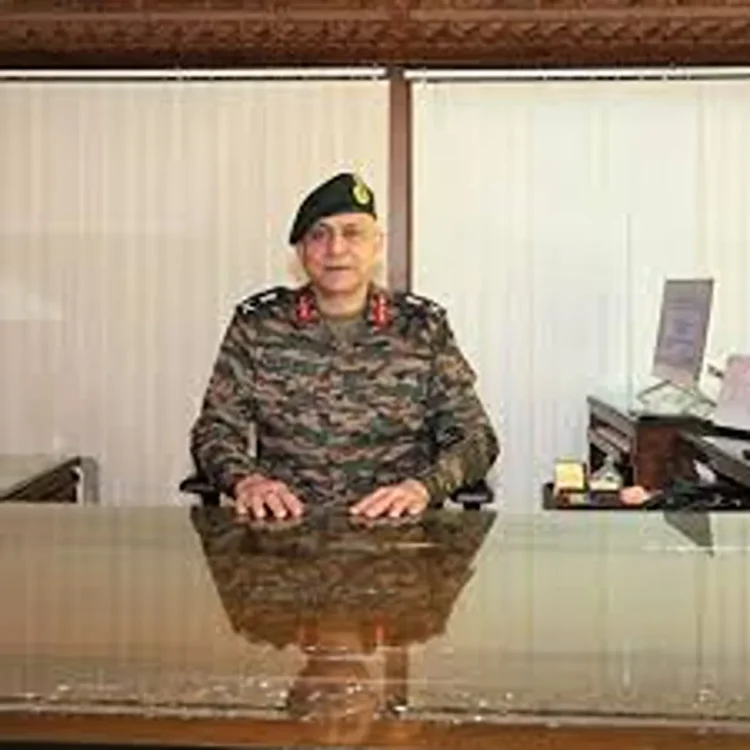
Command Transition in Srinagar-Based Corps
A senior-level change in the Indian Army’s 15 Corps, widely known as the Chinar Corps, took place on Friday as Lieutenant General Balbir Singh formally assumed command. He succeeds Lieutenant General Prashant Srivastava, who completed his tenure after leading the formation for over a year and a half.
The transition comes at a time when the Corps remains actively engaged in maintaining stability across Jammu and Kashmir, particularly along the Line of Control and in sensitive internal areas.
Outgoing Commander’s Operational Tenure
During his 19-month leadership, Lt Gen Srivastava oversaw several significant military operations. Among the most notable was Operation Sindoor, launched in May last year. The operation was carried out in response to the April 2025 Pahalgam attack, which resulted in the deaths of 26 people, including tourists and a local resident.
According to official statements, the operation targeted militant infrastructure located across the border in Pakistan and Pakistan-occupied Kashmir. Military officials described it as a calibrated response aimed at disrupting networks linked to cross-border terrorism.
Counter-Terror and Security Consolidation Efforts
Defence sources highlighted that under Lt Gen Srivastava’s leadership, the Corps achieved measurable progress in both counter-infiltration and counter-terror operations. Security forces reportedly intensified surveillance and response mechanisms along infiltration routes while also strengthening intelligence coordination within the Valley.
Officials noted that this period saw improvements in the overall security framework, with greater coordination between various agencies. The approach was described as more responsive and integrated, contributing to relative stability in the region.
Key Operations and Militant Neutralisation
Another major operation during his tenure was Operation Mahadev, which resulted in the elimination of three militants believed to be involved in the Pahalgam attack. Defence officials indicated that such targeted actions were part of a broader strategy to dismantle active militant networks.
The Army credited these efforts with weakening hostile elements and reducing operational capabilities of insurgent groups in certain areas.
New Appointment for Outgoing Commander
Following the completion of his command, Lt Gen Srivastava has been assigned a new role at the Army Headquarters in New Delhi. He will take over as the Quarter Master General, a position that involves overseeing logistics and supply chains for the force.
Incoming Commander’s Experience and Prior Roles
Lt Gen Balbir Singh, who now leads the Chinar Corps, brings more than three decades of military experience. His career includes extensive involvement in counter-insurgency and counter-infiltration operations, particularly in Jammu and Kashmir and the northeastern region.
He has previously commanded the Counter Insurgency Force (Victor) in South Kashmir, a key operational unit dealing with militancy in the region.
Focus on Stability and Civil Cooperation
In his first address after taking charge, Lt Gen Singh emphasized the importance of cooperation between the armed forces, civil administration, and local communities. He underlined the need for collective efforts to maintain peace and address ongoing security challenges.
He also called for broader public participation in supporting stability initiatives, suggesting that long-term peace depends not only on military operations but also on community engagement.
Continued Strategic Importance of Chinar Corps
The 15 Corps remains one of the most strategically important formations of the Indian Army, responsible for operations in the Kashmir Valley. The leadership change is expected to ensure continuity in operational objectives while adapting to evolving security dynamics.
As the region continues to face complex challenges, the Army’s focus remains on maintaining vigilance along the borders and ensuring internal stability through coordinated efforts.