
Conflict – Myanmar Military Regains Ground as Opposition Faces Internal Strain
Conflict – A little over a year ago, Myanmar’s military appeared to be losing its grip as coordinated offensives by ethnic armed groups pushed government forces out of large parts of the north. At the same time, newly formed pro-democracy militias were intensifying pressure in other regions, forcing the army into a defensive posture.
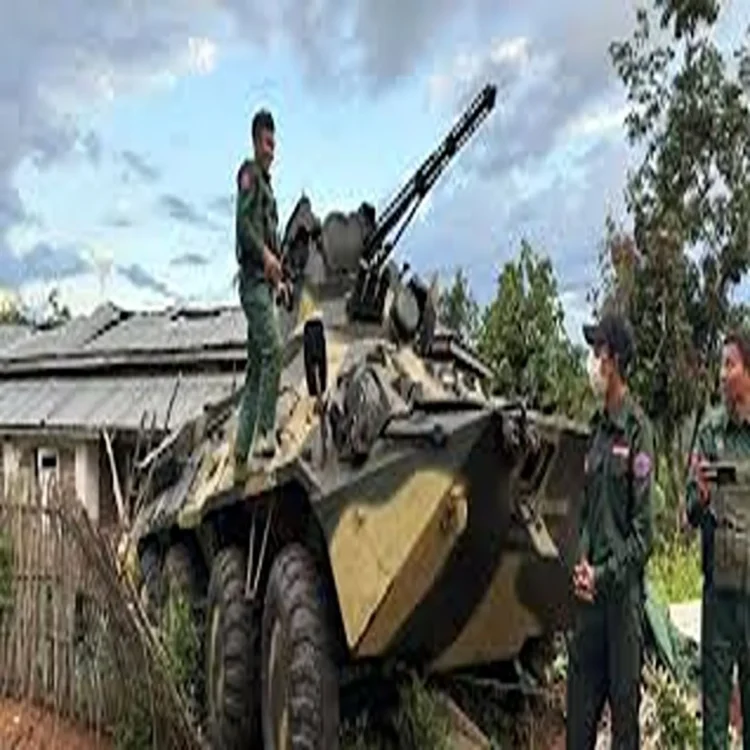
Changing Battlefield Momentum
The situation has since evolved. Reinforced by a large influx of newly recruited personnel, the military has managed to reclaim some of its lost territory and is now preparing for renewed offensives. Meanwhile, divisions among resistance groups, along with logistical and supply challenges, have weakened their collective strength. Some factions have even scaled back their involvement in active combat.
Analysts observing the conflict suggest that the military has regained strategic control. While resistance forces remain active, their ability to maintain coordinated pressure appears to be diminishing.
War Fatigue Among Civilians and Fighters
After nearly five years of ongoing violence, fatigue is evident across the country. The conflict has resulted in tens of thousands of deaths, including thousands of civilians, and displaced millions from their homes. According to regional observers, many civilians are now more concerned about ending the violence than about which side ultimately prevails.
This growing exhaustion is also reflected among fighters. Sustained conflict, limited resources, and uncertainty about long-term outcomes have contributed to declining morale in several resistance groups.
External Influence and Strategic Interests
Myanmar’s geopolitical importance continues to draw attention from neighboring countries. China, in particular, has significant economic investments in the country, including mining operations, energy pipelines, and infrastructure projects. Stability in Myanmar is seen as essential to protecting these interests.
Initially, China showed support for certain militia offensives, partly due to concerns over illegal activities along border regions. However, it has since shifted its stance, encouraging ceasefires and reducing support for armed groups. Diplomatic pressure has played a role in bringing some factions to the negotiating table.
Fragmentation Within Resistance Groups
The opposition to military rule is not a unified force. It includes long-established ethnic armed organizations as well as newer pro-democracy militias formed after the 2021 political upheaval. While these groups share a common objective of challenging military authority, differences in strategy, priorities, and leadership have created internal friction.
Some resistance groups have acknowledged the need for better coordination but admit that disagreements persist. These divisions have made it more difficult to present a unified front against the military’s advancing operations.
Political Developments and Leadership Moves
Recent political developments have also influenced the trajectory of the conflict. Elections held under military oversight have drawn criticism from international observers, who questioned their fairness. Nonetheless, the process has allowed the current leadership to consolidate authority and attempt to strengthen diplomatic ties within the region.
The newly established administration has signaled openness to dialogue, inviting various armed groups to participate in peace discussions. However, the offer has been met with skepticism, particularly due to unclear conditions and the exclusion of certain political stakeholders.
Prospects for Dialogue and Continued Conflict
Despite calls for negotiations, fighting continues in several parts of the country. Government forces are actively pursuing operations to regain control of strategic areas, while resistance groups continue to mount localized offensives.
Experts suggest that limited ceasefire agreements may emerge in the near term, especially if they serve tactical advantages for either side. However, a comprehensive resolution appears distant. The complexity of the conflict, combined with competing interests among domestic and international actors, makes a lasting settlement challenging.