
Economy – Powell Signals Continued Fed Role as Trump Escalates Criticism
Economy – The ongoing tensions between the US Federal Reserve and former President Donald Trump took a sharper turn on Wednesday, as Federal Reserve Chair Jerome Powell confirmed he intends to stay on the central bank’s board even after his term as chair concludes in mid-May.
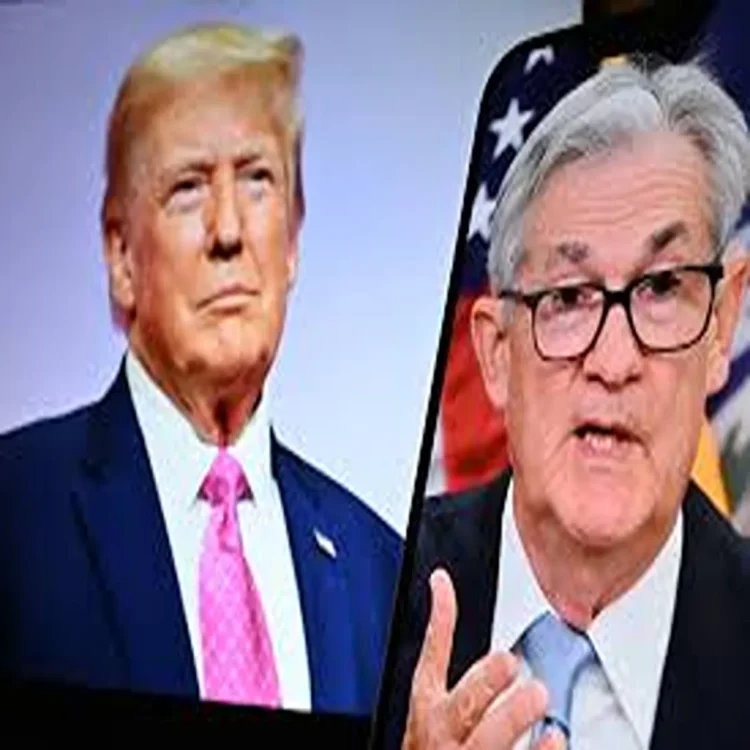
Powell Plans to Remain on Federal Reserve Board
Speaking to reporters in Washington, Powell said his tenure as chair will formally end on May 15, but he plans to continue serving as a member of the Federal Reserve Board for an unspecified period. Such a move, while uncommon, is not without precedent.
Powell’s decision appears rooted in concerns about preserving the institution’s autonomy. He warned that repeated public attacks on the Federal Reserve could undermine its credibility and its ability to operate independently of political pressure. According to Powell, maintaining that independence is essential for effective monetary policymaking.
Trump Responds With Fresh Criticism
Shortly after Powell’s remarks, Donald Trump issued a sharp response on social media, criticizing the outgoing chair and questioning his decision to remain at the central bank. Trump has frequently expressed frustration with Powell, particularly over the Fed’s reluctance to cut interest rates more aggressively during his administration.
The former president has long argued that lower rates would stimulate economic growth, though economists caution such measures can also contribute to rising inflation. Powell, for his part, has consistently defended the Fed’s approach as data-driven and insulated from political demands.
Debate Over Institutional Norms Intensifies
Powell indicated that if he stays on the board, he would adopt a low-profile role under the incoming chair, Kevin Warsh. However, Treasury Secretary Scott Bessent criticized the idea, calling it a break from established norms and suggesting it could complicate the transition of leadership.
Meanwhile, Warsh’s nomination has progressed through the Senate, though not without controversy. Some lawmakers have raised concerns about political pressure surrounding the appointment process, highlighting broader anxieties about the independence of the central bank.
Legal and Political Pressures on the Fed
The dispute has unfolded alongside a series of legal challenges involving Federal Reserve officials. The administration had previously attempted to remove Governor Lisa Cook over allegations tied to mortgage practices, a matter now before the Supreme Court.
In addition, the Justice Department launched an investigation into cost overruns linked to Federal Reserve renovations. Powell described the probe as an effort that could weaken institutional independence, though the investigation has since been paused.
Powell stated he intends to remain in his position until all legal uncertainties are fully resolved, reinforcing his stance that the central bank must remain free from political influence.
Divided Fed Holds Interest Rates Steady
The Federal Reserve’s latest policy decision added another layer to the debate. The central bank opted to keep interest rates unchanged for a third consecutive meeting, maintaining them within the 3.50 to 3.75 percent range.
The decision reflected growing uncertainty in the global economic environment, including rising energy costs linked to geopolitical tensions in the Middle East. Inflation remains elevated, partly due to these external pressures.
Notably, the vote revealed significant internal divisions. Four of the twelve voting members opposed the decision, marking the highest level of dissent in more than three decades. Some officials pushed for rate cuts, while others signaled caution about easing policy too quickly.
Outlook for Future Policy Direction
Analysts suggest the split within the Federal Reserve could lead to more intense debates in upcoming meetings, particularly as new leadership takes shape. The direction of interest rates will likely depend on how inflation and global economic conditions evolve in the coming months.
Powell also expressed confidence that Warsh would uphold the Federal Reserve’s independence, noting the incoming chair’s assurances during his confirmation hearings.
The situation underscores a broader challenge facing central banks worldwide: balancing economic stability while navigating political scrutiny. As leadership transitions and policy debates continue, the Federal Reserve’s role in shaping the economic outlook remains firmly in focus